12th Tehran International Cartoon Biennial concludes
12th Tehran International Cartoon Biennial concludes
TEHRAN – The closing ceremony of the 12th Tehran International Cartoon Biennial was held on Sunday evening in Tehran.
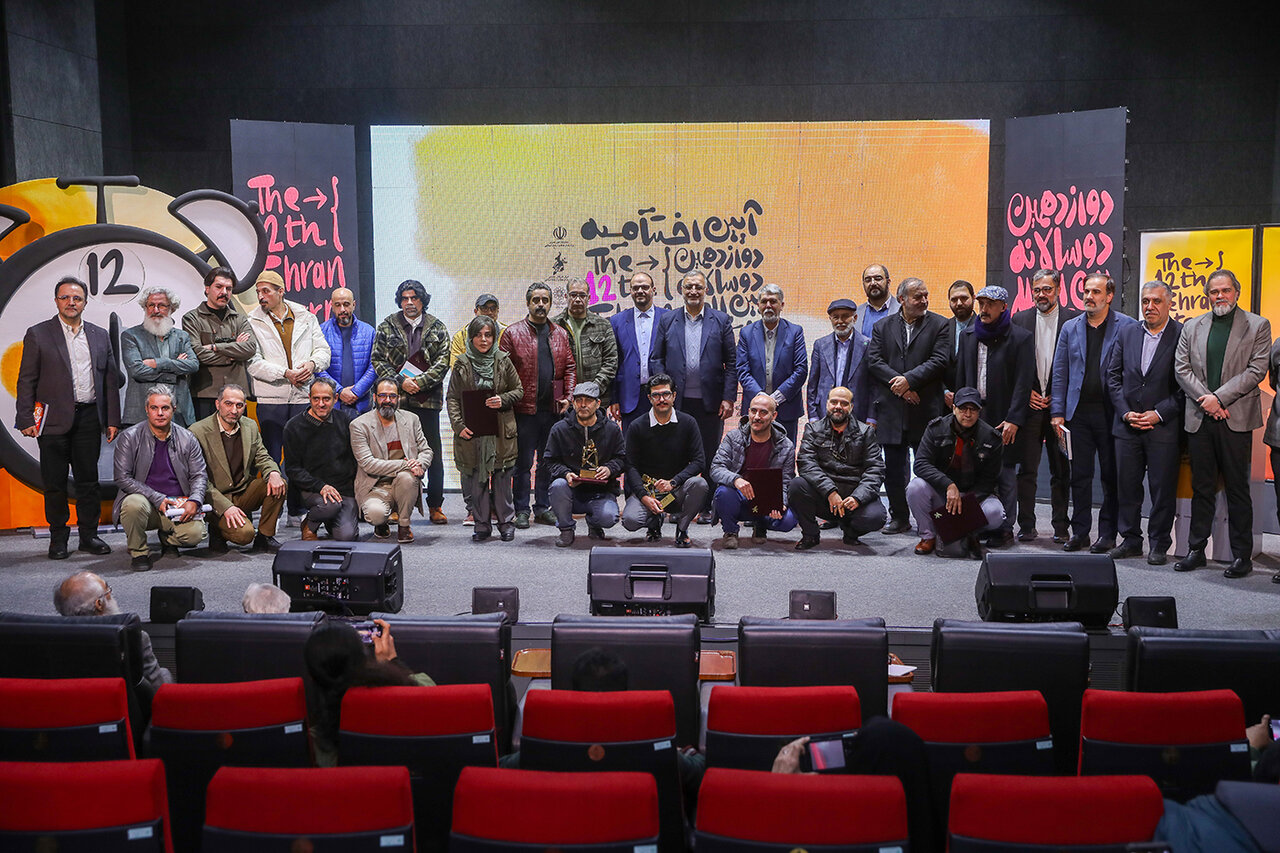
This year’s edition of the biennial was held after an eight-year hiatus and included artists from 70 countries, Honaronline reported.
At the beginning of the event, Masoud Shojai Tabatabai, secretary of the biennial, presented a report on the 12th edition of the event and added: “This event was held with the support of the Cultural and Artistic Organization of Tehran Municipality and the Ministry of Culture and Islamic Guidance”.
“The managerial highlight of this edition was the revival of the Iranian Cartoon House, which directly contributed to improving the quality of works submitted to the Biennial's secretariat,” he added.
“The Tehran International Cartoon Biennial, as one of the pivotal events of visual arts, was held with the aim of showcasing the power and depth of Iranian cartoon art on an international scale,” he noted.
Emphasizing the participation of artists from five continents, he added: “This edition provided an unparalleled opportunity to present creative and critical works with a rich diversity of styles, visual approaches, and content, and showed that cartoon remains one of the most effective and vibrant languages of contemporary art in the world.”
According to the secretary, a total of more than 4,600 works from 70 countries were submitted to the Biennial Secretariat in four specialized sections, including thematic cartoons centered on “haste”, cartoons with a free theme, comic strips with a free theme, and caricatures.
Referring to the caricature section, Shojai Tabatabai said: “This section was held with a special focus on honoring prominent pioneers of Iranian cartoon, including Parviz Shapour, Ardeshir Mohasses, Gholamali Latifi, and Javad Alizadeh.
He considered the large volume of international participation to be a factor that turned the 12th Tehran International Cartoon Biennial into a historical turning point, saying: “This event once again emphasized the pivotal role of Iranian artists in the global critical and satirical art arena.”
“The 12th Tehran International Cartoon Biennial was not only an exhibition of the creativity and skill of artists around the world, but also an effective step towards strengthening international cultural cooperation and creating a space for artistic dialogue, exchange of ideas, and the formation of lasting connections between cartoon and caricature artists from different countries around the world,” he concluded.
Also speaking at the event, Alireza Zakani, mayor of Tehran, stated: “This event is being held after eight years with the cooperation of the Ministry of Culture and the Abbasabad complex. The language of art is a lasting language, and good words last and endure for years through the language of art. Cartoons make this language more understandable.”
“We are a nation that has been oppressed, and the hegemonic system treats people with a different type of cruelty each time. Therefore, an artistic expression of world events and an expression of the Iranian people's legitimacy makes it possible to reflect the oppression of the Iranian people through the use of art; in addition, it makes it possible to have a dialogue with our own society,” he noted.
Afterwards, the winners of various categories received their awards. The winners included over 20 artists from Iran, Cuba, Brazil, Russia, China, Ecuador, Serbia, and Ukraine.
After announcing the names of the winners, Minister of Culture and Islamic Guidance Seyed Abbas Salehi said in his speech: “Cartoon in Iran is a symbol of 'We Can.' Although this art is not more than 125 years old, as mentioned, it is one of the successful sectors of Islamic Iran. I am happy that this cartoon event restarted after an eight-year hiatus”.
A day before the closing ceremony, the Culture Minister had written a message to the biennial, saying: “This biennial, in addition to being a clear manifestation of artistic creativity, is an efficient solution in developing cultural diplomacy and a messenger of peace, friendship, and human harmony for the world”.
“Cartoon is a living, expressive, and influential art that communicates with human society with a universal language, beyond the boundaries of language, culture, and geography, and provides a platform for the exchange of ideas between artists, people, and social activists. This influential branch of visual arts is a reflection of social developments and has recorded lasting works in the visual treasury of world culture,” he wrote.
“Iranian cartoonists, with their unique creativity and critical perspective, have made Iran's name shine in the international arena, and the Tehran International Cartoon Biennial enjoys a distinguished position in the art world”.
“Along with the advancement of new media and the digital space, the country's young artists, utilizing up-to-date visual language and new techniques, have turned this biennial into a dynamic and influential event in the international arena that always witnesses the widespread reception and presence of prominent artists”.
“In addition to being a clear manifestation of artistic creativity, the Tehran International Cartoon Biennial is an efficient solution in developing cultural diplomacy and a message of peace, friendship, and human harmony to the world; a message that is more vital than ever in today's complex circumstances,” the minister concluded his message.
At the end of the closing ceremony, Gholamali Latifi, a veteran cartoonist, was honored.
Born in 1934 in Baku, Latifi continued his education in Tehran after his family immigrated to Iran. He started his career as a cartoonist, working for publishers such as Ferdowsi, Naqsh-e Jahan, and Chalangar.
In 1958, he began working for Towfiq Weekly, where his works were published for six years. Then he signed an agreement with Tehran-e Mosavvar magazine to draw cartoons for one of its pages called Kashkiat. This page was published in a collaborative effort with Iranian author Manuchehr Mahjubi until the end of 1967. He has also taught at the Iranian Cartoon House.
On the sidelines of the closing ceremony, the works of the winners of the biennial were on display.
The exhibition for the selected works of the 12th Tehran International Cartoon Biennial will be open to the public until February 9, at the Saba Cultural and Artistic Institute in Tehran.
SS/
source: tehrantimes.com