Iran warns against using civil aviation as a tool of political pressure
Iran warns against using civil aviation as a tool of political pressure
TEHRAN — Iran has condemned the United States’ broad unilateral sanctions against the country’s civil aviation sector, warning that the continued use of aviation restrictions as a means of political and economic pressure could have repercussions extending beyond Iran and affecting regional and international air transport.
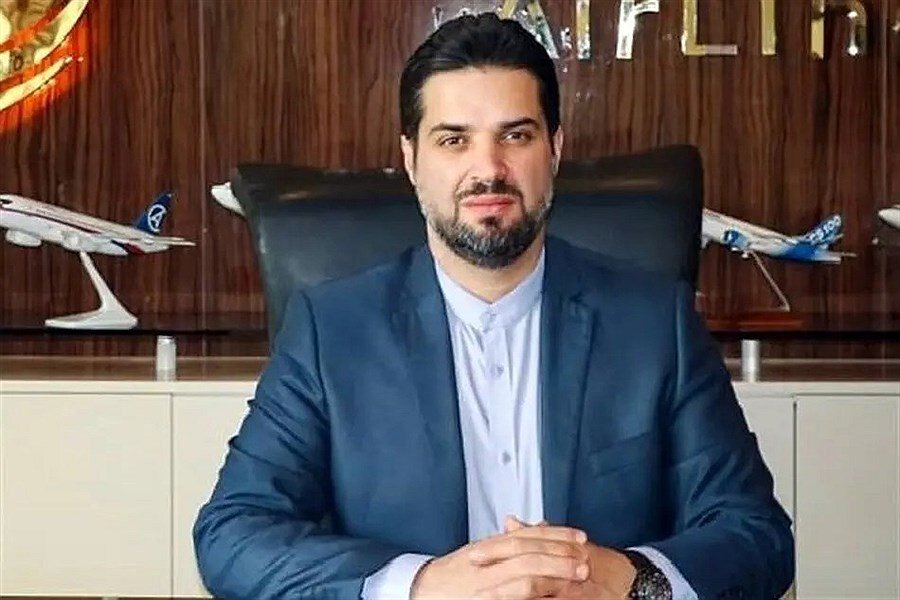
Captain Abouzar Shiroudi, head of Iran’s Civil Aviation Organization, made the remarks in a Saturday statement addressed to the President of the Council of the International Civil Aviation Organization (ICAO), calling for urgent attention to what he described as the serious and continuing consequences of U.S. extraterritorial restrictions on Iranian aviation.
Shiroudi said Washington had escalated its pressure campaign against Iran’s aviation industry after the United States and Israel failed to achieve their objectives during their imposed wars in 2025 and 2026. He pointed to the US decision on September 8, 2026, to impose sanctions on all Iranian airlines.
Iran invokes international aviation principles
The Iranian aviation chief argued that such measures run counter to the principles of the 1944 Chicago Convention, the foundational framework of international civil aviation, which promotes the development of international air transport as a means of fostering friendship and understanding among nations.
He also highlighted what he described as a contradiction between the sanctions regime and ICAO’s strategic objective for 2026–2050, known as “No Country Left Behind.”
According to Shiroudi, the principle underlying the initiative is difficult to reconcile with the situation of countries whose aviation sectors face extensive unilateral and extraterritorial restrictions.
He called on the ICAO leadership to pay greater attention to the practical consequences of such measures, particularly their potential implications for aviation safety and the ability of affected countries to maintain and modernize their civil aviation systems.
Iran says aviation sector has maintained operations
Shiroudi said Iran’s civil aviation industry has continued to operate despite years of restrictions, relying largely on domestic capabilities to maintain aviation services and safety standards.
He criticized 'the lack of effective action' by ICAO to support Iran’s aviation sector in dealing with the consequences of prolonged restrictions.
Iran has long argued that sanctions affecting aircraft, spare parts, maintenance and other aviation-related requirements can create challenges for the continued modernization and safe operation of its commercial aviation fleet. Tehran has repeatedly called for civil aviation to be treated separately from political disputes because of its direct connection with passenger safety and international air connectivity.
“Civil aviation must never be used as a tool for political or economic pressure,” Shiroudi said, stressing that no country should be prevented from maintaining adequate aviation safety standards because of political disputes or unilateral sanctions.
Tehran calls for aviation cooperation beyond political disputes
Iran’s appeal comes as the country continues to emphasize the need to preserve international aviation as a field of technical cooperation rather than political confrontation.
From Tehran’s perspective, restrictions imposed on airlines and aviation operators have consequences that go beyond the commercial interests of individual carriers. Limitations on access to aircraft, components, maintenance services and other aviation resources can affect a country’s ability to sustain and develop its civil aviation infrastructure.
Shiroudi’s message to the ICAO Council therefore places Iran’s aviation sanctions within a broader argument: that international aviation safety and connectivity should remain governed by common technical and safety standards rather than becoming instruments of unilateral political pressure.
He urged the international aviation community to address 'the growing gap' between the principles of international civil aviation and the realities faced by countries subject to unilateral sanctions.
source: tehrantimes.com