170millionyearold fossil in northern Iran presented for scientific study
170-million-year-old fossil in northern Iran presented for scientific study
TEHRAN - A fossilized tree trunk estimated to be 170 million years old and discovered in Iran’s northeastern Golestan province has been presented as a valuable resource for scientific research, natural heritage conservation and the development of science tourism.
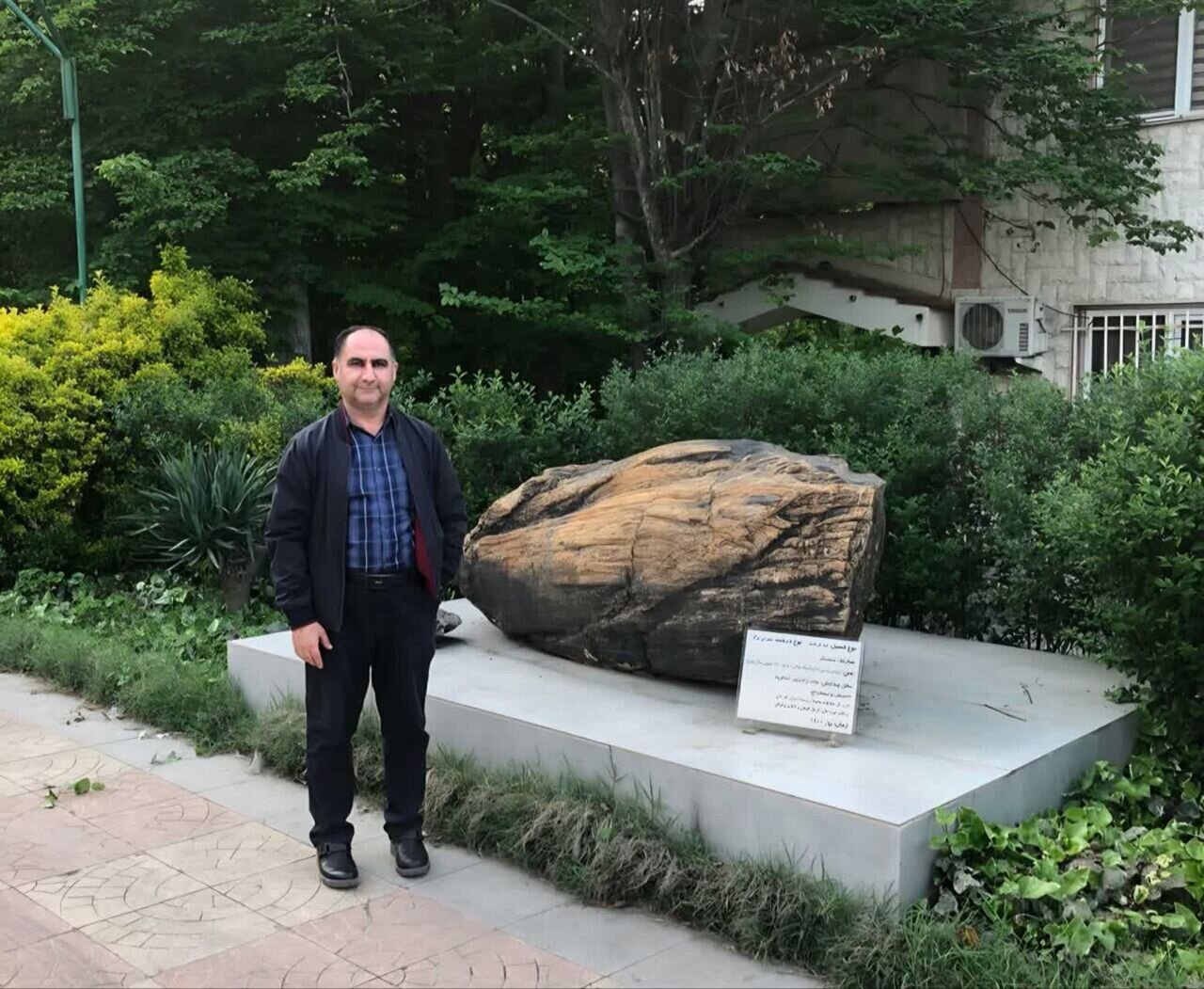
The fossil was identified in 2021 during road-widening work along the Azadshahr-Shahroud route and was subsequently transferred to the Golestan Department of Environment after officials confirmed the discovery, IRNA reported on Tuesday.
Preliminary assessments suggest that the specimen belongs to a group of coniferous trees, although further specialist studies are needed to determine its precise classification and geological age.
Mahmoud Shakiba, head of the wildlife protection and management, natural history museum and genetic resources department at the Golestan Department of Environment, said the fossilized trunk was among the province’s valuable natural heritage assets.
He said the specimen could help researchers investigate the region’s geological history and ancient vegetation while raising public awareness of paleontology and natural heritage.
Although the fossil has been estimated to be around 170 million years old, its precise geological period remains uncertain. Further expert examination is required to establish whether it dates to the Late Triassic or Middle Jurassic, Shakiba said.
A fragment of the fossilized trunk has been donated to the Department of Environment’s Biodiversity Museum in Tehran, a move intended to make the specimen more accessible for scientific and educational purposes.
Shakiba said the provincial environmental department had collected about 100 fossil specimens of different plant and animal types, which are being kept at its museum. Recently, 50 specimens were sent to the biodiversity museum in Tehran for further identification and taxonomic assessment.
Fossils provide important evidence of the history of life, past environmental conditions and changes in the Earth’s ecosystems over geological time. Proper preservation and documentation in specialized museums can support scientific research and help transmit knowledge of the natural world to future generations.
Shakiba said identifying, protecting and presenting fossil discoveries was part of the broader responsibility to safeguard Iran’s natural heritage. He added that greater public awareness of such resources could strengthen conservation efforts and improve understanding of the country’s natural history.
The fossil discovery also highlights Golestan’s wider potential for nature-based and educational tourism. The province is home to part of the Hyrcanian forests, an ancient forest ecosystem whose history extends back tens of millions of years.
Unlike fossilized remains, these forests are living ecosystems that preserve elements of ancient vegetation and provide important evidence for understanding long-term ecological change.
AM
source: tehrantimes.com