Chinese trade delegation TCCIMA discuss ways to develop IranChina trade
Chinese trade delegation, TCCIMA discuss ways to develop Iran-China trade
TEHRAN- A Chinese trade delegation, in a meeting with Feryal Mostofi, Vice President of the Tehran Chamber of Commerce, Industries, Mines and Agriculture (TCCIMA), and Fereydoun Vardinejad, Secretary General of the Chamber, discussed ways to develop trade cooperation and expand cultural exchanges between the two countries.
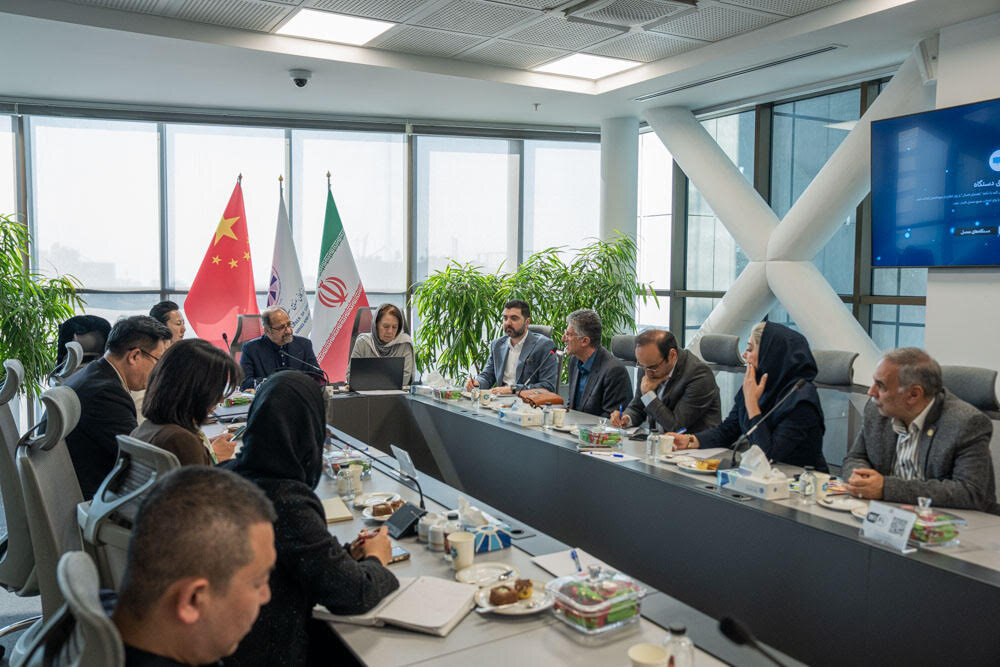
At the meeting, the Vice President of the Tehran Chamber spoke about the private sector’s readiness to facilitate the presence of Chinese investors in quick-return projects.
During the visit of the Chinese trade delegation composed of managers from various fields of trade, culture, art, investment, and listed companies of the country, opportunities for strengthening interaction between economic actors of the two countries, empowering skilled human resources, deepening cultural relations, and holding joint specialized conferences were examined.
Other axes raised at the meeting included developing trade exchanges through the use of modern money transfer methods and implementing joint economic projects.
Zhang Yi, responsible for Iran-China cultural and trade exchanges, at the beginning of the meeting highlighted the role of the Tehran Chamber in advancing trade cooperation between the two countries and spoke of the need to raise the level of these relations. Subsequently, other members of the trade delegation, some of whom were representing chambers of commerce and industrial zones in the port city of Qingdao in Shandong Province in eastern China, declared their interest in cooperating with Iranian industrialists and traders.
Fereydoun Vardinejad, Secretary General of the Tehran Chamber of Commerce, Industries, Mines and Agriculture, continued the meeting by introducing the structure of this institution and its role in the country’s economic growth, and stated: The Tehran Chamber of Commerce, Industries, Mines and Agriculture has more than 47,000 active members, and these members account for about 50 percent of the country’s GDP.
Establishing continuous communication between Iranian and Chinese companies and institutions such as the China Council for the Promotion of International Trade (CCPIT) provides an opportunity to improve trade relations between the two countries.
Vardinejad further explained that the Tehran Chamber’s representative office in Khorgos has recently been opened, and the Chamber is trying to improve the flow of trade information among traders of the two countries and to reflect the current economic realities of Iran and China through the Chamber’s communication channels.
Referring to the Tehran Chamber’s measures to develop economic cooperation with China, he also stated: A special secretariat for the development of economic cooperation with China has been established with the aim of monitoring developments and new technologies in that country and informing Iranian traders.
Also, the official website of the Tehran Chamber has been designed in three versions—Persian, English, and Chinese—so that Chinese economic actors can become more familiar with Iran’s laws, regulations, and business environment.
The Secretary General of the Tehran Chamber, referring to the capacity of the Belt and Road Initiative (BRI), the Shanghai Cooperation Organization, and BRICS for expanding economic relations between Iran and China, said: The continuation of direct dialogue between traders of the two countries and the use of these capacities can pave the way for defining and implementing joint projects and developing economic cooperation between the private sectors of Iran and China.
Emphasizing the need to create modern methods of trade interaction between traders of the two countries, he also proposed that, given the current conditions, the yuan or a barter mechanism be used for trade exchanges.
Proposal for direct investment by Chinese companies in Iran’s quick-return projects
Later in the meeting, Feryal Mostofi, Vice President of the Tehran Chamber, referring to the importance of developing economic cooperation and joint investment between Iran and China, spoke about the private sector’s readiness to facilitate the presence of Chinese investors in quick-return projects.
In another part of her remarks, she described the activities of the Tehran Chamber’s Investment and Family Business Center and said: This center was established with the aim of preparing the necessary infrastructure for attracting capital and seeks to provide a suitable platform for the presence of economic actors and Chinese companies in various projects in the country.
The Vice President of the Tehran Chamber then referred to the difference between financing models and added: The issue of project finance requires banking agreements between the Central Bank of Iran and China and insurance institutions; nevertheless, our main priority and preference is directed toward direct investment and partnership between Chinese and Iranian companies.
The head of the Strategic Council of the Tehran Chamber’s Investment and Family Business Center also referred to the capacity of Iranian economic enterprises and said: Iran has numerous projects with the capability of rapid and secure return on investment, which can provide a golden opportunity for foreign investors, especially Chinese economic enterprises. Defining quick-return projects through investment by Chinese companies will help develop the two countries and realize common goals.
Hadi Haddadi, Strategic Advisor to the Secretary General of the Tehran Chamber and Secretary of the Art Economy Committee, also described the missions of this committee at the meeting and explained that through the Tehran Chamber’s Art Economy Committee, a bridge can be created between producers and suppliers of cinematic works, theater, music, and visual arts and foreign buyers and suppliers.
According to Haddadi, the Tehran Chamber’s Art Economy Committee and Chinese cultural and artistic institutions such as Confucius have many opportunities for cooperation, and this synergy can go beyond classical artistic fields and also include handicrafts, carpet weaving, artworks by female heads of households and home-based businesses, as well as the tourism industry.
Emphasis on expanding Iran-China trade exchanges
The Chinese trade delegation then explained its future plans, announced the dispatch of trade, cultural, and tourism delegations to Iran in the near future, and welcomed the proposals raised for facilitating trade exchanges and expanding cultural interactions between the two countries.
The Secretary General of the Tehran Chamber, emphasizing the need to pay attention to reviving the “goods-for-goods barter” mechanism as a solution for continuing bilateral trade exchanges, proposed that relations between Iranian and Chinese cultural and economic institutions be expanded further.
He also announced that the Tehran Chamber is ready, by providing the necessary information about Iran’s trade laws and regulations to Chinese economic delegations, to play a role in facilitating their trade activities and strengthening economic relations between the private sectors of the two countries.
MA
source: tehrantimes.com