20 million Iranians one voice The story of the grassroots JANFADA campaign
20 million Iranians, one voice: The story of the grassroots ‘JANFADA’ campaign
TEHRAN - At a time when the world is more divided than ever grappling with crises, polarization, and social fractures, the emergence of large-scale grassroots movements takes on a meaning far beyond ordinary collective action. The “Janfada” campaign is one such phenomenon: an initiative that began on March 29 and, in a remarkably short time, has reached a staggering figure, over 21 million participants at the time of writing.
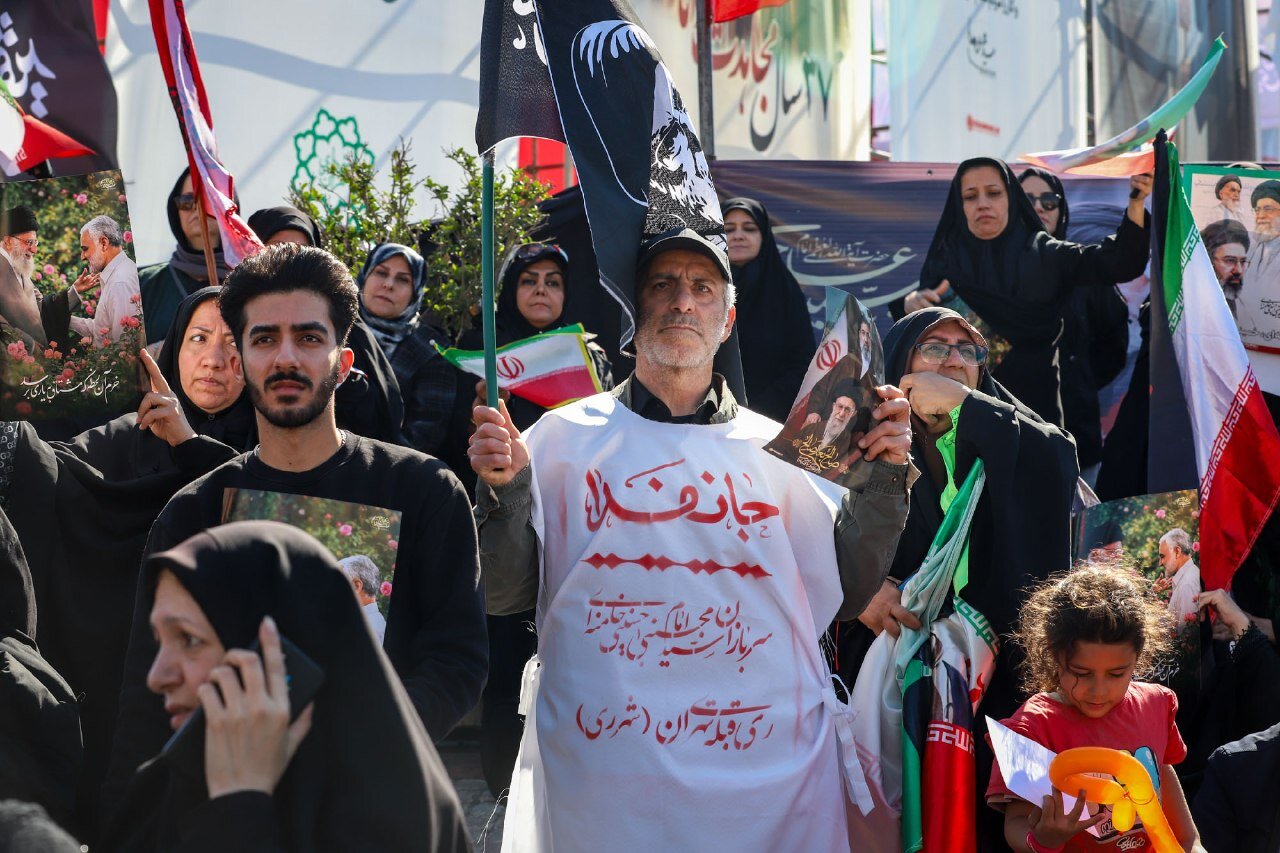
But this number is not just a statistic. Each digit represents a person with identity, belief, and a deep commitment to something called homeland.
From the very first hours of its launch, a wave of participation spread among Iranians. Social media users, ordinary citizens, cultural and sports figures, clerics, and political officials all joined the movement in different ways. What sets this campaign apart is not only its scale, but the depth of meaning it carries: a declaration of readiness to defend Iran, in any way possible.
Support for one’s homeland and the willingness to defend it is nothing new for Iranians. The country’s history is filled with moments when people, despite their differences, have stood united at critical turning points. From resisting foreign invasions in ancient times to enduring the pressures of modern conflicts, one constant remains: a profound sense of belonging to the land and a shared national identity.
In 1979, when the country faced a full-scale war, a public call for mass mobilization was met with overwhelming response. Young and old, men and women alike, each contributed in their own way. Now, 47 years later, that same spirit appears to be reemerging this time in a new form.
The “Janfada” campaign was launched to demonstrate public readiness to defend the country under current sensitive conditions. Yet what unfolded exceeded expectations. Within just a few days, millions signed up, adding their names to a list that continues to grow rapidly.
In a message marking the 40th day since the martyrdom of Ayatollah Seyyed Ali Khamenei, Iran’s new Leader Ayatollah Seyyed Mojtaba Khamenei, referred to the campaign, stating: “Undoubtedly, your resounding cries in the public squares have a profound impact on the outcome of the negotiations. Likewise, the astonishing and ever-increasing number of millions participating in the “Ready to Sacrifice for Iran” campaign is an influential factor in this arena.”
Among those who have joined are many well-known figures: from senior government officials including heads of the three branches of power, cabinet members, and leaders of major institutions to prominent athletes. Figures such as Hadi Saei, Khodadad Azizi, Sajjad Anoushiravani, and Vahid Shamsaei publicly voiced their support. Their participation not only amplified the campaign’s visibility but also underscored its broad reach across different segments of society.
Religious figures have also played an active role in promoting the movement. A video message by Ayatollah Javadi Amoli, calling on seminary teachers and students to join the campaign, marked a significant moment in its expansion, adding a spiritual dimension to the initiative.
One of the campaign’s most notable features is the participation of diverse religious and ethnic communities. From the Zoroastrian Association of Kerman to Sunni communities across the country, many have expressed their support. This diversity, combined with a shared purpose, presents a powerful image of national unity especially significant under current circumstances.
Yet perhaps the most important aspect of “Janfada” is the voice of the people themselves those without official platforms or political positions, whose presence forms the backbone of the movement.
In the streets, during nightly gatherings, and across social media posts both brief and extensive, a common message emerges: “If needed, we are here.”
One participant says: “Signing up isn’t just symbolic. For me, it means declaring that I will stand by my country under any circumstances.”
Another writes: “We didn’t live through the war generation, but we’ve learned that defending the homeland isn’t only about weapons, it’s also about presence, voice, and solidarity.”
Across these messages, a range of emotions can be seen: pride, concern, hope. But what unites them all is one thing love for Iran.
Notably, the campaign has extended beyond Iran’s borders. Iranians living abroad, despite the geographical distance, have sought ways to take part.
In one widely shared message, an Iranian living in southern France says: “I can’t directly participate from here, but I ask those of you in Iran to write my name down as well. I want to have a share in defending my homeland.”
Such responses highlight that for many Iranians, the concept of homeland goes beyond physical geography. Even in the farthest corners of the world, this emotional connection remains alive.
After more than ten days, “Janfada” appears to have evolved beyond a temporary initiative into a broader social movement. The numbers continue to rise, but what matters more is the meaning behind them.
Once again, this campaign demonstrates that Iranians, at critical historical moments, are capable of setting aside differences and focusing on shared values. Support for the homeland does not stem from obligation, but from a deeply rooted belief—one embedded in the country’s history, culture, and identity.
The campaign has even drawn attention from Israeli media. The Hebrew-language newspaper Yedioth Ahronoth reported on the widespread public response, noting that millions of Iranians have registered for the campaign, declaring their readiness to defend their country.
The report also highlighted symbolic expressions of support across Iranian cities, including a sign installed in Palestine Square in Tehran, bearing a message in Hebrew: “You can come by land with the Americans—we are waiting for you.”
The newspaper concluded by noting that Iranian media portray the “Janfada” campaign as a symbol of national unity and a spirit of resistance against external threats.
Ultimately, “Janfada” can be seen as a contemporary reflection of a long-standing trait among Iranians: loyalty to their homeland. From the past to the present, this sentiment has taken many forms on the battlefield, in cultural life, and now as a mass public movement.
Perhaps the most important message of all is this: for many Iranians, Iran is not just a country it is part of who they are. And when that part is at stake, millions respond without hesitation, with one voice:“We are all Janfada.”
source: tehrantimes.com