Strait of Hormuz to determine future of global economy
‘Strait of Hormuz to determine future of global economy’
TEHRAN- An economic expert, stating that the Strait of Hormuz will determine the future of the global economy, said: Given the $40 trillion debt of the US federal government and Russia's decision to sell oil in yuan, not only will America's position in global trade weaken, but it will also further cement China's role in the global economy.
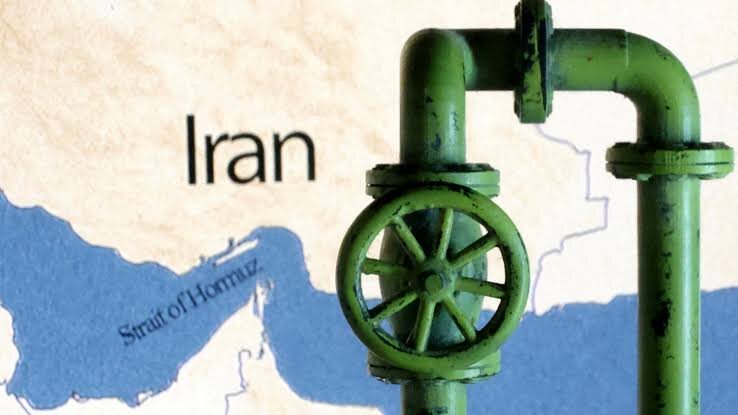
Hamid Haj Esmaeili told IRNA, referring to the economic consequences of the Persian Gulf developments following the American-Zionist coalition's aggression against Iranian territory, that Iran's strategic actions in the Strait of Hormuz following this aggression have changed global energy equations. If the state of war in the region continues, Europe's economy, East Asia, and even America's financial structure will face serious inflationary, recessionary, and currency pressures.
Noting that control of the Strait of Hormuz has made some global economies face more difficult conditions, and reports have even emerged of fuel shortages and shutdowns of non-essential facilities in various countries, he added that war is always a factor that, in addition to political and social upheavals, has direct and widespread effects on the economy. Due to the high costs and insecurities it creates, war typically affects various economic sectors.
This economic expert continued that the war in the Persian Gulf is particularly important because this region is one of the most critical hubs for oil transit and energy supply for European, Western, and even East Asian countries. Statistics show that about 20% of the world's consumed oil is transited through the Persian Gulf countries, which multiplies the strategic importance of the Strait of Hormuz.
He noted that in addition to oil, the issue of gas and even chemical fertilizers has now been added to this equation — sectors that have a very large share in the global economy, and even many countries and regional governments were previously unaware of the precise extent of their impact. The share of gas and fertilizers in this region is such that it can have profound effects on the global economy.
This indicates that events in the Persian Gulf are of extraordinary importance, and the longer this trend continues, the more the global economy will be affected.
Leading economies face risk of recession
Regarding the prediction by US bank J.P. Morgan that strategic oil and energy reserves released could help control oil prices until April 20 — less than three weeks from now — and whether we will then see so-called developed countries set back, Haj Esmaeili responded: In the first weeks, Western countries and the US released part of their oil reserves, but we saw that oil prices did not drop significantly, and now prices are rising again.
The economic expert continued that countries like Japan, which are almost entirely dependent on Persian Gulf oil, may face prolonged recessions. A characteristic of Japan's economy is that if it enters a recession, recovery takes years. The same holds true for South Korea. China, of course, has different conditions due to its extensive economic network and flexible capacities, but it is still affected by energy developments in the region.
He stated that Europe is also facing serious problems now, because the economic mechanism of European countries is largely dependent on Persian Gulf energy. These countries have a significant share in the global economy, and any disruption in energy could halt their economic growth.
Haj Esmaeili noted: Regarding the US, it should be noted that its economy depends above all on the capital market. Although the US produces oil and does not have the same direct dependence on the Persian Gulf as some countries, its economy is based on the stock market and financial investments. Therefore, if financial markets are damaged, the US economy will also suffer serious harm.
America's concern is no longer just military or political prestige
The economic expert said: One of America's main concerns right now is not just political or military prestige. The US federal government has about $40 trillion in debt, and if tensions in the Persian Gulf continue and Iran solidifies its effective control over the Strait of Hormuz, dollar-based oil trade may decline.
A reduction in dollar transactions could lower the dollar's value in the global economy.
In such a situation, countries might conduct their currency exchanges in other currencies, which could weaken the dollar's position.
Haj Esmaeili continued: The US is now at a strategic crossroads.
On one hand, accepting defeat carries a cost in terms of prestige; on the other hand, continued tensions could threaten the dollar's status and America's economic influence in the world.
It is even possible that following the Persian Gulf developments, China's economic role as a major global power will be further cemented.
Stating that Trump does not have a balanced personality and his approaches are more fascistic in nature — and even a significant part of American society rejects this approach — he said: On the international level, we have also seen that even some of America's European allies view him critically and negatively. The main goal of his threats is to pressure Iran's economic infrastructure.
The economic analyst continued: In such circumstances, alongside resistance and establishing military deterrence, activating economic and political diplomacy is essential, because continuing the war could have negative economic consequences for our country. Although Iran has the capacity for reciprocal response, the continuation of conflicts will nonetheless impose costs on the country.
MA
source: tehrantimes.com