The world must not permit US Israel to undermine ICC
The world must not permit US, Israel to undermine ICC
TEHRAN - The International Criminal Court (ICC) was established by the Rome Statute, a multilateral treaty adopted on 17 July 1998 in Rome, Italy. The Rome Statute entered into force on 1 July 2002, after 60 countries ratified it, and the court officially began operating on that date.
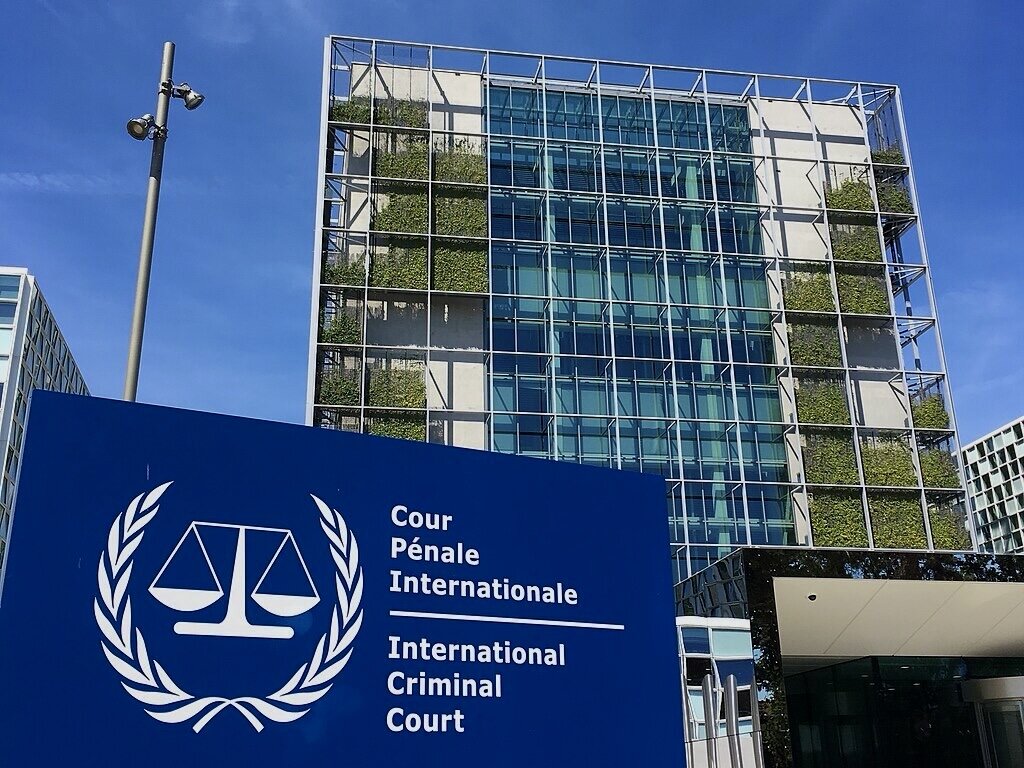
The ICC, headquartered in The Hague, was established for several key reasons:
To end impunity for the gravest international crimes. The ICC was created to prosecute individuals—not states—responsible for the most serious crimes of concern to the international community.
To deter future atrocities. By holding perpetrators personally accountable, the Court aims to discourage the commission of such crimes.
To provide justice when national courts cannot or will not act. Under the principle of complementarity, the ICC only exercises jurisdiction when national judicial systems are unwilling or genuinely unable to investigate or prosecute these crimes.
To strengthen international criminal justice. The Court was designed as the first permanent international criminal tribunal, replacing the previous practice of creating temporary tribunals for specific conflicts, such as those for the former Yugoslavia and Rwanda.
The ICC has jurisdiction over four categories of crimes: Genocide, crimes against humanity, and war crimes.
The crime of aggression (the Court's jurisdiction over this crime became operational in 2018, following the activation of the Kampala amendments.
The establishment of the ICC was driven in large part by the international community's determination to prevent a recurrence of atrocities such as the Holocaust, the genocides in Rwanda and the former Yugoslavia, and other large-scale violations of international humanitarian law that had exposed the limitations of existing mechanisms for international justice.
However, certain countries, particularly the United States under Donald Trump and Israel, have launched intensive campaigns to undermine the ICC.
Writing in The Wall Street Journal on July 13, U.S. Secretary of State Marco Rubio openly declared war on the court. In the article, Rubio said the Trump administration is working to “dismantle the [ICC] brick by brick” with the support of its allies.
Notably, the countries most hostile to the ICC are those that oppose the enforcement of international law and believe the Court is exposing crimes allegedly committed by their nationals or officials.
The ICC came under intense pressure after issuing arrest warrants for Israeli Prime Minister Benjamin Netanyahu and former defense minister Yoav Gallant on charges of war crimes and crimes against humanity committed against Palestinians in the Gaza Strip.
The international community will appear helpless and powerless if the Trump administration and the Netanyahu government are allowed to weaken the world's permanent international criminal tribunal.
In Rubio's own words, the campaign against the ICC aims to “systematically disable the ICC’s ability to operate, target American servicemen or officials, or otherwise threaten American sovereignty.”
Such remarks reinforce the perception that the United States considers itself above international law and regards itself as exceptional.
When President Trump pardons loyalists convicted of criminal offenses, there is little reason to believe that U.S. servicemen accused of war crimes in Iraq, Afghanistan, or elsewhere will be held accountable. On his first day back in the White House, for example, Trump granted clemency to more than 1,500 people who had been convicted or charged in connection with the January 6, 2021, attack on the U.S. Capitol.
Through their attacks on the Hague-based court, the United States and Israel are openly defying the international community.
Last year, the Trump administration imposed sanctions on 11 ICC officials under Executive Order 14203, including eight judges—nearly half of the Court's bench—the chief prosecutor, and two deputy prosecutors.
UN Special Rapporteur on the Occupied Palestinian Territory Francesca Albanese and three Palestinian human rights organizations have also been sanctioned under the same executive order for their accountability work concerning widely documented international crimes committed by Israeli forces in the occupied Palestinian territories.
So far, the international community has shown little resolve in the face of these attacks on the Court.
Writing in Middle East Eye on July 22, Sergey Vasiliev, professor of international law at the Faculty of Law of the Open University of the Netherlands, argued that “The U.S. anti-ICC campaign is as dangerous as it is ill-conceived. These measures must receive unequivocal condemnation and a firm response from other states, going beyond mere rhetoric.”
Countries that remain silent in the face of such unabashed actions should recognize that they, too, may one day become victims of war crimes or genocide committed by powerful states or their allies.
“States Parties have been either oblivious or unwilling to admit that this open season on the ICC is an indirect attack on their own sovereignty,” Vasiliev notes.
He argues that the real objective of the U.S. campaign is to intimidate both the Court and its States Parties into submission while entrenching impunity for past and future core international crimes committed on their territories by U.S. or allied—particularly Israeli—forces.
For example, the massacre of more than 150 schoolchildren in Minab, southern Iran, on the first day of the U.S.-Israel war on Iran on Feb. 28 would constitute, if established, a grave war crime for which those responsible should be held accountable. However, according to this view, the United States has instead mounted a campaign to discredit the ICC in an effort to shield itself and its allies from legal scrutiny.
Vasiliev argues that “the law is on the ICC’s side” and that “the court is taking heat for applying it equally.”
“That the ICC continues to be perceived as a threat by serial violators of international law is in itself a badge of honor—one that speaks volumes about its role in the world,” the professor writes.
He also argues, “Rooted in exceptionalism, the U.S. stance effectively interferes with the sovereignty of the ICC’s 125 States Parties.”
source: tehrantimes.com