Iran pledges stronger deterrence asserts sovereignty over Strait of Hormuz
Iran pledges stronger deterrence, asserts sovereignty over Strait of Hormuz
TEHRAN— Iranian military officials have reaffirmed the country’s determination to strengthen its defense capabilities, protect its maritime interests and oppose efforts to restore a US-dominated security order in West Asia, arguing that regional stability must be based on national sovereignty and cooperation among neighboring countries.
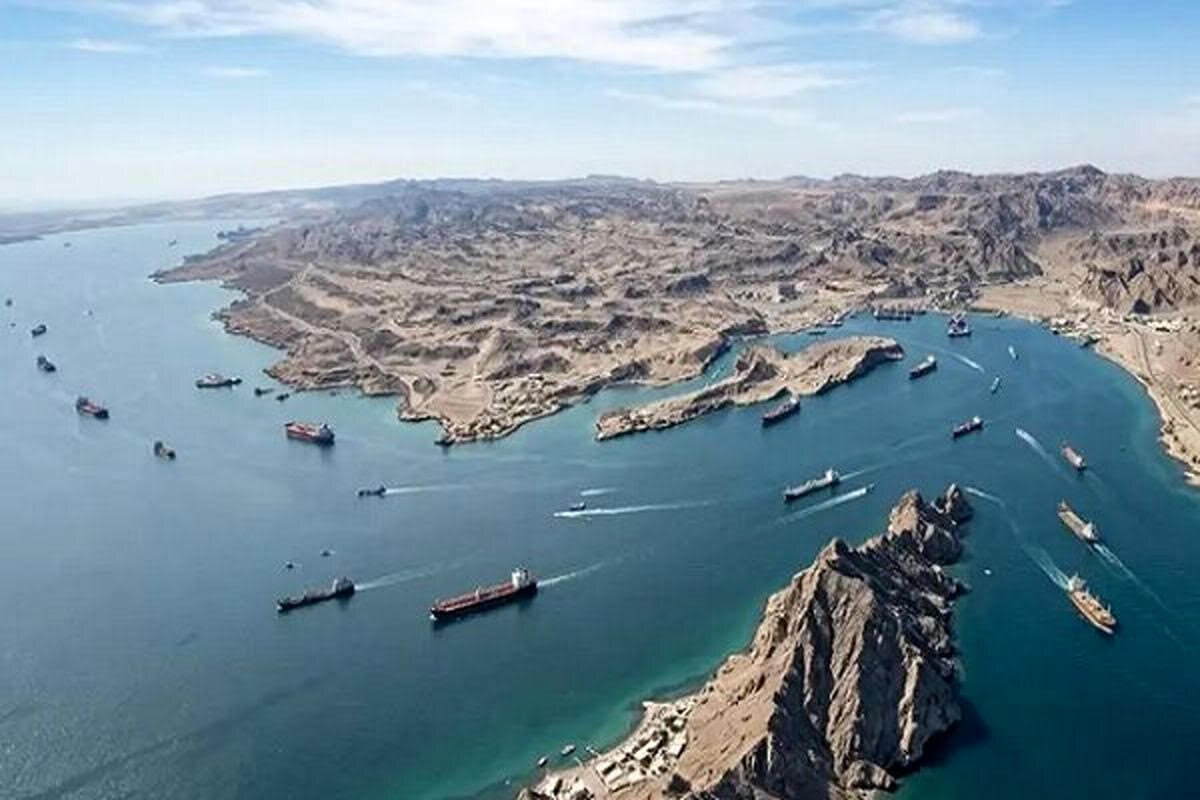
The statements by senior military figures and defense officials address several interconnected issues, including Iran’s military preparedness following recent hostilities, the strategic management of the Strait of Hormuz, the future of regional security arrangements and the growing controversy over Washington’s use of historical and civilizational rhetoric in its confrontation with Iran.
Military preparedness and deterrence
Iranian military officials say the country has drawn lessons from recent conflicts and strengthened its ability to respond to potential threats.
Rear Admiral Bemani, deputy commander of the Iranian Army’s Navy, said Iran had studied its adversaries’ weaknesses and developed new weapons and tactics considering recent military confrontations.
He said the Iranian Army’s Navy, working alongside Iran’s Islamic Revolution Guard Corps (IRGC) Navy, had inflicted significant blows on US forces at certain stages of the fighting. According to Bemani, US forces are now operating farther from Iran’s maritime borders than in previous periods.
He warned that any renewed miscalculation would prompt a response from Iran’s Navy and could force hostile forces to move farther away from the country’s maritime borders.
Bemani also distinguished between the responsibilities of the armed forces and those of the government in addressing the US naval blockade. While the government handles its political and economic dimensions, he said, the military remains focused on resistance, defense preparedness and responding to threats.
Caretaker Defense Minister Brigadier General Majid Ebn al-Reza has likewise emphasized the importance of strengthening Iran’s scientific, industrial and defense capabilities. He said national security requires the means to defend the country’s sovereignty and ensure that the armed forces are adequately equipped to protect Iran.
The emphasis on domestic capabilities reflects the Iranian military leadership’s stated position that deterrence depends not only on weapons and operational readiness but also on scientific advancement, industrial capacity and the ability to adapt to evolving military threats.
Strait of Hormuz: Strategic management and maritime sovereignty
The Strait of Hormuz remains another central element of Iran’s security calculations, given its geographical position and importance to global energy supplies.
Major General Yahya Rahim Safavi, head of the Lt. Gen. Qassem Soleimani Research Institute of Sacred Defense Sciences and Teachings, has identified the strategic management of the waterway as a key component of Iran’s approach to countering the US naval blockade.
Safavi said Iran’s geographical position and rights as a coastal state underpin its authority to safeguard its interests in the strait and surrounding waters. He stressed that exercising sovereignty should not automatically be interpreted as an intention to escalate tensions.
He also distinguished between closing the waterway and managing maritime traffic, arguing that these are fundamentally different approaches. In his assessment, the transport of military equipment that directly threatens Iran’s national security could make the management or restriction of maritime traffic a strategic necessity.
Safavi added that alternative pipelines do not eliminate the Strait of Hormuz’s importance to international energy markets.
According to the US Energy Information Administration, approximately 20 million barrels of oil and petroleum liquids passed through the strait daily in 2022, accounting for roughly one-fifth of global petroleum liquids consumption. The waterway is also a major route for liquefied natural gas shipments, making its security a matter of international economic significance.
Iranian officials maintain that maritime security cannot be separated from the wider political and military circumstances in the region. From their perspective, the management of the strait must take account of Iran’s sovereignty, the security threats it faces and the need to protect vital national interests.
Safavi has also presented Iran’s approach as part of a broader response to maritime pressure and sanctions, while arguing that regional security should be pursued through the participation of countries in the area.
Tehran rejects a US-led security order
Brigadier General Abolfazl Shekarchi, spokesperson for Iran’s Armed Forces, has said Iran will not allow the regional order envisaged by the United States and Israel to be restored in West Asia.
Shekarchi called on neighboring countries to reconsider their reliance on an ineffective US security umbrella. He argued that recent conflicts had demonstrated the risks of depending on Washington for regional protection.
He accused the United States of fuel smuggling, maritime theft and psychological warfare surrounding the Strait of Hormuz, adding that political statements and media messaging could not change realities on the ground. He also questioned Washington’s ability to guarantee regional security and urged neighboring governments not to base their security calculations on the policies of US President Donald Trump and Israeli Prime Minister Benjamin Netanyahu.
Shekarchi said Iran’s armed forces were more capable than before and remained prepared to defend the country against threats.
The statements reflect Tehran’s long-standing emphasis on regional participation in security arrangements. Iranian officials argue that countries sharing West Asia’s geographical and strategic environment should play the leading role in maintaining its stability rather than relying on military structures dominated by outside powers.
In this view, regional cooperation is not merely a diplomatic preference, but a security requirement shaped by geography, shared interests and the consequences of military confrontation.
Civilizational confrontation and Washington’s historical rhetoric
Alongside the military and strategic debate, Iranian officials have strongly criticized the use of historical and civilizational references in contemporary political disputes.
Caretaker Defense Minister Ebn al-Reza condemned remarks by US Secretary of State Marco Rubio in Athens that invoked the ancient conflicts between Greece and Persia. He warned against turning historical and cultural differences into a basis for present-day political or military confrontation.
“Civilizational confrontation is playing with fire,” Ebn al-Reza said, cautioning that those who ignite such tensions may not be able to control their consequences.
He stressed that Iran possesses an ancient civilization and a distinct national identity that do not depend on external recognition. He also argued that the country must strengthen its scientific, industrial and defense capabilities to safeguard its independence.
Brigadier General Ali Balali, an adviser to the commander of the IRGC Aerospace Force, offered a broader ideological interpretation of the confrontation. He said the United States and Israel sought to exploit the wealth and resources of Eastern countries while preventing the emergence of a new Islamic civilization.
“Civilization belongs to the East, and they have no civilization of their own,” Balali said.
He urged neighboring Muslim countries to be aware of efforts by Washington and its allies to prevent the peoples of the East and the Muslim world from becoming more capable and prosperous. Balali also criticized the historical record of Western powers, citing the mass killing of Indigenous peoples in the Americas and violence against populations in Africa.
He maintained that Western powers would ultimately fail to prevent the emergence of a global order shaped by Islamic civilization.
The controversy has also drawn attention to Trump’s statements during the war against Iran. On April 1, he threatened to bombard Iran and said US forces would “bring them back to the stone ages,” while also threatening Iranian power plants and other infrastructure. On April 7, he warned that “a whole civilization will die tonight, never to be brought back again” if Iran failed to meet his demands.
The remarks have become part of the wider dispute over the language used to describe the conflict and its potential consequences. Iranian officials have argued that such rhetoric cannot be separated from threats against the country’s infrastructure, population and sovereignty.
The exchange has also revived historical references on both sides. Iranian political figures have invoked episodes from the country’s past, including the capture of Roman Emperor Valerian by the Sasanian king Shapur I in 260 AD, in response to Washington’s references to ancient Greco-Persian wars.
For Iranian officials, the issue extends beyond competing interpretations of history. They frame it as a broader question of who has the authority to define civilization, determine the political future of other societies and shape the emerging international order.
Taken together, the statements by Iran’s defense and military officials present a unified message: the country intends to strengthen its deterrent capabilities, safeguard its sovereign interests in strategically important waters and resist external efforts to determine the future of West Asia. In their assessment, lasting regional stability requires respect for national sovereignty and a greater role for regional countries in shaping their own security arrangements, rather than renewed dependence on outside military powers.
source: tehrantimes.com