Pakistans cultural heritage takes center stage at Tehran exhibition
Pakistan’s cultural heritage takes center stage at Tehran exhibition
TEHRAN-An exhibition exploring Pakistan’s historical and cultural development, from ancient civilizations to its enduring literary traditions, was inaugurated in Tehran on Tuesday, bringing together diplomats, cultural officials and researchers to highlight the longstanding ties between Iran and Pakistan.
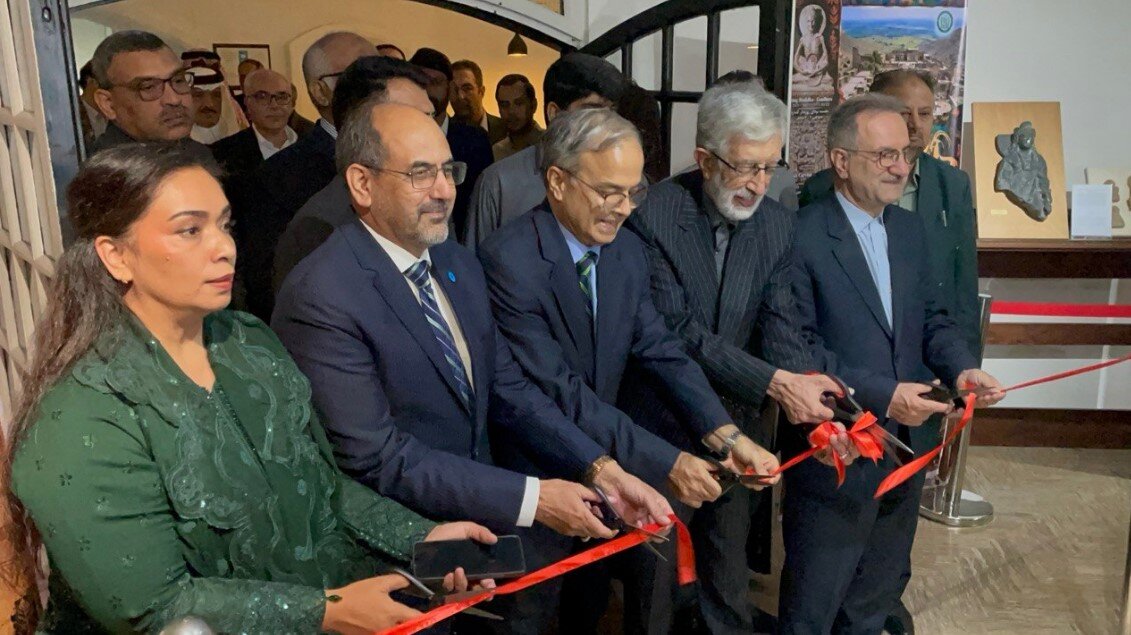
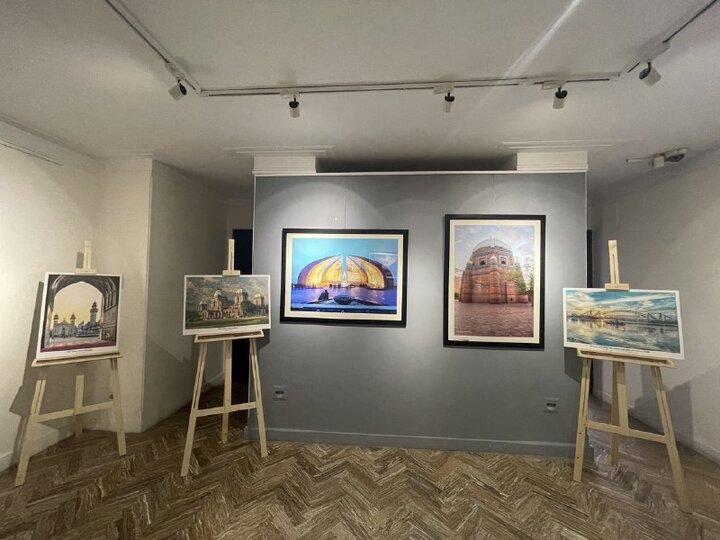
Titled “Pakistan Through the Ages,” the exhibition was organized by the Embassy of Pakistan in Tehran in collaboration with the ECO Cultural Institute (ECI). It featured historical photographs, calligraphy, paintings and visual records from different periods, offering visitors an overview of Pakistan’s rich cultural heritage.
The event also provided a platform for discussions on the countries’ shared civilizational legacy, the influence of Persian language and literature on the Indian subcontinent, and the potential for expanding cultural and tourism cooperation across the region.
Ambassador Imran Ahmed Siddiqui, Pakistan’s ambassador to Iran, was unable to attend the ceremony, as he was accompanying a Pakistani delegation led by Field Marshal Asim Munir during its engagements in Tehran. His remarks were delivered by Ismat Hassan Sial, deputy head of mission at the Pakistani Embassy.
Addressing the gathering, Ambassador Muhammad Hassan, president of the ECO Cultural Institute, welcomed the participants and described Pakistan as a country whose identity has been shaped by numerous languages, communities, customs and historical experiences.
He emphasized that Pakistan’s cultural richness could not be reduced to a single, uniform narrative. Rather, it reflected the distinct traditions of its regions and communities, each contributing to the country’s broader national identity.
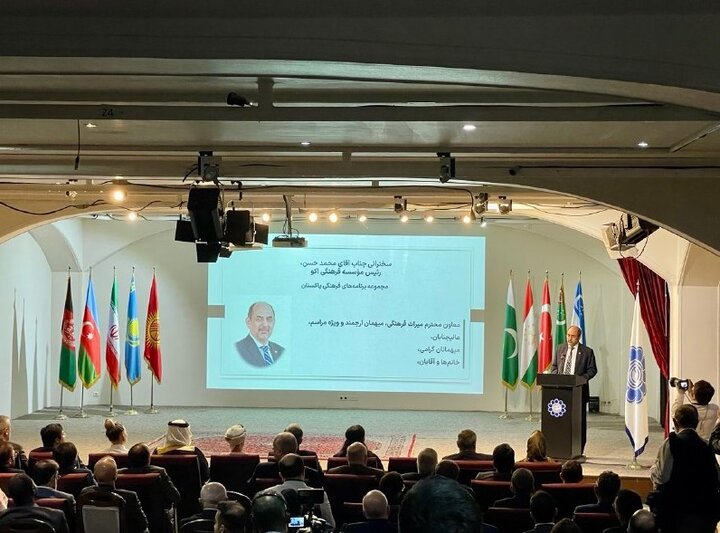
Hassan referred to the Sufi poetry and music of Sindh, Punjab’s literary heritage, Balochistan’s poetry and handicrafts, and the storytelling and hospitality traditions of the Pashtun communities in Khyber Pakhtunkhwa. He also drew attention to the distinctive heritage of the Kalash communities in Chitral and the linguistic and cultural diversity of Gilgit-Baltistan and Hunza.
These regions, he said, bear witness to centuries of interaction among South Asian, Central Asian and Tibetan cultures. Mountain ranges, rather than serving merely as barriers, have often provided routes for trade, migration and cultural exchange.
He added that national unity did not require the erasure of cultural differences. Respect for local identities and support for their development could instead strengthen social cohesion and deepen mutual understanding.
The exhibition also highlighted the influence of Islamic civilization and Persian cultural traditions on Pakistan’s historical and literary development, underscoring the role of language, music and poetry in connecting communities across the region.
Anoushirvan Mohseni Bandpei, Iran’s deputy minister of cultural heritage, tourism and handicrafts for tourism affairs, highlighted the potential of the Economic Cooperation Organization (ECO) to promote regional integration and create new opportunities for sustainable development.
He said tourism could serve as an effective instrument for economic growth, closer cooperation among member states and greater familiarity among their peoples. Developing joint tourism routes, facilitating travel, promoting shared cultural attractions and encouraging cooperation between public and private sectors were among the measures that could advance these objectives.
Mohseni Bandpei also emphasized Pakistan’s strategic geographical position at the crossroads of South Asia, Central Asia and West Asia, describing the country’s active participation as important to the realization of ECO’s regional goals.
Turning to bilateral relations, he said Iran and Pakistan shared interests in regional peace and stability, economic development, public welfare and sustainable cooperation. Their relationship extended beyond political and economic ties to encompass a long history of cultural, linguistic and literary interaction.
He also welcomed Pakistan’s diplomatic efforts to encourage dialogue and peaceful negotiations, stressing that mutual understanding and confidence-building were essential to lasting peace. Expanding language education, academic exchanges and opportunities for younger generations to become familiar with thinkers such as Allama Muhammad Iqbal and Jalal al-Din Rumi could further reinforce the cultural bonds between the two nations.
Gholam-Ali Haddad-Adel, president of the Saadi Foundation, also addressed the gathering, describing Islam and Persian literature as fundamental links between Iran and Pakistan.
He said Persian had played a significant role in the transmission of Islamic thought to the Indian subcontinent, particularly through mystical literature and poetry. The historical influence of Persian, he added, remains visible in Urdu and Pakistan’s literary traditions.
Haddad-Adel pointed to the substantial collections of Persian manuscripts preserved in Pakistani libraries and the contributions of generations of Pakistani poets who wrote in Persian. He also highlighted the importance of Allama Iqbal, whose intellectual and literary legacy represents a significant connection between the two countries.
Drawing a comparison between Lahore and Isfahan, he noted that the cities share recognizable cultural and historical features that reflect their longstanding connections.
The speakers agreed that the region’s shared heritage provides a valuable foundation for closer cultural relations and regional cooperation. The exhibition served as a reminder that centuries of interaction among civilizations have left a lasting imprint on the languages, literature and traditions of the peoples of the region.
Photo : Left to right: Deputy Head of Mission at the Pakistani Embassy Ismat Hassan Sial, President of the ECO Cultural Institute Muhammad Hassan, Secretary General of the ECO Asad Majeed Khan, President of the Saadi Foundation Gholam-Ali Haddad-Adel, and Deputy Tourism Minister Anoushirvan Mohseni Bandpei (Mahnaz Abdi/Tehran Times)
SAB/
source: tehrantimes.com