The legacy of strategic patience
The legacy of strategic patience
LONDON -- Strategic institution building characterized Iran’s strategic patience phase, whereas now is the moment of testing. The current transformations cannot be separated from the prolonged period that Iran experienced under the leadership of Sayyed Ali Khamenei. It was characterized by a policy of strategic patience and an avoidance of escalation into an all-out confrontation.
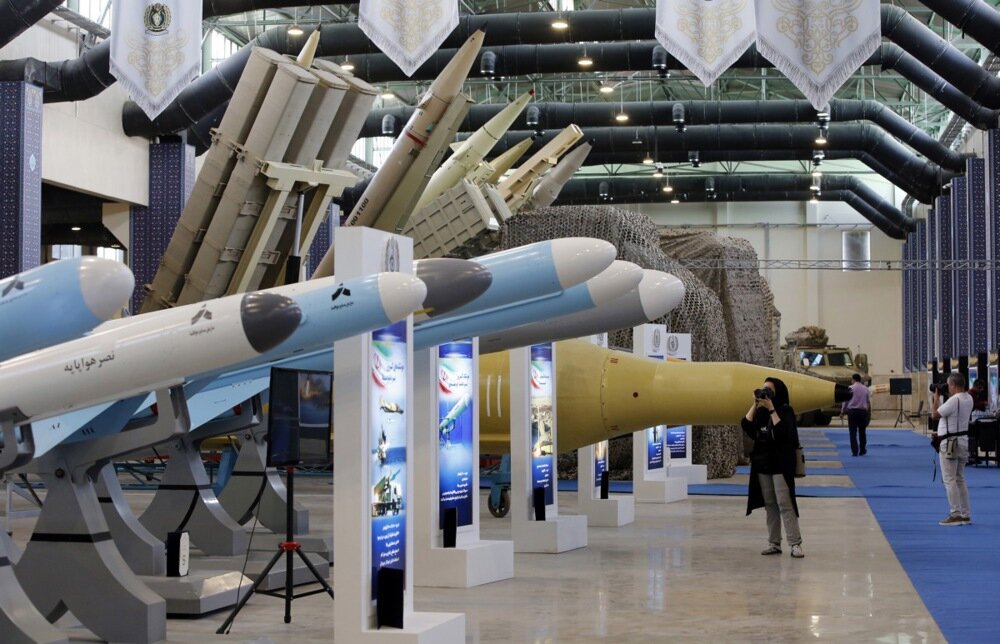
Since Sayed Ali Khamenei assumed leadership, emphasis was placed on building institutions, expanding them, strengthening their reach and consolidating their ability to endure. Despite the breaches and vulnerabilities to which they were exposed, this period witnessed the emergence of deeply rooted institutional, military, security and political structure. These have now become a fundamental part of Iran's ability to engage in confrontation.
This does not mean that these institutions were immune to infiltration. Rather, the central point is that the accumulation of institutions and capabilities over many years enabled Iran to reach a stage where it could sustain confrontation, despite attacks and losses.
However, the policy of strategic patience did not leave behind institutional legacies alone. It also contributed to the emergence of a political current that believes in maintaining this policy and avoiding direct confrontation. This is based on the conviction that patience and negotiations may be less costly than war.
Consequently, the developments witnessed in the current Iran-US. confrontation place this political current before a difficult test. This is as realities on the ground undermine the belief that avoiding confrontation is the most effective option under all circumstances.
Under the circumstances faced during the leadership of Sayed Ali Khamenei, strategic patience was the fundamental approach for continuing the mission. However, when war becomes inevitable, confrontation and diplomacy must become the central approaches, rather than continuing to tolerate violations and acts of aggression.
The more this approach loses its influence over decision-making, the greater Iran's and the Axis of Resistance’s ability to move from a policy of absorbing pressure, to one of imposing corresponding costs on their adversary.
Herein lies the paradox: the period during which institutions were established under the banner of strategic patience, may prove to be the very period in which these institutions are used to change the rules of confrontation. The institutions have developed the capacity to withstand pressure and operate under increasingly complex conditions.
Iran has not merely confronted the attacks; it has also adapted to the conditions of war and drawn lessons from the realities imposed by the confrontation. The significance of this lies in several interconnected areas. This includes the following: understanding the enemy's methods, such as how the United States and the Israeli occupation entity select their targets, determine the timing of their strikes and identify what they consider to be the centers of gravity. These are areas they believe the destruction will weaken or paralyze the resistance's ability to respond.
Protecting domestic capabilities: reassessing the means of protecting facilities and military, security and political centers, while addressing the infiltrations and vulnerabilities that may emerge during the confrontation.
Assessing the enemy's capacity for attrition: monitoring the volume of ammunition, resources and operational capabilities consumed by the enemy, as well as its ability to sustain mobilization, deploy forces and bear the associated costs.
Managing domestic resource consumption: balancing available resources against the demands of sustaining the war, and establishing priorities in a way that prevents Iran's capabilities from being depleted prematurely.
Strengthening domestic manufacturing: developing domestic manufacturing, production and replenishment capabilities, thereby giving Iran greater capacity to sustain the confrontation.
Distributing decision-making centers: strengthening the ability to make decisions and maintain operations even if certain leadership centers come under attack.
Military decentralization: distributing capabilities and responsibilities across multiple centers, ensuring that the targeting of a single location does not paralyze the entire system.
Rebuilding forces through accumulated knowledge: drawing on the information accumulated about the enemy's methods, strengths and weaknesses to rebuild and develop forces based on a realistic understanding of the nature of the confrontation.
Assessing potential targets: studying the types of targets that the enemy may seek to strike and preparing for the possibility of attacks by distributing risks. This is rather than assuming that military and political infrastructure will remain beyond the reach of targeting.
The significance of these factors lies in the opportunity they provide Iran to move beyond simply absorbing attacks and towards developing its methods of confrontation, based on practical experience. War does not merely expose weaknesses, it also reveals the extent to which each side is capable of learning, adapting and reorganizing its capabilities.
source: tehrantimes.com