Democrats victory could constrain US military escalation in Iran American sociologist
Democrats’ victory could constrain US military escalation in Iran: American sociologist
TEHRAN- Paul Joseph, professor emeritus of sociology at Tufts University, specializes in peace and conflict studies, US militarism, military interventions, and the relationship between public opinion and foreign policy.
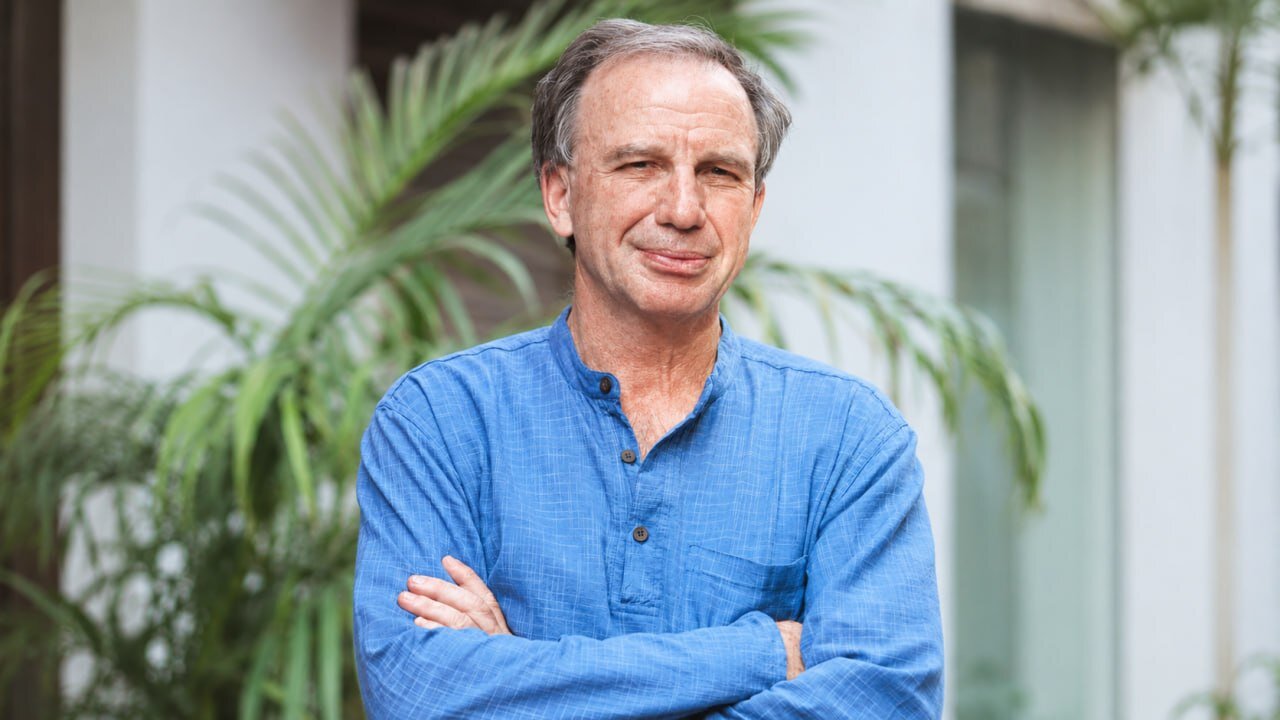
Following the Democrats’ gains in the November 3, 2026 midterm elections, questions have emerged over whether the results will strengthen congressional opposition to President Donald Trump’s policies, particularly the ongoing war against Iran. Joseph’s research examines how public attitudes and domestic political pressures shape US decisions on war and military intervention. In an interview with the Tehran Times, he discusses the prospects for congressional efforts to stop the war, the growing influence of anti-war sentiment, and the possibility of renewed diplomatic negotiations.
Below is the full text of the interview:
On October 27, Le Monde published a collective appeal titled “The Iranian People Must Not Pay the Price of Political and Military Objectives,” calling for the protection of Iranian civilians, respect for international humanitarian law, and access to essential supplies and humanitarian aid. What motivated you to sign it, and what message did you hope to convey?
Well, I was pleased to receive the invitation. For many people in the United States, as we saw in the election last night especially, this is a wrongheaded war that is contributing mostly to casualties in Iran, though it also has costs for American citizens and others throughout the Middle East. You want to be able to do something to register your opposition to the insanity of Trump's policies, and signing the appeal just seemed like a very good way to at least do something modest.
You have studied American public opinion and foreign policy for decades. Do you think the war against Iran has exposed a growing gap between the foreign policy priorities of US leaders and the views of ordinary Americans?
Absolutely. I think it's a topic that I have studied for many years. Following the Vietnam War, 50 years ago, it has become more difficult for American policymakers to follow a war policy explicitly and directly. They cannot take for granted the support of the American people when they pursue a war policy. They might still be able to go to war. I'm not saying the constraints on war are absolute, but it's become more difficult for them to do that.
Every time Washington engages in hostilities, war managers must manage opinion in the United States in a more complex and convoluted ways.
And that tension between going to war and managing public opinion in the United States carries contradictions that make it more difficult to pursue a war policy. Not impossible, but more difficult. What we saw last night in the elections was a great example of the underlying opposition to war that resides in the United States under almost every circumstance.
You have written extensively about US military interventions, including in Vietnam, Iraq, and Afghanistan, as well as the military's efforts to understand and influence other societies. Do you think Washington has fundamentally misunderstood Iranian society and underestimated the consequences of attacking Iran?
No, I don't think American policymakers understand Iranian society, Iraqi society or Afghan society. I don't think they understand any of those societies.
In the case of Vietnam, the commitment to resist US intervention was absolute. There was no magic combination of bombing, ground troops and strategy on the part of the US military that would have resulted in a decision by the Vietnamese to stop fighting. Their nationalism was so strong that they were going to resist regardless of what the United States did.
I think it's true also in the case of Iran right now. Trump might think that there will be some sort of message or military strategy that will result in capitulation on the part of the Iranian authorities. I think the consequences for the Iranian authorities might be extremely costly in terms of civilian casualties and the Iranian economy. But the commitment to resist the United States remains and is pretty much absolute. It's not susceptible to strategy A versus strategy B versus strategy C.
Those strategies may be different, but none of them will result in, "Okay, we give up. We'll do whatever you want."
In your book Are Americans Becoming More Peaceful?, you examine changing American attitudes toward war. Do you believe Americans are genuinely becoming more committed to peace, or is their opposition to war primarily driven by its human, economic, and political costs?
It's really a complicated question about what peace means. Is peace just sensitivity to the costs of war, or is it something deeper, more organic?
I think it's useful to make a distinction between peace as opposition to the costs of war, where I do think the United States is very peaceful, as are most countries, and a deeper-seated peace, where there's some sort of recognition that we have an obligation, as human beings, to recognize the human status of people who are different from ourselves.
I like to think that Americans are becoming more peaceful in both senses: opposition to the costs of war and the deeper meanings of peace.
Let me just give an example of this from last night's election. There was a Muslim who was running in Michigan, Abdul El-Sayed.
He was subjected to the worst forms of Islamophobia, being attacked because he was a Muslim. Those attacks certainly would not be an example of a peaceful attitude on the part of Americans.
But I think it's also remarkable that, even with those attacks and the money that was spent in opposition to him, hundreds of millions of dollars, he still won. I'm not saying that the United States, as a society, has conquered Islamophobia. That would be a very, very big overreach.
But the fact that a Muslim under attack from the media and from politicians with lots of money could be elected in Michigan is a remarkable change, I think, in the United States. It could not have happened 10 or 20 years ago. So there's a lot of progress in that, even though the progress contains all sorts of contradictions and tensions.
Also, going back to the question about sensitivity to the costs of war versus the deeper meanings of peace, an example is the illegitimate war with Iran. On the first day or two, the United States bombed the girls' school in Tehran, and approximately 170 children and teachers were killed. That' was a terrible act of war.
But the Trump administration and the Pentagon have had to work so hard to keep collateral damage and civilian casualties out of the eyes of the American public because, if those costs are present, opposition will really grow.
I think that can be compared to the Vietnam War, where 200 civilians were being killed every single day. Over two million people died. That was not visible to most Americans, even though there was a huge anti-war movement that did try to call attention to those casualties. In mainstream politics, the catastrophic civilian consequences of the war were largely invisible. The killing of more than 450 villagers in My Lai took a long time to get into the media.
Now, this incident in Iran, the bombing of the schools and the killing of the girls, is in the media. So the sensitivity to the costs of war is there.
Again, it doesn't qualify as peace in the sense of a Gandhian vision of peace, namely the full embrace of the other or an absolute commitment to nonviolence, even though those aspects are present in US society. But I still think it's a significant constraint on US war policies.
You can see this not just in sensitivity to civilian casualties, but also in the fact that the United States can't really use ground troops in a situation where it anticipates that there will be a lot of American casualties. There are also the costs of deploying aircraft carriers and the wear and tear on human beings. That affects the American public, and points to the need for a change in policy.
So I think you're right in making the distinction between those two senses of peace, but I think they're helping each other. They're talking to each other.
At a rally in Tennessee on October 10, Trump told his supporters: “I could say the stupidest things and you clap, ‘Oh, I love you so.’” The audience responded with laughter and applause. From a sociological perspective, what explains the persistence of this loyalty? Is it rooted primarily in ideology, culture, identity, economic interests, or distrust of the political establishment?
One of the biggest puzzles is why this MAGA Trump base of support persists and why it even exists. Why did 40 percent of the public support Trump? It was always a minority, but a significant minority. Why did they support him?
Even though I have studied that question and read a lot, it's very hard to answer.
I think Trump was able to tap into the resentment within American society and use it for his own benefit. He was able to gain support because in many ways US society is not doing very well. There's substantial poverty, and many people who are living right on the edge.
You see the reaction to grocery prices, the price of gas, the loss of health care and rising premiums. Even though people may not be poor, they are living paycheck to paycheck, working long hours or struggling in many ways.
What I think is really huge about last night is that the resentment over those conditions, which used to work in Trump's favor, has now been refocused and is working against him.
His approval level went from 50 percent when he first came into office two years ago, at the start of his second term, down to 30 percent. He lost 20 points. There was a huge wave of reaction.
So I think it's a double-sided story. On the one hand, you have this perplexing problem of why even a quarter of the country would support Donald Trump, given his personal behavior, how obnoxious he is, his failure to make good on his promises, the way he rips off his own supporters, his heavy-handed approach to borders and the huge levels of corruption. It’s fair to ask, why does anybody continue to support him?
But the second part of the story is that Americans are changing their attitudes, too. So I think the Trump movement is over.
Alongside the election results, the United States has witnessed a wave of public demonstrations, including the No Kings protests, which began in February 2025, as well as anti-war activism. To what extent can peace movements influence government policy and challenge the country's entrenched militarism?
The simple answer is yes. But I think it's not a simple matter of having a movement on one side and government policy on the other, with the movement forcing the policy to change. It's more nuanced, more layered and more complicated.
If you look historically at Vietnam, Iraq, Afghanistan, nuclear weapons policy and even now in Iran, one of the things peace movements do, even if they don't directly force the government to take the opposite direction, is deny certain policies that the government wants to follow. Peace movements may not change goals but they can change the means that war managers want to follow to achieve those goals.
In Vietnam, the peace movement eventually help stop the bombing of North Vietnam and made it impossible for the United States to commit ground troops again. It also forced the United States, in nuclear weapons policy, to engage in diplomacy with the Soviet Union about reducing the number of nuclear weapons.
Or, in the current situation, the movement can prevent the use of ground troops against Iran.
So it's not changing policy in 100 percent terms, but it's forcing the government to adopt a Plan B rather than follow its preferred Plan A.
That sensitivity to the costs of war is an example of how peace movements, even if they are not fully influential, can significantly push governments to adopt policies they would not want to pursue in the first place.
Another way peace movements have influence is through third parties, such as the media which can also call attention to the costs of war.
Media coverage can also encourage opposition political candidates to speak out against the war. Certainly, in the election, Democrats felt very comfortable opposing the war because they were confident that most of the American population was opposed to it.
So the media can provide channels of influence that are significant, even if the relationship between movements and policy is not direct.
The United States continues to conduct military operations abroad, often citing national security concerns, including in Iran. Given your research on militarism and its roots in American political and economic structures, can anti-war movements meaningfully influence US policy, regardless of who holds power?
I think you're absolutely right in pointing to the ways in which American society contains militaristic elements such as the military-industrial complex.
The Pentagon spends so much money on weapons, munitions and overseas bases. I mean, it's staggering. So your question about how an anti-war movement operates in the context of all this commitment to militarism is a very good one.
On the one hand, you have this huge establishment, with the United States now spending a trillion dollars a year on defense. You can't possibly ignore that. On the other hand, you have political and cultural constraints on how those munitions are used.
Where intervention is hidden, that militarism can operate . An example would be the attacks on the presumed drug shipments, the small boats in the Caribbean and the Pacific, where the United States has killed something like 250 people. But this is largely invisible to the US public.
But where the costs are visible, I don't think the United States can pursue the same kind of knee-jerk, automatic military policies, even if it has this huge establishment.
In another piece of the puzzle, I think the United States' relationship with Israel is changing significantly.
For years , the United States supported Israel's military policies. Even Democrats, like President Obama, signed huge packages of military assistance to Israel.
Biden did as well, just as much as Trump and the Republicans did.
But now I think that commitment to Israel is being rethought inside the United States, and certainly inside the Democratic Party.
More than half of the people who voted for the Democratic Party are opposed to military aid to Israel. So that's really a change, and it's happening despite that huge institutional commitment to military spending.
So, is the glass half full or half empty? Or maybe only a quarter full and three-quarters empty.
The empty part is, as you're pointing out, the Pentagon budget, the commitment to militarism and the history of Washington’s interventions. But the part that is at least partly full from the standpoint of peace policies is the increasing sensitivity to the costs of war.
Even within the military there's sensitivity to civilian casualties. One of the first things new Secretary of Defense Pete Hegseth did was dismantle the unit within the military that tracked civilian casualties. They didn't want the military studying or thinking about civilian casualties.
But isn't it interesting that the military did have a sub-agency devoted to assessing civilian casualties? It could say, "If you do this, the civilian casualties will be very high. You can't go in that direction."
Obama had that policy when he was using drones in Afghanistan. If the civilian consequences of using drones in a particular strike were over a certain threshold, they couldn't be used.
That is not perfect. I'm not trying to oversell it. But it's still a significant change from the Vietnam era or from the World War II era.
I think that will be reestablished after Trump leaves office. We are all going to have to recover from Trump in so many ways. Last night was one of the first necessary steps. One of the places where we will recover is by reintroducing a sense of professionalism within the military regarding war costs and civilian casualties.
In the book Are Americans Becoming More Peaceful?, I track all of the ways in which the Pentagon or Washington, when pursuing a war policy, needs to cover it over and paper it over. There are contradictions that accompany that process of trying to hide what's going on, and those can backfire.
The best example goes back to the Vietnam War, when the United States bombed Cambodia and tried to keep it secret. When news of the US bombing of Cambodia was leaked to The New York Times, the Nixon administration tried to prevent further news about the bombing. Those efforts produced the Watergate scandal.
The Watergate scandal was rooted in opposition to the Vietnam War. So I can't predict mathematically that significant opposition to a war will produce a scandal that will bring down an administration. But that did happen at the end of the Vietnam War. The Watergate scandal brought down the Nixon administration, and it was rooted in opposition to the war.
Pete Hegseth, the defense secretary, has been facing a movement to impeach him, and that may well happen now with the new Congress. This relates to Hegseth's efforts to control the military and reverse many of the recent trends towards modernization such as the promote of women and minorities. The military does not like Pete Hegseth. They don't like their defense secretary.
I can't predict where that's going to go. But it's interesting that not only is the anti-war movement opposed to Hegseth, but there are also elements within the military that are opposed to him.
I don't think the edifice of militarism that you're describing, and correctly pointing to, is a monolith. I don't think it consists only of a straightforward commitment to using military force wherever people want to use it.
Do you expect the Democrats to use their gains in Congress to constrain Trump's foreign policy, particularly regarding the war against Iran? More broadly, what would it take for shifts in public opinion to translate into meaningful changes in US foreign policy?
I do think the Democrats are going to constrain Trump. We've already seen it with the War Powers Act vote and opposition to funding the war.
Many of the leaders of the Democratic Party were saying last night that we can't just be in opposition to Trump. We need to do something more proactive ourselves. Much of that has to do with domestic policy.
But one of the things I think we can count on from January onward is that, if the war with Iran is still going on, there will be new efforts to stop it. Congress will be more dedicated to trying to stop the war.
I don't have a crystal ball. My own judgment and my own hope are that the overwhelming victory of the Democratic Party last night will serve as a constraint against escalating the military strategy in Iran.
There will be some effort to pursue negotiations, a new effort to do that. That's my hope, but I don't have a crystal ball.
Trump is unpredictable, so he may still go ahead with the attacks. Israel's public opinion is another factor, too, because unfortunately the peace movement in Israel, which used to be significant, has really declined in significance compared with even 10 years ago, unlike in the United States.
One of the things I discuss in my work is anticipatory de-escalation. That means officials want to pursue a military policy, but are constrained from doing so because they anticipate that, if they did, there would be widespread opposition.
Given the opinions expressed in the election last night, I think one thing that will happen, not only in the Democratic Party but also among the public at large, is that if the United States escalates militarily in Iran, opposition will strengthen. It will strengthen not only in the Democratic Party but also among the public. I feel optimistic about that.
Following the election results, Trump threatened to use his veto power against legislation advanced by the Democrats. How much leverage does he retain to block their agenda, and could this threat constrain their efforts on foreign policy and domestic issues?
I think both remain to be seen. It depends on how much space he thinks he has. I think he will try to veto many of the proposals that will emerge from the Democratic Party.
As I said before, the Democrats are aware that, even with the election, they have to offer more than opposition to Trump. They have to support health care reforms, address inequality between rich and poor, and deal with taxation policy and tariffs. They will also have to stop the war and seek a diplomatic solution.
Trump will try to veto it. One of the questions will be whether Republicans continue to be in lockstep with Trump or whether they will say that the time to break with Trump has come. even if it only means preserving their self-interest. Republicans may go along with some of this Democratic legislation and produce a veto-proof majority in the Senate, meaning two-thirds of the Senate.
It looks like the Democratic Party has 55 seats, maybe 56. So they would only need 10 Republican votes to make it veto-proof.
There are a lot of uncertainties. The Democrats are also going to pursue the Epstein files. Many people think there is incriminating information in the Epstein files about Trump himself, not just “the Epstein class”. If that surfaces, I don't think that Trump will be able to resist. Trump certainly behaves as though there is incriminating information in the files.
So there are a lot of uncertainties over the next two years: whether the Epstein files will come out, whether Republicans will distance themselves from Trump and, in their own self-interest, go along with some Democratic legislation, and how Trump himself sees his legacy.
Trump may focus only on his construction projects and retreat into his own shell. There is also the question of whether investigations into his own finances and his family's finances will reach a point where he is politically handicapped and can no longer veto legislation. In the short run, we will have to maneuver around Trump but I also hope that we are on the cusp of some significant changes in Washington, both domestically and how the U.S. interacts with the rest of the world.
source: tehrantimes.com