How October 7 shattered Netanyahus grip on power and Israeli stability
How October 7 shattered Netanyahu's grip on power and Israeli stability
The global far-right alliance has suffered three consecutive defeats in recent weeks, beginning with Flavio Bolsonaro's defeat in Brazil's presidential election and his subsequent flight from the country. This was followed by Benjamin Netanyahu's defeat, as the number of seats held by his parliamentary coalition fell below the required majority, and culminated in Donald Trump's major setback in the US midterm elections, which saw Republicans lose control of both the House of Representatives and the Senate, handing control of Congress to the Democrats, alongside the loss of several governorships.
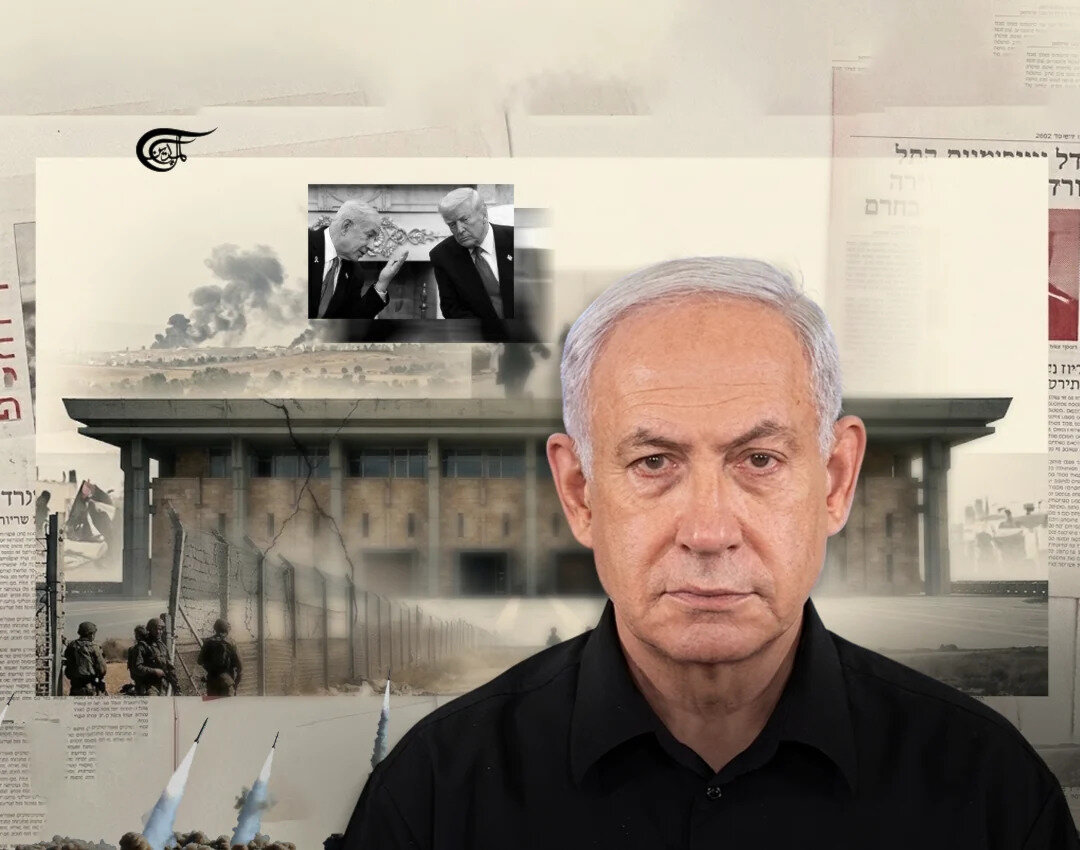
What happened in the United States can be attributed to the defeat in the war against Iran, a matter that, according to the article, enjoys broad consensus. Indeed, this defeat has been explicitly acknowledged not only by opponents but also by Republicans, Trump himself, and his Vice President JD Vance.
Nevertheless, it is difficult to explain these political developments independently of the consequences of October 7. Zohran Mamdani's rise to the position of mayor of New York was, to a considerable extent, the result of public opposition to the crimes committed by Netanyahu in Gaza and the support American officials provided for those crimes. Similarly, the victories of candidates opposed to the Israeli regime's crimes in the Democratic Party primaries, and their subsequent entry into Congress, reflect another dimension of the repercussions of October 7.
Where did the story begin?
The operation of October 7, 2023, which marked the beginning of the Battle of Al-Aqsa Flood, represented a turning point in weakening multiple aspects of life and power within the Israeli entity, including its population and Benjamin Netanyahu personally, in his capacity as prime minister.
Just eleven months before the operation, Netanyahu had achieved a remarkable electoral victory that resulted in the defeat of the opposition and the disintegration of its coalition. He had begun preparing to consolidate his rule indefinitely, effectively becoming a king over the right-wing camp, which commands a majority within Israeli society. However, men from Gaza took him from paradise to hell.
This article seeks to provide a clear picture of the process that led to these transformations.
Five consecutive early elections and a storm of instability
Since late 2018, the Israeli entity entered a period of political instability that led to the collapse of the governing coalition, the dissolution of parliament, and the holding of early elections on five consecutive occasions.
- April 2019: The election ended without a decisive result, prompting another election.
- September 2019: This election also failed to produce a conclusive outcome, leading to yet another vote.
- March 2020: A national unity government was formed based on a rotating premiership between Netanyahu and Benny Gantz, who was leading the opposition at the time. However, this heterogeneous government collapsed after thirteen months.
- March 2021: The opposition succeeded in removing Netanyahu from power and forming a government. Nevertheless, this government suffered from several weaknesses:
-The coalition, which brought together left-wing, centrist, and right-wing parties, was deeply divided and lacked ideological cohesion.
-The rotating premiership arrangement reflected political instability and the distribution of power among competing factions.
-Naftali Bennett, who assumed the premiership first under the rotation agreement, controlled fewer parliamentary seats than Yair Lapid, who led the largest opposition force.
-The government was formed as a minority government after the opposition failed to secure the required majority of 61 seats in the 120-member Knesset.
-It nevertheless won a confidence vote with 60 votes in favor and 59 against, benefiting from the fact that supporting votes outnumbered opposing votes. - November 2022: Netanyahu's coalition secured 64 seats, exceeding the required 61-seat majority by three seats. At a later stage, the right-wing coalition's representation increased to 68 seats following Gideon Sa'ar's return to Netanyahu's coalition after a period of separation.
The direction of political developments
The Israeli entity spent four years in a state of political instability until the fifth election, held in November 2022, brought about the restoration and consolidation of political stability.
However, eleven months later, the October 7 operation turned the situation upside down.
An emergency government was formed with the participation of the opposition under an unusual arrangement in which major strategic decisions were taken by a five-member war cabinet. Three members came from Netanyahu's coalition, while the other two represented the opposition: Benny Gantz and Gadi Eisenkot.
Meanwhile, the remaining ministers retained their positions within the broader government.
Within this council, the prime minister, the defense minister, and Gantz, serving as a minister without portfolio, held voting rights, while Eisenkot and Strategic Affairs Minister Ron Dermer participated as observers.
Netanyahu managed to complete the four-year parliamentary term, but the political landscape now appears to have returned to its pre-November 2022 condition, with three possible scenarios emerging: an inconclusive election leading to another early vote; the formation of a rotation government in which Netanyahu serves as prime minister first, followed by Eisenkot; or the formation of a heterogeneous opposition government based on a coalition with Palestinian Arab parties.
Some consequences of October 7 became apparent quickly, while other dimensions of the operation's repercussions require more time to become clear.
The latest election is an example of this. Three years after the October 7 operation, it has pushed the Israeli entity, which had appeared to have reached safe harbor, back into a turbulent sea of political instability.
What if October 7 had never happened, or its consequences had been resolved?
To assess the impact of October 7 on Netanyahu's political fate, it is necessary to examine the position the Israeli prime minister would have occupied in the absence of this variable.
Had the October 7 operation not taken place, or had Netanyahu succeeded in overcoming the problems it created, he could have consolidated his position as the undisputed leader of Likud and the right-wing coalition, without the emergence of figures such as Naftali Bennett and Gideon Sa'ar, who established their own independent political frameworks, or the departure of figures such as Avigdor Lieberman from the coalition.
Had Netanyahu continued along the political trajectory established by the November 2022 elections, he could have brought experienced bureaucratic figures into Likud, rather than recruiting prominent and extremist personalities whose social influence and political ambitions might create difficulties for him.
Such an approach would have strengthened the party's effectiveness, increased its internal discipline, and made it more responsive to his directives.
Strengthening Likud would also have reduced Netanyahu's dependence on alliances with leaders of highly extremist parties, such as Itamar Ben-Gvir, allowing him to deal with these figures and political forces from a position of strength rather than falling under their influence and becoming vulnerable to their pressure.
How did 'Bibi' fall into the trap
It is said that Netanyahu had been seeking, since the spring of 2023, to open a military front in Gaza. However, he was pursuing this objective gradually, at a slow and calculated pace, while simultaneously shifting the operational center of gravity toward the Strip.
Although the number of ground forces deployed around Gaza was not particularly large, the area had become a top priority in terms of reconnaissance operations, aerial activities, and military movements.
The planning of military operations in Gaza, followed by southern Lebanon, was based on several considerations.
The first was that the Israeli regime's patience was approaching its limits and that it believed the existing situation had to be brought to an end at some point.
The second consideration concerned the discovery of oil and gas fields in the maritime border areas of Gaza and Lebanon. According to the article, these fields would not only generate tens of billions of dollars in annual revenue but would also provide Tel Aviv with net profits estimated at tens of billions of dollars, given the exceptionally high profit margins in the energy sector.
The third consideration involved the desire to settle regional conflicts before the emergence of a fully developed multipolar international order, coinciding with the rise of new regional powers.
If Gaza and other areas continued to constitute sources of threats to Israel, Tel Aviv would eventually face a future in which the United States no longer occupied its position as the leader of the unipolar international order. This would weaken Washington's ability to protect Israel at a time when emerging regional powers in West Asia could exploit these fronts against Tel Aviv.
Accordingly, a military strike was considered inevitable. However, the resistance in Lebanon changed the nature of the attack that the enemy had been planning to carry out.
The October 7 operation and the transformation of the enemy's planned attack
The October 7 operation can be examined from several perspectives, but its most significant impact was its transformation of the nature of the attack the enemy had prepared to launch.
The Israeli plan had been to carry out a surprise attack against Gaza, assassinate resistance leaders to create a severe shock, and subsequently continue the operation through aerial bombardment and a ground offensive aimed at decisively settling the battle.
Lebanon was intended to represent the next phase of this plan.
The Israeli regime exploited its intelligence capabilities and the extent of its security infiltration to carry out the pager explosions and assassinate commanders.
The enemy's level of intelligence penetration, situational awareness, and operational readiness had reached such an advanced stage that even the heightened vigilance developed over an entire year of war was unable to prevent the implementation of its plans.
The enemy implemented its plan after October 7. However, the war became a mixture of successes and failures from its perspective and ultimately failed to produce the results it had expected.
Regarding the changes brought about by the preemptive October 7 operation to the nature of the planned Israeli attack, four central points stand out.
1. Reversal of the element of surprise
Instead of the enemy beginning the war by taking the resistance by surprise, it found itself on the receiving end of a surprise attack.
2. Transition from a phased war to multiple fronts
The enemy had planned to wage war through successive phases. Instead, it faced the entry of Lebanon, Yemen, and Iraq into the front supporting Gaza from the outset, followed later by Iran.
Consequently, it found itself confronting preemptive initiatives from different fronts and an integration of the various theaters of confrontation.
Despite these developments, the enemy subsequently managed to separate the fronts from one another through various means and tactics. However, by that point, too much time had passed, and it was no longer possible to restore the conditions that had existed before the outbreak of war.
3. Disruption of "Israel's" equilibrium and its impact on decision-making
The war affected the Israeli regime's equilibrium and its decision-making mechanisms.
Regarding the pager devices, Yoav Gallant, the Israeli defense minister at the time, later revealed that the plan had been to detonate them on October 11, five days after the beginning of the war, according to the article, because of Israeli fears that Hezbollah might launch a surprise attack.
On the one hand, "Israel's" possession of the option to detonate the pagers indicates that the enemy had prepared a large-scale military plan in advance.
On the other hand, the intention to activate this option just five days after the October 7 operation indicates a disruption of the Israeli plan's equilibrium and a degree of haste and emotional decision-making in the use of an important strategic asset.
However, Tel Aviv ultimately used this asset an entire year later.
The disruption of the enemy's equilibrium is particularly significant given its advanced capabilities, prior preparations, and carefully developed plans. This disruption was reflected in the diminished effectiveness of the military and security assets employed by Tel Aviv.
4. Slowing the pace of military shocks and allowing time for adaptation
The planned Israeli operation relied on surprise and rapid execution, with the intention of delivering successive, devastating blows within a short period.
Although the enemy subsequently employed military and security assets capable of producing major shocks, the prolonged duration of the war gave the Axis of Resistance time to absorb these blows, reorganize its ranks, and restore its capabilities.
Had these assets been deployed within a short period, in accordance with the original Israeli plan, the resistance would have found it considerably more difficult to adapt to the new circumstances.
How was the cunning player deceived?
Netanyahu is a cunning political player who has successfully maneuvered around dozens of politicians, military officers, and intelligence personnel, managing to remain in power in the occupied territories for nearly two decades.
He brought Gideon Sa'ar back under his political umbrella and, through his maneuvers, pushed Benny Gantz, who had previously led the opposition, toward what resembles the end of his political career, at least for the time being.
Despite Netanyahu's considerable ability to manage scenarios designed to preserve his hold on power, he fell into an intelligence and cognitive trap.
Entrapping someone who had been known for decades for his precise calculations was no easy task.
The events of October 7 drew him into a domino effect of hasty decisions, forcing the prime minister to make a succession of urgent decisions amid unpredictable consequences.
The October 7 trap was based, in one way or another, on an analysis of the personality of one of the most prominent actors in the confrontation.
The turning point in this reverse-engineering process was a precise understanding of Netanyahu's psychological makeup, characterized by a combination of narcissism, including the belief that he was exceptional and invincible, and a deep fear of losing power.
This psychological makeup made him more susceptible to miscalculations and errors of judgment during the most sensitive moments of the crisis.
The final blow during the last sixty days
During the sixty days preceding the elections, the publication of documents and substantiated accounts concerning Netanyahu's role in the October 7 catastrophe, and the resulting intelligence failure that struck "Israel's" security establishment, completely transformed the function of the political tools on which he had relied.
Netanyahu had sought to use the elections to consolidate his authority, but his opponents employed harsh criticism of his performance on October 7, further complicating his political position.
Similarly, Netanyahu had long been accustomed to benefiting from the deliberate creation of military crises and shifting them into the sphere of foreign policy to secure scenarios that would guarantee his continued hold on power.
However, the wars of recent years now appear to have exhausted this political instrument and deprived it of its effectiveness.
source: tehrantimes.com