Blood in the Bekaa and Ain alHilweh Who protects Lebanons sovereignty
Blood in the Bekaa and Ain al-Hilweh: Who protects Lebanon’s sovereignty?
SOUTH LEBANON — The Israeli enemy has escalated its aggression against Lebanon, committing a massacre in the Bekaa Valley and launching a deadly strike on the Ain al-Hilweh refugee camp near Sidon.
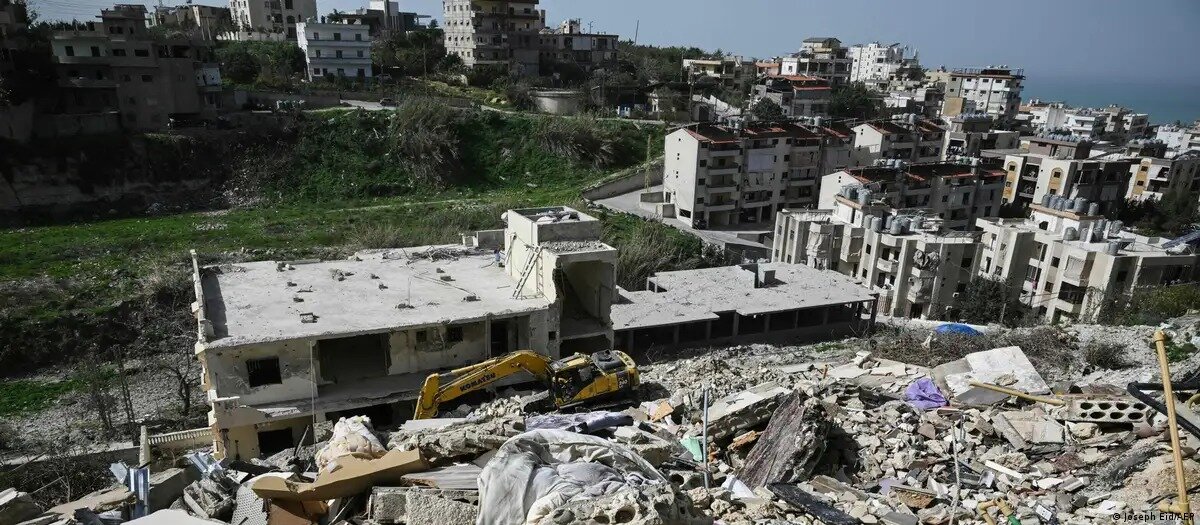
The attacks signal not only a dangerous military escalation, but a broader attempt to reshape political realities under the cover of firepower and intimidation.
In the Bekaa, dozens were killed and wounded as violent airstrikes targeted both the eastern and western mountain ranges. One of the raids leveled a building near the Al-Qard Al-Hassan Association along the Riyaq–Baalbek highway, reducing it completely to rubble.
Entire communities were shaken overnight, as rescue teams searched through debris for survivors.
The Gathering of National and Pan-Arab Parties in the Bekaa declared that “the Zionist killing machine has not been satisfied by the blood of honorable Lebanese who dedicated their lives and possessions for the freedom of land and humanity.”
The statement argued that the massacre—alongside systematic destruction in southern Lebanon—reveals an expansionist doctrine whose violent expression is evident in both Lebanon and Gaza. It also reaffirmed Lebanon’s commitment to international resolutions, particularly UN Security Council Resolution 1701, while accusing the Israeli enemy of repeatedly violating not only that resolution but the broader principles of international law.
In Ain al-Hilweh camp near Sidon, a new strike killed two men and wounded four others after days of intense drone surveillance.
Witnesses reported hearing three missiles, while Israeli media claimed the attack was launched from a naval vessel at sea.
The target was a center affiliated with Hamas, reportedly used as a kitchen and aid warehouse and previously as a headquarters for the joint security force in the camp. The two victims, Mohammad al-Sawi and Bilal al-Khatib, were members of Hamas’s youth committee and part of a group previously targeted in an airstrike on Khaled bin al-Walid Stadium last November that killed 13 young men.
Hamas and Islamic Jihad condemned the attack, describing it as another crime added to a long list enabled by ongoing international silence.
The strike comes amid increasing Israeli incitement against Palestinian Resistance factions in Lebanon and coincides with a Lebanese government plan, backed by the Ramallah Authority, to collect weapons from the camps.
Observers suggest that the combined pressure of external aggression and internal political campaigns seeks to turn public sentiment against Hamas and fragment the camp’s social fabric.
Meanwhile, tensions rose in northern Lebanon when U.S. occupation forces stationed at the Hamat Air Base left the facility to search for a suspected drone, causing alarm among residents.
Although military sources later indicated there were no signs of a terrorist act, the incident reflected the heightened state of alert surrounding U.S. forces in the region amid tensions with Iran.
Under the agreement with the Lebanese authorities, American troops are not authorized to operate outside the base without coordination and supervision by the Lebanese Army, prompting an apology and clarification from U.S. representatives.
At this critical juncture, Lebanon faces not only bombs from the sky but political pressures from within.
Calls to “confine weapons to the state” raise legitimate questions about sovereignty and state authority. Yet a fundamental dilemma remains: what kind of sovereignty can be restored under bombardment?
No serious national project can be built while cities burn and civilians are buried beneath rubble.
True sovereignty requires more than slogans. It demands clear guarantees: an end to aggression, withdrawal from occupied land, respect for Lebanese airspace, and genuine international accountability.
It also requires strengthening the Lebanese Army and pursuing a comprehensive national defense strategy through internal dialogue—not through coercion or reliance on foreign pressure.
Hence, Lebanon stands at a crossroads: the choice is not between war and statehood, but between fragmentation and unity. Protecting sovereignty begins with refusing to let external firepower or internal divisions dictate the nation’s fate.
source: tehrantimes.com