Lebanons 2026 elections on a tightrope Domestic legitimacy vs foreign calculations
Lebanon’s 2026 elections on a tightrope: Domestic legitimacy vs. foreign calculations
SOUTH LEBANON — As Lebanon approaches its scheduled parliamentary elections in May 2026, an extraordinary debate has taken center stage: whether the vote should happen at all.
What once circulated as diplomatic whispers has now been publicly acknowledged by senior Lebanese officials.
Reportedly, foreign ambassadors in Beirut have conveyed a preference for postponing the elections for one or even two years, pending clarity on broader regional developments — particularly the trajectory of U.S.–Iran negotiations. In effect, Lebanon is being told to wait!
For non-Lebanese observers, parliamentary elections in Lebanon are not routine procedural exercises. They recalibrate the country’s delicate sectarian balance and determine the weight of rival political blocs.
At the heart of this equation stands the alliance commonly referred to as the “Shiite duo” — Hezbollah and the Amal Movement — which together represent the core of the Resistance and dominate Shiite representation in parliament.
Crucially, this alliance also holds the speakership, held for decades by Nabih Berri.
Berri has publicly confirmed that ambassadors from the so-called Quintet group — the United States, France, Saudi Arabia, Qatar, and Egypt — signaled their preference for postponement.
His response was unequivocal: Berri is moving forward with the elections and rejects both technical delay and parliamentary extension. He declared his candidacy early and instructed Amal members to file nominations, signaling that the electoral machinery is already in motion.
The argument for postponement
Foreign officials frame postponement not as hostility to democracy but as pragmatism. Lebanon’s internal fragility, ongoing U.S.–led Israeli military pressure on border regions, and the sensitive phase of U.S.–Iran talks are cited as reasons to avoid a destabilizing electoral contest.
U.S. President Donald Trump recently made vague remarks about “working on Lebanon’s problems,” widely interpreted in Beirut as linking the Lebanese file to broader regional bargaining.
Parallel messages reportedly reached President Joseph Aoun and Berri from French and Saudi envoys encouraging at least a one-year extension of parliament’s term.
The justification: reforms and the controversial “weapons file” — shorthand for debates over the Resistance’s arms — require stability and continuity, particularly under Prime Minister Nawaf Salam.
Yet postponement is inherently political; elections would constitutionally require the government’s resignation and potentially disrupt the current executive arrangement.
Reconstituting a similar cabinet under Salam could prove difficult, given opposition from multiple blocs.
For foreign actors prioritizing continuity — especially regarding economic reforms aligned with IMF frameworks and efforts to confine weapons exclusively to the state — maintaining the present government appears preferable.
Among circulating proposals is activation of Article 22 of the Lebanese Constitution, which envisions creating a Senate once a non-sectarian electoral law is adopted. This would require postponing the draft of new legislation — a move that could provoke resistance from Christian parties wary of altering power balances.
Resistance’s position
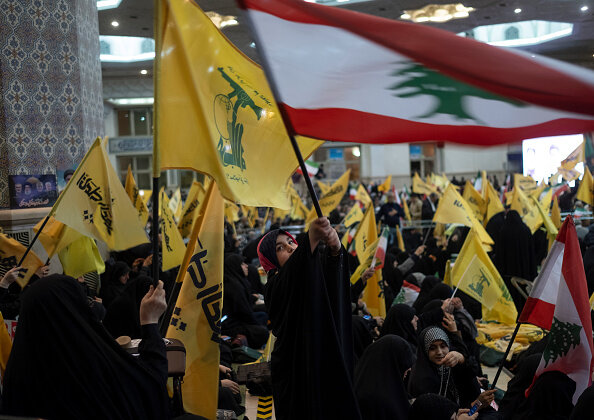
For the Resistance and its allies, elections are more than constitutional routine; they are a test of popular legitimacy.
In this context, a notable visit by Mohammad Raad, head of Hezbollah’s parliamentary bloc, to Berri underscored full alignment. Raad affirmed that their electoral stance is “completely identical” and that they will contest the elections together “in any direction.”
Hezbollah has reportedly decided to re-nominate all its current MPs — a sign of organizational confidence.
Electoral mathematics reinforces that confidence. Indicators suggest Shiite voter turnout may rise significantly, consolidating the 27 seats allocated to the community and potentially enabling gains in mixed districts.
Cooperation with the Free Patriotic Movement could expand parliamentary influence further.
From this perspective, elections are not a risk but an opportunity to reaffirm dominance and preserve the speakership — a post central to legislative agendas and national negotiations.
Sunni realignments and Saudi signaling
Simultaneously, the Sunni political arena has experienced notable movement.
The 21st anniversary of the assassination of former Prime Minister Rafic Hariri revealed renewed mobilization around Saad Hariri. His return to Beirut after years of absence recalibrated electoral expectations, particularly in regions like Akkar and Tripoli.
Against this backdrop, an iftar hosted by MP Mohammad Suleiman in Wadi Khaled in honor of Saudi Ambassador Walid Bukhari took on political significance.
The event — reportedly requested by the ambassador — was widely interpreted as a message that Saudi Arabia can engage directly in Sunni strongholds traditionally aligned with Hariri.
The carefully curated guest list and symbolic tribal imagery suggested efforts to reshape Sunni balances independent of the Future Movement’s umbrella.
Public reaction was mixed; critics decried perceived extravagance amid Akkar’s economic hardship, while others reaffirmed loyalty to Hariri.
The ambassador’s subsequent public appearances, including high-profile prayers in Tripoli, reinforced impressions of coordinated political signaling.
For Riyadh, the challenge is complex. While it seeks continuity in government to advance the arms and reform files, Hariri’s enduring grassroots support complicates efforts to cultivate alternative Sunni leadership.
Reports suggest the Persian Gulf's hesitation to heavily finance campaigns amid uncertain electoral returns.
International conferences to support the army?
The Lebanese Army, under Commander Rudolf Haykal, has also sought breathing space, briefing foreign diplomats on the need for time to complete sensitive missions tied to internal security and disarmament.
International conferences to support the army highlight how security, reform, and elections are increasingly intertwined.
Ultimately, the postponement debate exposes Lebanon’s structural vulnerability: constitutional timelines remain entangled in regional and international calculations.
A delay would signal that domestic democratic processes are subordinate to external negotiations. Proceeding with elections, by contrast, would reassert institutional normalcy but could disrupt the balance foreign actors seek to preserve.
For the Shiite duo and the broader camp of the Resistance, the ballot box itself has become a form of political assertion — a means of locking in parliamentary leadership and reaffirming popular legitimacy amid regional flux.
For external powers, postponement offers strategic patience and continuity.
Whether Lebanon votes in May 2026 or enters a new cycle of extension will depend less on logistics than on political will — both inside the country and beyond its borders.
At stake is not merely the composition of the next parliament, but the fundamental question of who determines Lebanon’s political timetable: its citizens, or the capitals watching from afar.
source: tehrantimes.com