Boundary survey commenced around Asirabad historical mound in Saveh
Boundary survey commenced around Asirabad historical mound in Saveh
TEHRAN – A team of archaeologists and cultural heritage experts has begun a field survey to propose a protective buffer zone for the Asirabad historical mound, which is located in the southeastern part of Saveh, a local official said on Tuesday.
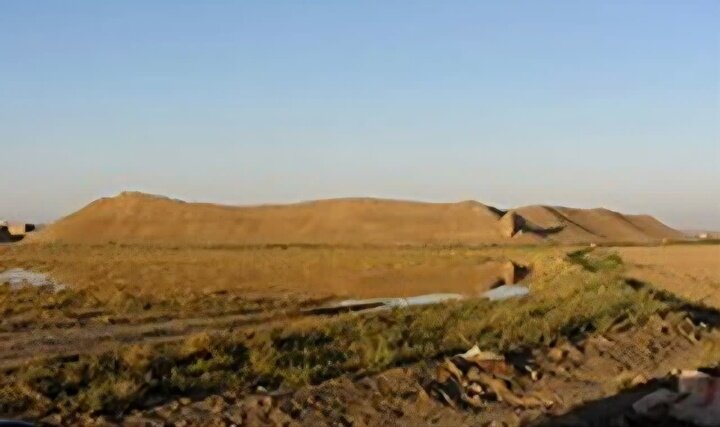
Hossein Mahmoudi, who presided over the cultural heritage department of Markazi province, said the research project aims to define the precise limits of the nationally registered site and establish legal protection measures.
The mound, known as Asirabad, is located near the shrine of Imamzadeh Seyyed Eshaq in the southeastern part of Saveh. It was registered on Iran’s National Heritage List in 1974.
Mahmoudi said the site consists of the remains of a Sassanian-era fortress built in a square-shaped plan covering about 2.7 hectares. The structure was enclosed by walls and towers and constructed with mudbrick materials.
He said archaeological evidence indicates the complex continued to be used in the early Islamic centuries before gradually being abandoned in the middle Islamic period.
According to Mahmoudi, the surviving remains of the fortress currently rise about 12 meters above the surroundings, reflecting the scale of the original structure. He added that natural factors and human interventions have increased the need to accelerate measures to organize, protect and legally define the site.
Mahmoudi underlined defining the boundaries and buffer zones of historical site is a legal and infrastructural step to prevent encroachments, manage surrounding urban development and safeguard historical identity.
He said the initial phase includes archaeological soundings to identify the exact extent of the site, examine cultural layers and carry out scientific documentation to provide a technical basis for proposing a legal buffer zone.
The project is being led by archaeologist Mohsen Karimi and will continue until the second half of March, Mahmoudi said. Field studies, detailed mapping, technical surveys and full documentation will be conducted to prepare the final proposal for the site’s boundaries and protective zone.
The Sassanid era (224 CE–651) is of very high importance in the history of Iran. Under Sassanids, Persian art and architecture experienced a general renaissance. Architecture often took grandiose proportions, such as palaces at Ctesiphon, Firuzabad, and Sarvestan, which are amongst the highlights of the ensemble.
Crafts such as metalwork and gem engraving grew highly sophisticated, yet scholarship was encouraged by the state. In those years, works from both the East and West were translated into Pahlavi, the language of the Sassanians.
In 2018, UNESCO added an ensemble of Sassanian historical cities in southern Iran -- titled “Sassanid Archaeological Landscape of Fars Region”-- to its World Heritage list.
AM
source: tehrantimes.com