Production of 10m tons of greenhouse products targeted
Production of 10m tons of greenhouse products targeted
TEHRAN- The Deputy Agriculture Minister for Horticulture Affairs announced the targeting of 10 million tons of production in the country's greenhouse sector and emphasized the necessity of moving from traditional methods toward advanced agriculture, along with removing infrastructural obstacles and active trade diplomacy for sustainable foreign currency generation.
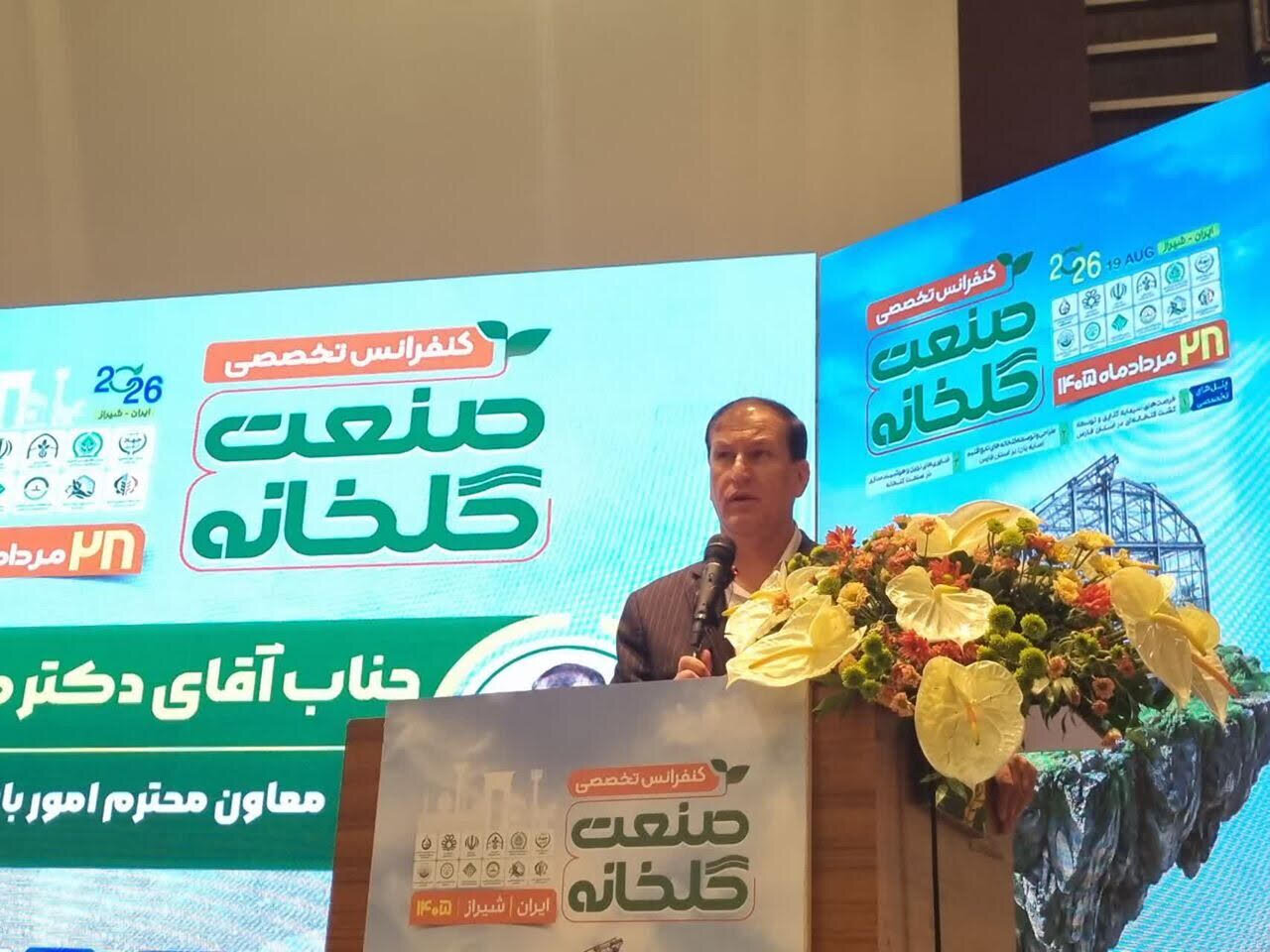
According to an IRNA report, Mohammad Mehdi Boroumandi, on Wednesday at a specialized greenhouse growers' conference in Shiraz, while emphasizing the necessity of transitioning from traditional agriculture to advanced agriculture, announced the targeting of 10 million tons of production in the country's greenhouse development.
He stated: Relying on active trade diplomacy and removing infrastructural obstacles, we are moving firmly on the path of sustainable foreign currency generation through the export of premium Iranian products.
The Deputy Minister, referring to the performance of the past agricultural year, said: In this period, over $390 million in export value was obtained from the country's greenhouse production.
Boroumandi added: Last year and for a period, the European Union disrupted our export situation and did not allow our products, especially pistachios—which are among the best and healthiest products of the country—to be exported to target countries.
According to him, pistachios, with value of 1.7 billion dollars, have the highest export revenue among the country's agricultural products.
The official further emphasized: We must resolve people's concerns about the production of healthy greenhouse products through cohesive planning.
Boroumandi stated: Currently, we export agricultural products to over 80 countries worldwide, but only 20% of the country's greenhouse products are in the export basket.
He also said: Iran is among the countries that consume the least amount of fertilizers and pesticides in its production.
Elsewhere in his remarks, the deputy minister reminded: Fars Province currently ranks eighth in greenhouse production in the country with an area of 600 hectares.
Boroumandi added: Fars is one of the provinces dealing with severe water resource stress and shortages, and it must plan for greenhouse cultivation and long-term goals.
Then considering producers' concerns, he spoke about the government's efforts to supply the energy needed for greenhouses and stated that resolving energy challenges is the main prerequisite for the sustainable development of this sector.
Boroumandi emphasized: The government will stand alongside farmers to ensure stability in the production process.
Referring to the 12% growth in horticultural product exports, he announced Iran's high capacities for penetrating new markets and said: Through active trade diplomacy, the government is opening new export routes for high-quality Iranian products.
The Deputy Minister emphasized the importance of using modern and knowledge-based technologies in greenhouse management and appreciated the role of universities, especially Shiraz University which hosted this conference, in transferring technical knowledge to producers.
Boroumandi noted: Synergy among university, government, and private sectors is the main key to success in implementing horticultural development programs.
He added: Producers must manage their production with an export-oriented approach.
Expressing hope for the outcomes of such conferences and the connection between experience and science, the official announced: The outputs of these scientific-specialized meetings will be effective in formulating future policies of the Ministry of Agriculture to support greenhouse growers and develop the country's horticulture sector.
Changing approach from "Building Greenhouses" to "Sustainable Business" is a necessity for agricultural industry
The Chairman of the Board of Directors of the National Greenhouse Constructors Association also stated at the event that quantitative development is fruitless and emphasized the need to move toward profitable, market-oriented, and sustainable businesses, calling on the government and the private sector to redefine their roles in this chain.
Ahmad Mokhtari, emphasizing the necessity of changing the approach in greenhouse development, said: Merely increasing cultivated area cannot be a symbol of success, and instead, the country must think about creating sustainable businesses aligned with market needs.
Referring to water resource limitations, climate change, rising production costs, shortage of suitable land, and the need for greater productivity, he stated: Greenhouse development is no longer a luxury choice or a symbol of modern agriculture, but has become a strategic necessity for the survival of the country's agriculture.
Mokhtari, distinguishing between the concept of "structure construction" and "business launch," stated: Before any action, the investor must answer key questions about the type of product, target market, working capital, and return on investment period; the success of a project is the result of synergy between the government, the construction company, the supervising engineer, and the investor, not the performance of one single link alone.
The Chairman of the National Greenhouse Constructors Association cited execution quality as the main concern of this organization and said: Choosing cheaper design or execution to reduce initial costs often imposes heavier costs in subsequent years.
Mokhtari added: A greenhouse is a complex structure, and its resistance to snow, wind, crop load, climate, and ventilation requires precise pre-execution calculations.
According to him, competition in this industry must be based on quality, technology, and productivity, not price undercutting.
The Chairman of the National Greenhouse Constructors Association, criticizing the prolongation of administrative processes and the multiplicity of decision-making authorities, called for shortening, transparency, and predictability of the investment path by the Ministry of Agriculture and the Engineering System Organization, and emphasized: Investors should not have to wander for months among various agencies to obtain permits, utility connections, or financing.
Mokhtari called on greenhouse construction companies to move away from merely selling structures and to accompany investors throughout all stages of study, design, execution, startup, training, and operation.
In his view, the industry's credibility is maintained when the investor remains satisfied with their decision even years after construction.
The Chairman of the National Greenhouse Constructors Association identified the market as a fundamental pillar of success and said: Increasing production without understanding the market leads nowhere. From the design stage, the domestic market, export capacity, packaging, and product standards must be examined.
Mokhtari added: The future of Iran's greenhouse industry lies in quality production, high productivity, and effective presence in regional markets—something that cannot be achieved through fragmented decisions.
He advised investors: Before receiving a price quote for the structure, conduct preliminary studies, review contractors' track records, understand the product market, and before any expenditure, formulate a realistic economic plan.
He continued: The cheapest proposal is not necessarily the most economical; one correct decision at the beginning generates income for years, while a mistake brings irreparable costs.
The Chairman of the National Greenhouse Constructors Association, announcing the association's readiness to cooperate with all stakeholders, said: The future of the greenhouse industry is promising, but only if we speak of the number of successful and profitable greenhouses instead of the number of hectares.
Mokhtari added: Success is achieved when the investor makes a profit, the country's water is managed, and Iranian quality products are competitive in global markets.
He continued: Realizing this vision requires the government's facilitating role, the private sector's responsibility, adherence to engineering standards, and a long-term perspective instead of short-term gains.
EF/MA
source: tehrantimes.com