MP US criminal act in Lamerd and Minab is a modern example of crimes in Hiroshima and Nagasa
MP: US criminal act in Lamerd and Minab is a modern example of crimes in Hiroshima and Nagasa
TEHRAN — Iran’s Deputy Parliament Speaker Hamid Reza Haji Babaei has lashed out at the United States over its deadly strikes against civilian targets in southern Iran, declaring Washington’s strikes on the city of Lamerd and the Shajareh Tayyebah school in Minab as direct modern manifestations of the atomic atrocities perpetrated against Hiroshima and Nagasaki.
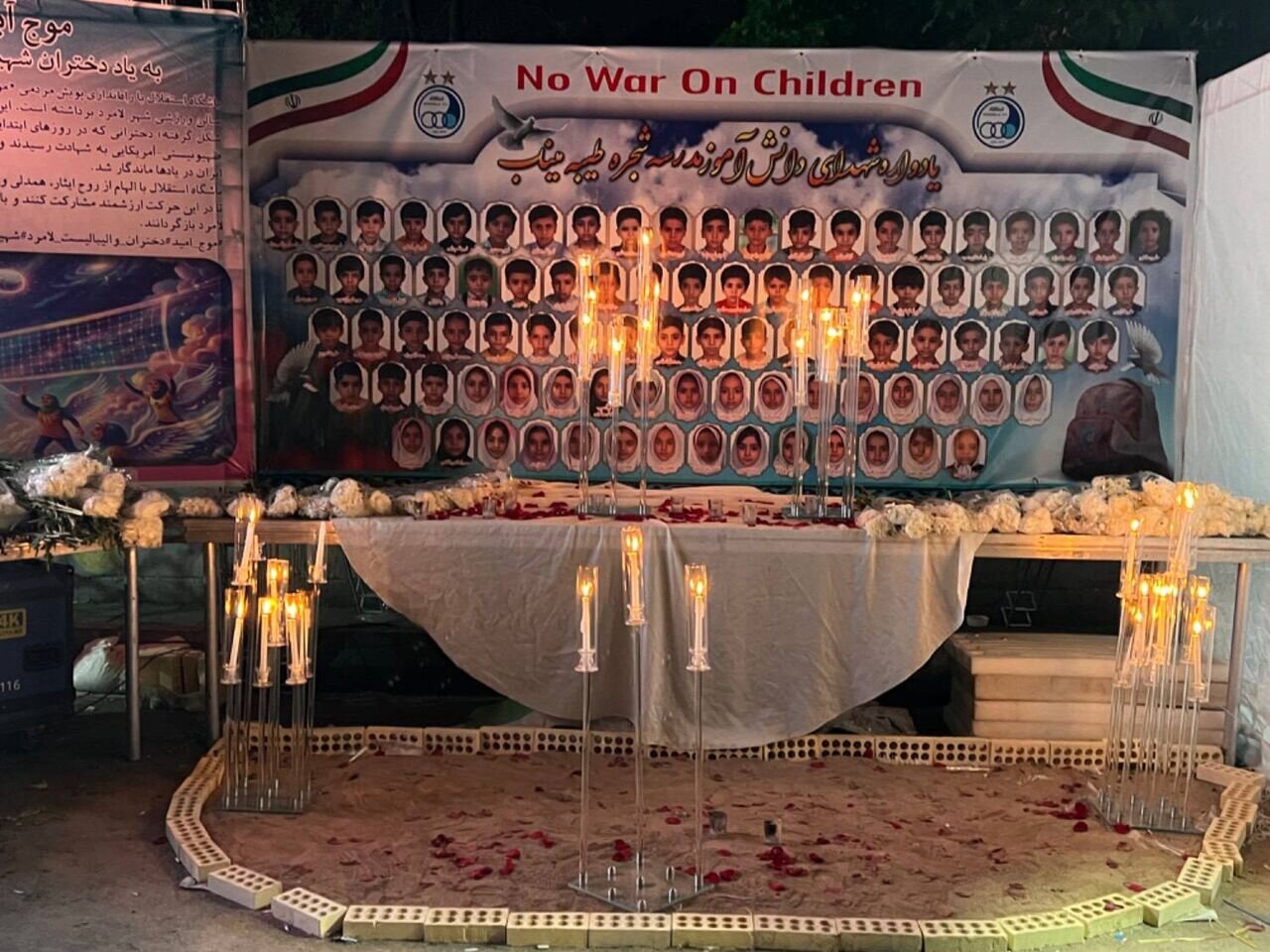
Speaking during an open parliamentary session on Sunday, Haji Babaei reiterated Tehran’s resolve to hold the United States legally and politically accountable for blatant violations of international law and international humanitarian statutes.
“The criminal action of the United States in Lamerd and the Shajareh Tayyebah school in Minab is a textbook example of modern-day crimes akin to what transpired in Hiroshima and Nagasaki,” Haji Babaei said in response to a parliamentary notice raised by Musa Mousavi, the lawmaker representing Lamerd and Mohr.
“This is the exact same course of savagery, merely updated with modern technology and weapon systems. It demonstrates that the US continues to expand its repertoire of war crimes and brutality against sovereign nations while brazenly trampling basic human values,” the deputy speaker emphasized.
During his address on the Majlis floor, Musa Mousavi detailed the horrific dimensions of the strike on Lamerd, characterizing it as an indisputable war crime aimed deliberately at maximizing human suffering.
According to Mousavi, four precision-guided ballistic missiles—identified as Precision Strike Missiles (PrSM)—were fired into Lamerd, tearing through two residential neighborhoods and a public indoor sports arena.
Mousavi explained that the munitions deployed in Lamerd were designed specifically for wide-area lethality rather than standard structural demolition. Instead of detonating upon ground impact, the warheads exploded roughly 40 meters in the air, releasing an indiscriminate hail of 180,000 tungsten fragments per missile over a 360-degree radius.
“In total, 720,000 tungsten pellets were rained down on Lamerd. In a city of 30,000 people, this amounts to an average of 24 lethal projectiles for every single resident,” Mousavi noted, presenting photographs of perforated walls, doors, and residential infrastructure pockmarked with hundreds of shrapnel holes.
The lawmaker underscored that several factors prevented a significantly larger catastrophe beyond the recorded toll of 21 martyrs and 60 injured: the attack struck near the evening Iftar when families were indoors, the residential zones were less congested, and a neighboring school complex was empty at that hour.
Mousavi slammed the provocative rhetoric from US military commanders who praised the deployment of these weapons to “put pressure on the Iranian populace,” while highlighting how arms contractors such as Lockheed Martin subsequently saw inflated multibillion-dollar procurement contracts.
Echoing the directives of the Leader—who instructed the Iranian Judiciary to vigorously pursue legal cases against the United States over the carnage in Lamerd and Minab—Mousavi called on Iranian diplomats to turn these strikes into an international indictment against Washington across multilateral bodies.
The attacks on Lamerd and Minab represent some of the most devastating strikes on civilian infrastructure in southern Iran, sparking worldwide outrage and international scrutiny over Washington’s unlawful targeting methodologies.
The Tragedy of Shajareh Tayyebah
Located in the eastern coastal plain of Hormozgan Province near the Strait of Hormuz, Minab is an ancient agricultural and trade hub, home to roughly 75,000 residents.
On February 28, the civilian population of Minab suffered one of the deadliest single mass-casualty attacks when a US cruise missile pulverized the Shajareh Tayyebah Elementary School during morning classes. The strike brought down the multi-story educational facility, martyring nearly 170 civilians—the vast majority of them young schoolchildren.
Independent investigations and a formal report by the United Nations Fact-Finding Mission concluded that the strike constituted an indiscriminate attack and a potential war crime. Inquiries revealed that US forces had relied on decades-old, obsolete intelligence regarding a nearby historical installation, failing to take basic precautions to verify the presence of active educational institutions.
Lamerd, situated in the southernmost tip of Fars Province near the Persian Gulf energy corridor, is a strategic hub of energy, aluminum manufacturing, and commerce. Bordering Bushehr and Hormozgan, the county sits atop major natural gas fields, including the Tabnak and Eram reservoirs, and hosts the sprawling Lamerd Special Economic Zone (housing the South Aluminum Corporation, SALCO).
Despite its purely civilian and economic profile, residential districts and civic sports infrastructure inside Lamerd were subjected to air-burst tungsten fragmentation strikes. Rather than striking isolated strategic installations, the deployment of anti-personnel fragmentation warheads over residential quarters underscored a calculated attempt to inflict maximum civilian terror.
source: tehrantimes.com