Iraqs security risks amid US withdrawal
Iraq’s security risks amid US withdrawal
TEHRAN – There is intense debate in Baghdad over whether the anticipated U.S. military withdrawal will close one chapter or mark the beginning of another.
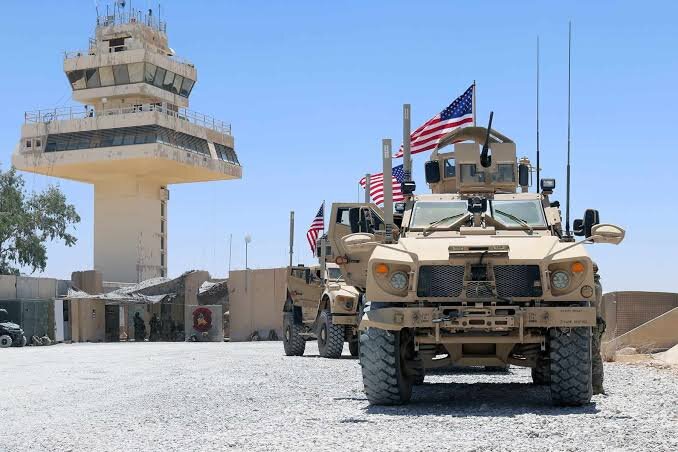
The new reality is both simple and harsh: an international military force led by the United States is anticipated to withdraw from Iraq by the end of September. What remains afterward is not some theoretical vacuum to be debated in coffee shops.
It is a concrete reality on the ground, one that began the moment the withdrawal process was set in motion.
The question that deserves to be asked without ambiguity is this: who will actually fill this vacuum? The Iraqi state and its institutions? Or external powers that rely on domestic proxies and have been waiting for years for precisely such a moment to rearrange Iraq’s geography and future according to their own interests?
The answer will be determined by what actually happens along the borders, internal negotiations over weapons, and in the positions taken by regional powers known not simply to observe events but to help shape them whenever the opportunity arises in order to settle their sectarian and ideological scores.
A vacuum to be exploited
The security lesson established by Iraq’s experience since 2003, from sectarian violence and al-Qaeda, through the Daesh period, to the fallout from the Gaza genocide and the illegal war against the Islamic Republic is clear: a security vacuum does not remain empty for more than the first moments of shock.
When one force withdraws from a position, other forces do not wait for permission to occupy it. The quickest to move are usually groups already prepared and operating under the banner of “sectarianism,” “factions,” or “mercenaries” skilled in working both covertly and openly.
There is a vast difference between these labels in form and in ideological and military substance.
The expected scenario is not arbitrary. It involves attempts to manufacture scattered security incidents, carefully timed leaks, warnings of an economic collapse, and border crises deliberately engineered to appear as natural consequences of state weakness and political dysfunction.
In reality, however, they would be the product of a calculated operation carried out by those with a direct interest in keeping Iraq dependent on permanent external protection.
Consider this pattern, which has been repeated more than once across the region: clandestine bases, lone wolves, and recruited local cells operating in complete silence before carrying out an operation that throws the internal balance into confusion or creates tensions between neighbors that had no genuine dispute in the first place.
Then begins the search for “Who did it?” while the real beneficiary is obvious to anyone who reads the scene beyond official statements. Who benefits from setting Iraq’s borders with its neighbors ablaze, straining its relations with its Islamic surroundings, and exhausting it in internal conflicts that are perilously close to becoming sectarian?
The history of Iraq’s post-2003 enemies is known and documented: when the territory of states with weak security structures is used as a launchpad for operations that the perpetrators do not want directly attributed to them, the affected parties are left trading accusations among themselves while the real actor watches from a distance and, at times, pulls the strings itself.
Iraq’s geography leaves no room for complacency on this particular issue. From the western border with Syria, where the situation remains fragile and capable of igniting, to the strip bordering Jordan and Saudi Arabia, and all the way to the Iranian east, every point along this expanse could become a testing ground for everyone’s patience.
Any cleverly engineered incident could ignite a pointless conflict between Iraq and a neighboring state, one that serves neither side but benefits a third party whose name never appears in any statement. The incident involving the bombing of the Saudi Petroline pipeline may be a telling example.
Tel Aviv and Washington do not want stability in the Persian Gulf and Iraq simultaneously: an Iraq that regains its geopolitical role as a bridge to regional stability rather than remaining a permanent arena of conflict; an Iran that does not need direct confrontation to consolidate its regional influence; and Persian Gulf states reconsidering their calculations away from complete alignment with Washington.
From the perspective of those planning for a turbulent rather than stable region, such a scenario is entirely unacceptable.
But if the region were to descend into a comprehensive regional war, or even into a series of internal crises or conflicts spilling across neighboring borders and keeping everyone in a state of permanent tension, the matter would be entirely different.
Borders would evaporate, the balance of power would be redrawn, and states such as Iraq, with its structural weaknesses, which there is no point denying, would shift from entities capable of making their own decisions into arenas where the calculations of Zionist lobbies are played out.
To ignite such a scenario, the party concerned would need little more than a hidden launchpad on a third country’s territory, an incident that could serve as a pretext, and an already-charged regional context in which every side is primed to believe that its neighbor was the one who attacked it.
Given Iraq’s geographical position and its multiple open fronts, it is perpetually at risk of becoming that launchpad, whether its leaders recognize it or not.
source: tehrantimes.com