Majidi dedicates Busan premiere of Midday Meal to martyred children of Minab brave people of Iran
Majidi dedicates Busan premiere of “Midday Meal” to martyred children of Minab, brave people of Iran
TEHRAN – Majid Majidi’s latest film “Midday Meal” premiered at the 31st Busan International Film Festival (BIFF), and the director dedicated it to the brave people of Iran and the martyred children of Minab.
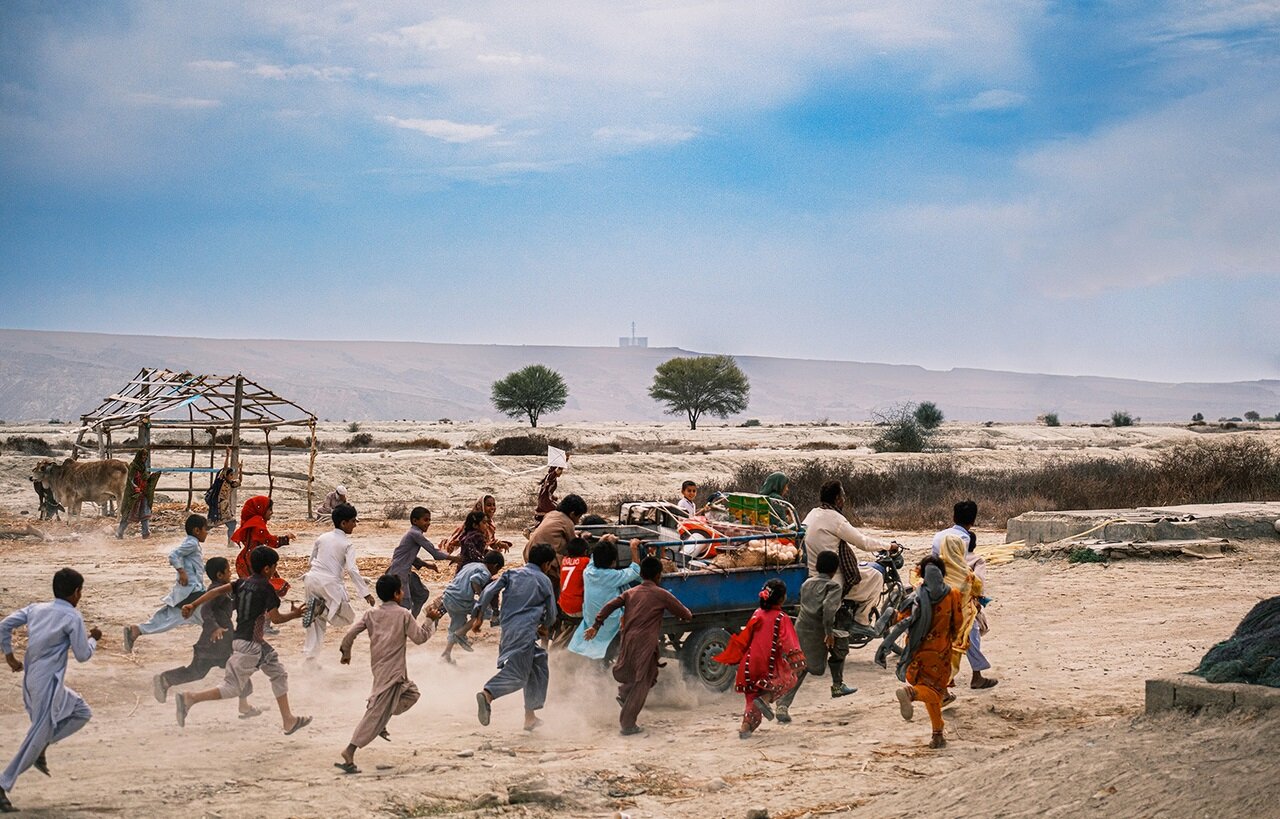
Prior to the screening of the film in the festival’s main competition section on October 9, the director said in brief remarks: “I would like to dedicate the screening of this film, on my own behalf, to the brave and courageous people of Iran and the martyred children of Minab. As you have heard, 168 children were massacred on the first day of the war (the US and Israel imposed on Iran), yet the people continue to stand firm and resist”.
“We salute these courageous people who have not bowed their heads and will not. We will rebuild all that has been destroyed. The Iranian people are resilient; they stand against oppression and maintain their independence. The only crime of the Iranian people is that they wish to be independent,” he emphasized.
A production of 2026, the 133-minute family social drama, which deals with children and human rights, marks Majidi’s first visit to the festival, Honaronline reported.
Funded by the Institute for the Intellectual Development of Children and Young Adults, the film was shot exclusively in southern Iran and features an entirely local cast, with no established stars, including Mohammad Rahimi, Kheyri Zakeri, Rahim Bakhsh Pira, and Heybatmorad Damani.
A rural schoolteacher loses sight of his own morality and sanity as he questions the divergent needs of his young (and old) charges in “Midday Meal,” Majidi’s 11th feature film. A slow-burning bonfire of moral vanities unfolding in a land beset by poverty and bureaucracy, the Iranian auteur’s moving drama bows in competition in Busan, where he and lead actor Mohammad Rahimi can expect to take home awards.
In a parched badland village that looks like the end of the world, Solan is the only teacher. After years of enduring the poorly paid temporary job, he holds one modest dream - to become a full-time teacher and to live in a proper house with his mother. But everything begins to unravel with the death of the benefactor who had funded the school’s meal program. If the meals stop, most of the students will stop coming, and the school’s closure becomes inevitable. The education office offers no real help, only an order to keep the classes running. Desperate, Solan withdraws his rental deposit, moves into the school, and begins a precarious double life as a teacher by day and oil smuggler by night. And through it all, his mother stays by his side, quietly trusting him.
In “Midday Meal,” master filmmaker Majidi shows this world with unflinching rawness, and his direction reveals a gift for capturing layered emotions that resist easy words. His camera runs close to the characters’ emotions, then falls still at key moments, heightening the drama through that very stillness. Do Solan’s ends justify the means? Are choices driven by pure goodwill, or are they nothing more than self-interest masquerading as virtue?
Within its own running time, the film can only project a single facet of reality, but how far today’s conscience might take root for generations to come is left to the audience.
With “Midday Meal,” Majid Majidi doesn't seek to replicate the success of the films that made him famous. He returns to the concerns that have spanned his career, but places them within a more mature, grittier, and complex narrative. Poor children are still present, injustice still subtly permeates lives, but this time, we witness the tragedy through the eyes of an adult - one who understands what is right but cannot always do what is right.
This year's edition of BIFF is the first since the International Federation of Film Producers Associations designated Busan as one of its 17 A-list festivals. The winner of the Busan Award for best film now also qualifies for submission to the Oscars for best international feature. The distinction puts Busan alongside the five other Oscar-qualifying festivals: Cannes, Berlin, Venice, Sundance and Toronto.
Now in its second year, the best film competition brings together 14 Asian films, 12 of them world premieres. Four are from first-time directors, and four are by women filmmakers.
In addition to “Midday Meal,” the lineup includes “Beach Fictions” by Korean newcomer Lim Hayeon, “Between Two Lovers,” from Hirokazu Kore-eda protégé Hirose Nanako, and “The First Taste of Loneliness,” by Chinese director Gu You. Also included in the line-up are entries from Uzbekistan, Indonesia, and Taiwan.
Majid Majidi, 67, is an Iranian filmmaker and producer. His films often feature child or adolescent protagonists, explore themes such as childhood innocence, family bonds, poverty, social issues, and solidarity, and are characterized by a humanistic sensibility.
His important films include “Children of Heaven” (1997), “The Color of Paradise” (1999), “Baran” (2001), and “The Song of Sparrows” (2008). “Children of Heaven” was nominated for the Academy Award for Best International Feature Film.
More recently, Majidi directed “Muhammad: The Messenger of God” (2015), an epic film dealing with the childhood of the Islamic prophet Muhammad (PBUH).
The Busan International Film Festival, held annually in Haeundae District, Busan, South Korea, is one of the most significant film festivals in Asia.
The main focus of the BIFF is to introduce new films and first-time directors, especially those from Asian countries. Another notable feature is the appeal of the festival to young people, both in terms of the large youthful audience it attracts and through its efforts to develop and promote young talent.
The 31st Busan International Film Festival will run until October 15.
Photo: A scene from “Midday Meal” by Majid Majidi
SS/
source: tehrantimes.com