Bagheri Tehran quadrilateral meeting reflects Irans defense capabilities
Bagheri: Tehran quadrilateral meeting reflects Iran’s defense capabilities
TEHRAN — Ali Bagheri Kani, deputy for international affairs at the Secretariat of Iran’s Supreme National Security Council, has described the quadrilateral meeting between Iran, Saudi Arabia, Turkey and Pakistan in Tehran as a product of the Iranian nation’s resistance and the courage of its Armed Forces, saying the gathering reflected a growing recognition among regional countries that 'lasting security must be built through cooperation and reliance on domestic capabilities.'
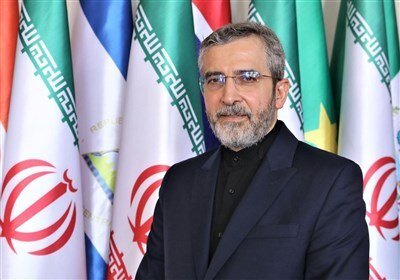
Speaking after Monday’s meeting, Bagheri Kani said the talks took place against the backdrop of major strategic developments in the region over recent months, the “brutal aggression” of the Israeli regime and the “terrorist US government.”
He said Iran’s resistance had thwarted Washington’s objectives and left the United States facing a difficult situation. He also maintained that developments following the Israeli regime’s aggression against Iran had not unfolded according to its plans.
Bagheri Kani identified two major outcomes of the confrontation: Iran’s ability to withstand military aggression through its domestic capabilities and the demonstrated effectiveness of its indigenous defense industry.
Indigenous capabilities and resistance to sanctions
The official said the Islamic Republic had relied on its national resources and domestic capabilities to withstand two separate acts of aggression, adding that Iran had succeeded in confronting both.
He noted that the United States and Western countries had imposed sanctions on Iran for decades, particularly targeting strategic sectors and restricting the country’s access to advanced military equipment and technology.
Despite those restrictions, he said, Iranian military personnel and specialists had made significant advances in defense capabilities, demonstrating their effectiveness under operational conditions.
He maintained that Iran’s experience demonstrated the strategic importance of developing indigenous capabilities rather than depending on external powers for national security.
The official also pointed to a broader lesson for countries across West Asia, saying some regional states had believed that aligning themselves with a major power such as the United States would shield them from security threats. In practice, however, he said, events had shown that such expectations did not necessarily correspond with reality.
He argued that regional countries therefore had growing reasons to pursue security through regional engagement, cooperation and the pooling of their respective capabilities.
Israeli policies and the case for regional security cooperation
Bagheri Kani said developments involving the Israeli regime had created an important basis for greater understanding among regional countries about the sources of insecurity and instability.
He argued that the regime’s actions, particularly following developments in recent years, had demonstrated its 'aggressive conduct and lack of restraint in pursuing its ambitions.'
Referring to the concept of “Greater Israel,” he said the idea encompassed a number of countries in the region and had reinforced concerns among regional states about the implications of Israeli policies.
According to Bagheri Kani, the growing recognition of the Israeli regime as a source of instability had helped create common ground for regional countries to work toward establishing security within the region.
He identified this assessment as 'one of the key points reflected in the Tehran meeting,' alongside the emphasis all four participating countries placed on self-reliance and the development of domestic capabilities.
The official said Iran regarded reliance on internal resources as a fundamental strategic principle and that the other participants had also acknowledged the importance of self-sufficiency.
“This is a very important point and a fundamental cornerstone on which we can move toward the future,” he said.
Bagheri Kani added that regional security could not be sustainably achieved by relying exclusively on external powers. Instead, he argued, countries in the region needed to strengthen their own capacities and establish cooperative arrangements capable of addressing shared security challenges.
How the quadrilateral meeting came to Tehran
Bagheri Kani also outlined the process that led to the meeting between Iran, Saudi Arabia, Turkey and Pakistan, explaining that the initiative emerged from earlier consultations among the three other countries and their subsequent efforts to bring Iran into a regional dialogue on security.
He said Saudi Arabia, Turkey and Pakistan had previously held a meeting in Pakistan and had expressed a strong interest in Iran's participation. However, circumstances at the time had prevented the Iranian side from attending.
The three countries subsequently held another meeting in Turkey, where they again expressed their desire for Iran to take part in the discussions.
This time, however, they proposed travelling to Iran themselves to hold a quadrilateral meeting in Tehran, Bagheri Kani said.
He cited a previous visit to Tehran by Pakistan’s army chief, during which the Pakistani commander met Major General Rezaei and conveyed the three countries’ interest in convening a meeting in the Iranian capital.
Four countries seek a framework for broader regional engagement
The Iranian official emphasized that the meeting was not an attempt by any one participant to impose its particular outlook on the others. Rather, he said, the four countries sought to develop a common framework capable of accommodating their respective perspectives and encouraging practical cooperation.
He described this approach as a significant feature of the gathering, arguing that a cooperative framework among the four countries could also encourage other regional states to participate in efforts to strengthen security.
Bagheri Kani said Iran, Saudi Arabia, Turkey and Pakistan had the potential to play an influential role both across the wider region and in the Muslim world if they worked together.
He stressed that their cooperation could serve as a foundation for broader regional participation, enabling countries to address shared security concerns through dialogue, coordination and the development of mutual capabilities.
Its emphasis on self-reliance, regional cooperation and the need for a common approach to security, Bagheri Kani said, reflected a shared interest in developing practical mechanisms for addressing the region’s challenges.
source: tehrantimes.com