Brazils elections How Lula preserved sovereignty
Brazil’s elections: How Lula preserved sovereignty
TEHRAN – The most insidious feature of domination is its insistence that people believe they are powerless and their future already written by others.
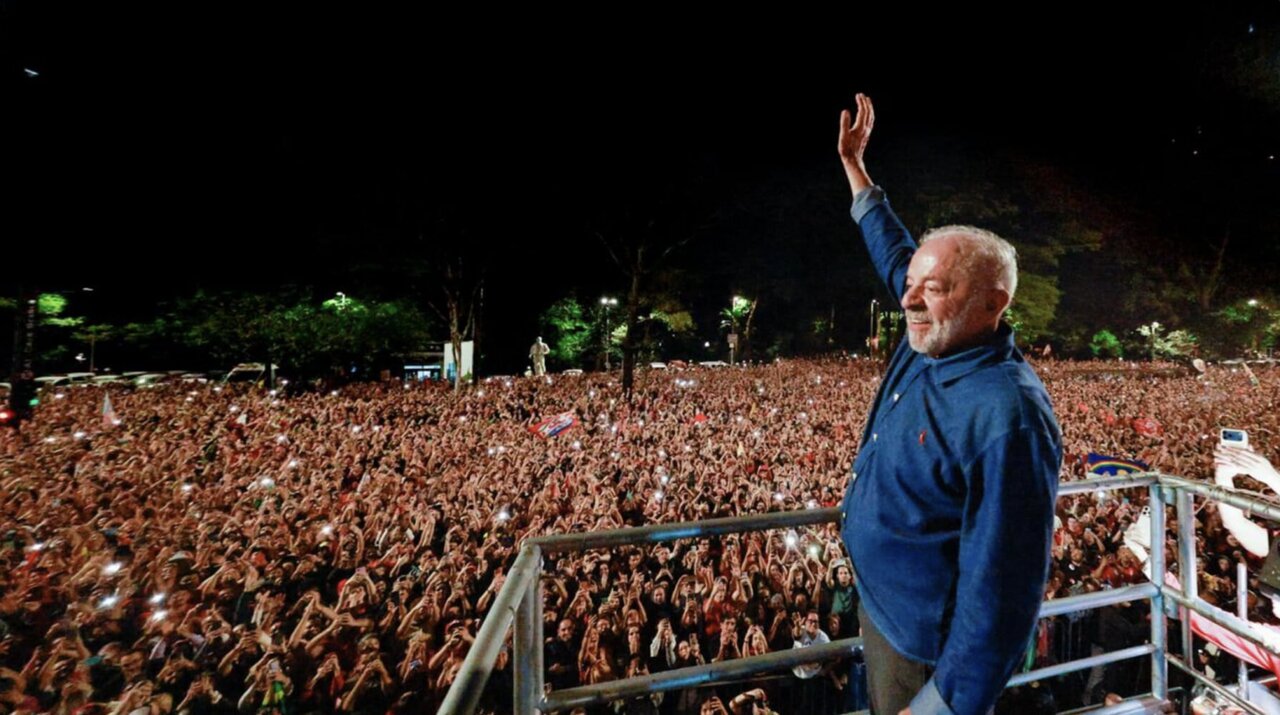
This is what makes Luiz Inacio Lula da Silva’s victory in Brazil significant far beyond the country’s borders. It demonstrates that people can shatter this illusion, reclaim their fair share of national wealth, and defend their right to choose who governs them.
Faced with the power of money and political blackmail, a majority of voters once again placed their trust in a man who rose from the ranks of the working class and brought a fundamental question into government: Whom does the state serve, and who reaps the rewards of economic growth?
Lula secured a fourth presidential term with 51.8 percent in the runoff vote, overturning his opponent’s lead in the first round. No candidate in Brazilian history has lost the first round and won the second. Voters renewed their confidence in the former factory worker and in a political project that links development to the rights of ordinary people and the independence of national decision-making.
When the poor become a political force
Lula emerged from the world of labor, led the metalworkers’ union, and helped establish the Workers’ Party in 1980. The deeper significance of his journey lies in his ability to organize social discontent and turn it into a force capable of shaping government policy.
When marginalized groups enter politics through organized movements and political programs, their suffering moves from the margins of public complaint to the center of decision-making. Ignoring them becomes politically costly.
Poverty drains people’s time and security, narrowing their ability to participate in public life and defend their rights. When social protections expand, workers regain some of their freedom to speak out and become better equipped to resist the coercion that comes with economic insecurity.
The 2025 edition of the State of Food Security and Nutrition in the World report confirmed that Brazil had been removed from the global hunger map after the prevalence of undernourishment fell below 2.5 percent over the 2022–2024 period. Behind that statistic are people who have regained some measure of security about where their next meal will come from.
It is also evidence that what is presented to the poor as an unavoidable fate can be changed through policies that reorder national priorities. In a resource-rich country, persistent hunger is an indictment of how wealth is distributed. This is where the strength of Lula’s politics becomes clear.
When Washington seeks to choose on the people’s behalf
When sanctions are used to weaken an elected president and improve his opponents’ chances of taking power, sovereignty itself becomes the target. Who gets to choose a country’s government: its own people or a foreign power capable of inflicting economic pain on them?
That is the political significance of media investigations, including Reuters, into efforts by U.S. officials to support the Bolsonaro family’s return to power through measures intended to weaken Lula. Such pressure amounts to an attempt to reshape the popular will to suit the interests of the United States.
At the heart of this intervention lies a broader struggle over Brazil’s place in the world. Will it remain a country that expands its partnerships and reserves the right to disagree, or become an ally more closely aligned with Washington’s priorities? The competing political platforms reflected this divide. Lula emphasized cooperation with the Global South and rejected subordination, while Flavio Bolsonaro favored closer ties with the U.S. and the Zionist regime.
In situations like this, imperial hegemony seeks to turn the costs of independence into an argument against independence itself. Economic opportunities are constrained, and closer alignment with Washington is then presented as the path to recovery.
Many see Lula’s victory as a setback for a strategy that turns economic hardship into electoral submission. It demonstrates that a popular mobilization can frustrate the calculations of forces with far greater financial resources and political influence. Nearly three million more Brazilians voted in the second round.
Sovereignty begins with the people’s share
Sovereignty becomes meaningful when people have a say in decisions about their country’s resources, their labor, and their future. Lula expressed this principle in his most recent address to the United Nations, linking access to Brazil’s mineral resources to technology transfer and the creation of added value within the country.
A nation that exports raw materials while importing the knowledge and industrial capacity needed to process them remains vulnerable to a system in which the benefits of its wealth accumulate in other economies.
Independence is only complete when the proceeds of development reach society as a whole. Leaving wealth in the hands of a minority while forcing the majority to shoulder the costs of economic crises drains the very strength a country needs to resist external pressure.
Social justice builds the shared interest that makes defending one’s country inseparable from defending one’s own life and one’s children’s future.
Lula’s political project places the role of the state and the distribution of economic growth at the heart of the contest over how a market economy should function. The struggle concerns the limits of corporate power and society’s ability to make private interests answerable to public needs.
Palestine at the heart of the liberation struggle
Brazil recognized the State of Palestine in 2010, during Lula’s presidency, and Lula has continued to defend the Palestinian people’s right to self-determination. In his address to the United Nations General Assembly on September 22, 2026, he slammed the genocide carried out by Netanyahu’s regime in Gaza and warned about the illegal expansion of settlements in the occupied West Bank.
Brazil’s refusal to submit to the will of the United States finds its parallel in the rejection of the subjugation of Palestinians under the Israeli occupation regime. Accepting that superior military or economic power gives its possessor the right to seize other people’s land and control their lives undermines the foundations of independence for everyone.
Palestine exposes the international order for what it is: a system in which the weak are told to respect international law while the powerful and their allies enjoy protection from accountability.
source: tehrantimes.com