Israels war on UNRWA Killing the witness
Israel’s war on UNRWA: Killing the witness
TEHRAN – For over seven decades, UNRWA has stood as more than a relief agency; it has been the living archive of Palestine’s dispossession.
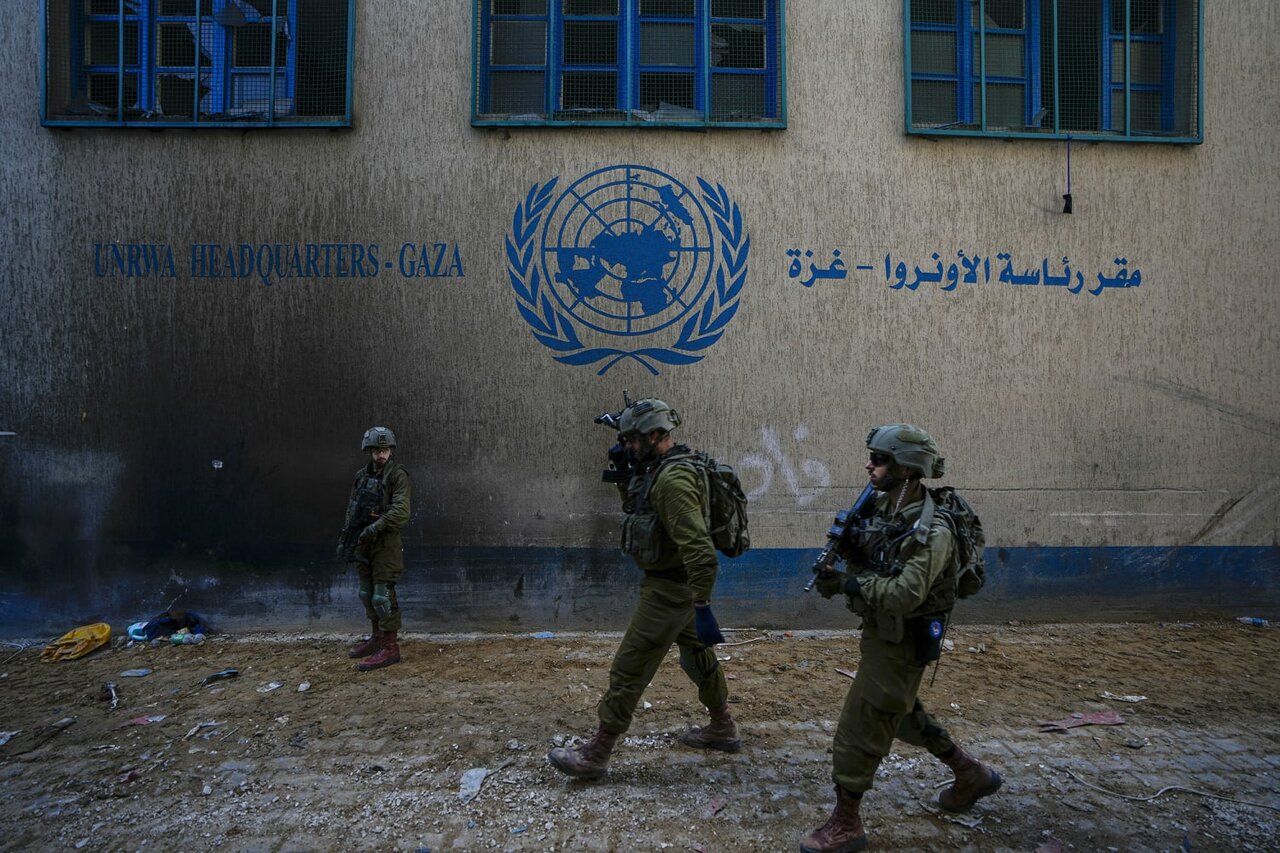
Its schools, clinics, and registration ledgers not only dispense aid; they preserve the names, villages, and stories that Zionism has tried to erase. This is why the Israeli regime’s assault on the agency is not administrative or diplomatic; it is existential.
When a criminal kills a witness to his crime in an attempt to conceal the evidence and erase it, in a futile and desperate effort to clear himself of the crime, they are implicitly acknowledging that the truth is closing in on them and that the crime itself is suffocating them.
This is precisely what the Israeli regime is doing in its war against the United Nations Relief and Works Agency for Palestine Refugees in the Near East, known as UNRWA.
The regime’s war against UNRWA aims to kill the international living witness to the crime of the Nakba, the tragedy of displacement, and the United Nations’ enshrined right of return for the Palestinian diaspora.
It is directed against the agency’s physical presence, including its buildings, institutions, refugee camps, employees, and services, as well as its moral and symbolic presence: what it represents as a humanitarian and political cause, a historical and legal record, a repository of the memory of the Nakba and displacement, and a narrative of tragedy and resilience.
Benjamin Netanyahu summed up the reason for the regime’s decision to target and kill the witness, UNRWA, when he said, “This agency perpetuated the refugee problem instead of solving it.”
The refugee problem is the very evidence of the crime that the Israelis seek to eliminate. Following October 7, 2023, and the beginning of the genocidal war, Netanyahu made his regime’s objective of killing the witness explicit, declaring: “It is time for the international community and the United Nations to understand that UNRWA’s mission must come to an end.”
This marked the beginning of the Zionist crusade to eliminate UNRWA as a witness to the crime of the Nakba.
UNRWA is a witness to the crime of the Nakba through tangible evidence: the existence of 58 refugee camps administered by the agency across its five fields of operation, and the six million Palestinian refugees registered in its records.
It is also a witness through the historical evidence contained in its extensive documentation of the tragedy of displacement and exile, preserved in archives filled with paper and digital records, as well as the information contained in Palestinian refugee registration cards and ration cards, which identify the original town of each Palestinian refugee family.
It is also a witness through legal evidence establishing refugee status and the right of return. Most importantly, Palestinian refugees are defined as those who were expelled from Palestine during the Nakba and their descendants; UNRWA’s existence is linked to United Nations General Assembly Resolution 194, which affirms the right of return; and UNRWA reports are regarded as legal documents that can be used before international forums and courts.
To kill the witness, UNRWA, to the Zionist crime of the Nakba, the regime has pursued several parallel paths. The most dangerous has been the campaign on the ground, whose latest episode was the seizure of the agency’s vocational training institute in the Qalandia refugee camp north of occupied al-Quds (Jerusalem).
This preceded the demolition of the agency’s central administrative headquarters in the Sheikh Jarrah neighborhood of occupied al-Quds.
The campaign reached its most brutal peak during the genocidal war in the Gaza Strip, with most of the agency’s buildings and facilities destroyed through aerial bombardment and ground demolition, hundreds of its employees killed, and the delivery of aid to the agency blocked.
Alongside this destructive campaign on the ground, the occupying regime has pursued legal, media, and financial campaigns. The legal campaign took the form of Knesset legislation targeting UNRWA during the genocidal war, most notably banning the agency from operating in areas under the occupied territory, revoking the 1967 agreement between the regime and the agency, and prohibiting Israeli contact with UNRWA.
The media campaign has taken the form of demonizing the agency, distorting its role, stripping it of its status as a neutral humanitarian organization, and accusing it of supporting terrorism without evidence.
The financial campaign has involved pressuring Western countries that fund the agency to suspend their contributions in an effort to economically strangle it, a strategy that has succeeded completely with some countries and partially with others.
The paths that the regime has pursued in its war against UNRWA, as part of its policy of killing the witness to its ongoing Zionist crusade, are intended to eliminate humanitarian sympathy for the refugee cause and political solidarity with the Palestinian cause, while stripping the refugee issue of its national dimension and emptying it of the right of return.
In this war, the regime understands that UNRWA is not just an international relief agency or a United Nations organization providing employment. It is also, and perhaps above all, a moral and symbolic agency and a living witness to the crime of the Nakba and displacement, the tragedy of diaspora and exile, and the rights to return and compensation.
UNRWA’s testimony is preserved through other means as well. Every registration card, a ration card that records an original town tells the story of a Palestinian family whose roots extend deep into the Palestinian land occupied during the Nakba, reinforcing Palestinian memory and the national narrative.
In every schoolyard of a UNRWA elementary school, stories of the Palestinian Nakba are told, etching the tragedy of exile and the right of return into the Palestinian consciousness.
In every courtyard of an agency health clinic, stories are told of the suffering of displacement and the hopes of finding a way out, planting in Palestinian consciousness the emergence of hope from the depths of pain.
And outside every food distribution center, conversations about resilience and resistance take place, renewing the spirit of refugees and rekindling the will and determination of the people.
source: tehrantimes.com