Hormuz The bill for Americas strategic miscalculation
Hormuz: The bill for America's strategic miscalculation
TEHRAN — Washington's great miscalculation in attacking Iran may have been that it weighed the cost of war too heavily on the military battlefield and too little on America's economic balance sheet.
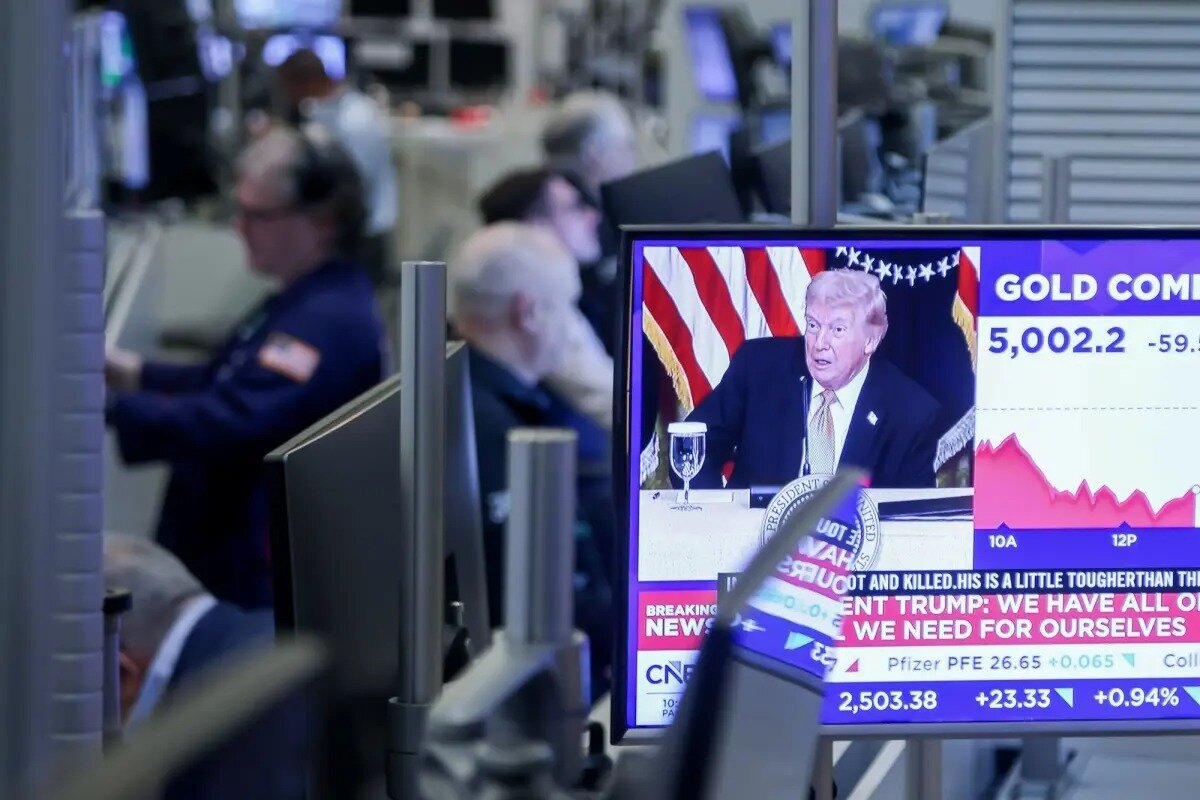
The initial assumption may have been that pressure on Iran would remain confined to a limited, controlled, and manageable framework. But the vortex of the Strait of Hormuz has shown that in today's deeply interconnected economy, war does not flow only where the missiles land. Part of the bill is now showing up in diesel prices, gas contracts, shipping insurance, the Treasury bond market, the Federal Reserve's interest rate, and the cost of financing America's $40 trillion debt.
For this reason, the biggest error in analyzing recent developments is to measure the severity of the crisis by the daily price of oil. Whether Brent crude sits at $95 or crosses $100 is only the first layer of the issue; the more important transformation is happening beneath the market's skin. The Hormuz shock has moved beyond crude oil, reaching refined products and gas, raising the cost of transport and production, and from there entering inflation and the "price of money" in the United States. The crude oil market still has tools to absorb the shock — increased exports from Iraq, rerouted shipments, capacity from other suppliers, and demand adjustments can offset part of the shortfall, which explains why the sharp drop in traffic through Hormuz has not necessarily translated into an equivalent explosion in Brent prices.
But this relative calm can be misleading, because the real point of transmission for the crisis is now less crude oil itself and more products like diesel and jet fuel. The rise of the average U.S. diesel price to $5.820 per gallon, an increase of roughly 55 percent since the start of the conflict, and the surge in diesel refining margins to more than $108 per barrel show that the issue has moved beyond a mere "shortage of oil barrels." Diesel directly fuels trucking, mining, agriculture, machinery, the cold chain, construction, and industrial production; therefore, its rise transmits to production costs and consumer prices faster than crude oil does. Trump may have counted, when deciding to attack, on America's position as the world's largest oil producer — but the strategic folly lies precisely in overlooking the difference between "having oil" and "being immune to an energy shock."
A country may have abundant crude oil, but if it lacks the right refined product, sufficient refining capacity, a secure shipping route, or adequate inventory at the point of consumption, it remains vulnerable to a price shock.
The same logic has become evident in the liquefied natural gas market. The rerouting of some Qatari and Emirati cargoes to ship-to-ship transfers outside the Strait of Hormuz may, from an operational standpoint, be a way to keep export flows moving, but from a political-economy standpoint it signals that the crisis has entered a deeper phase. When one of the most standardized and capital-intensive supply chains in global energy trade is forced to change its shipping pattern in order to bypass a geopolitical chokepoint, it means the risk is no longer reflected only in the oil price chart — it is settling into the cost structure of trade itself. Extra vessels, more expensive insurance, longer transit times, more complex operations, larger precautionary reserves, and higher legal risk are all costs that are ultimately passed on to the consumer or the investor. For this reason, "cargo passage" should not be mistaken for "trade returning to normal." Even if Hormuz is formally open, a strait whose passage carries the risk of seizure, attack, penalty, or a spike in insurance premiums is fundamentally different, economically speaking, from a normal route.
This is where the strategic error of the attack on Iran moves from the energy domain into U.S. monetary policy. The Federal Reserve faces an equation with no clean solution: raising interest rates does not reopen Hormuz and does not produce a single additional barrel of diesel, but if the energy shock feeds through into inflation expectations, wages, services, and the price of goods, the central bank cannot ignore it either. The Federal Reserve is now caught between two risks: an aggressive response could push the economy toward recession at a time when the labor market is already softening, while excessive delay could allow inflation to become entrenched again. In this way, Trump's decision has placed on the central bank's table an issue whose origin is not fundamentally monetary but whose consequences are directly monetary.
Yet the more important issue is not even the outcome of the Fed's next meeting; the deeper point lies in Christopher Waller's remarks about the erosion of the "safety and liquidity premium" of U.S. Treasury bonds. For decades, the U.S. government enjoyed an exceptional privilege: investors, due to the security, liquidity, and status of the dollar, were willing to hold Treasury bonds at lower yields. If this historic discount is now eroding, and if the economy's neutral interest rate is also structurally rising, then the United States would need to pay higher interest to attract capital even without a Hormuz shock — Hormuz has simply worsened the timing and intensity of this pressure.
This development has come at precisely the worst possible moment for the U.S. Treasury: federal debt has surpassed $40 trillion, the budget deficit remains large, and technology companies have become serious rivals for capital as they pursue a massive wave of investment in artificial intelligence, data centers, chips, and electricity. As a result, the U.S. government is no longer without competition in the capital market and must compete for the same dollars that large private companies are also seeking. Against this backdrop, the Hormuz vortex creates a dangerous feedback loop: expensive energy makes inflation stickier; sticky inflation limits room for interest rate cuts; higher rates raise the cost of issuing and rolling over debt; higher interest costs deepen the budget deficit; a larger deficit demands more bond issuance; and greater bond supply requires higher yields to attract buyers.
The issue is not that the United States is on the verge of bankruptcy — such a claim would be exaggerated and analytically of little value. The far more important issue is the shrinking of Washington's "freedom of action." A great power is not measured only by the volume of its resources, but also by the amount of free resources it can deploy in the next crisis. The state of America's Strategic Petroleum Reserve makes this point more concrete: after extensive releases, the reserve has fallen to its lowest level in more than four decades — meaning Washington, in order to contain the fallout of today's error, is consuming part of tomorrow's economic ammunition. Even rebuilding this reserve is not without cost or constraint, and the debate over using heavy Venezuelan crude has shown that oil specifications, refining capacity, and logistical limitations do not allow every barrel to simply replace one drawn from the emergency reserve.
The United States, of course, still has three major shields: enormous domestic production, its strategic reserve, and the deepest financial market in the world. None of these three shields has collapsed; but the strategic point is that the margin of safety on all three has narrowed. Shale cannot make up for any degree of Middle East disruption within a few weeks; the emergency reserve is far smaller than it once was; and the Treasury no longer necessarily enjoys the same historic discount on its borrowing costs. The real cost of Trump's decision should be sought precisely in this "shrinking margin of safety," not merely in a few extra dollars on the price of oil.
From this perspective, even an end to the conflict would not necessarily mean an end to the economic crisis. Markets have memory: shipping companies, after the Hormuz experience, will demand higher insurance premiums; energy companies will hold safer inventories; buyers will build alternative routes; supply chains will sacrifice some efficiency for security; and investors will demand higher returns to accept geopolitical risk.
The war may stop, but the "war risk premium" can remain embedded in the price of energy, trade, and capital.
This is precisely where Trump's folly turns from a military operation into a strategic error — because an operation can be measured by the number of targets destroyed, but a strategy must be judged by the final balance of power. If the outcome of the attack is that Iran comes under pressure while, at the same time, energy becomes more expensive, U.S. inflation remains sticky, the Federal Reserve has less room to maneuver, the Treasury borrows at higher rates, the strategic reserve shrinks, and the cost of projecting power rises for Washington itself, then success can no longer be measured simply by the map of the battlefield.
The most important number in this crisis may be neither $95 oil, nor $5.82 diesel, nor even the $40 trillion debt — the most important issue is their simultaneity. A narrow strait has linked an energy disruption to inflation, inflation to interest rates, interest rates to the cost of debt, and the cost of debt to the capacity of American foreign policy. Trump may have imagined that attacking Iran would send the main bill to Tehran; but the honorable resistance of the fighters, combined with the courageous prudence of the wise leadership of the Islamic Republic of Iran, has caused the Hormuz vortex to now return part of that very bill to Washington. The longer this situation continues, the less it will resemble the price of a barrel of oil, and the more it will resemble the price of America's money, debt, and power.
source: tehrantimes.com