What do gas prices in America reveal
What do gas prices in America reveal?
In an editorial, Kayhan discussed gasoline prices in the United States and the fuel challenge that could follow the closure of the Strait of Hormuz.
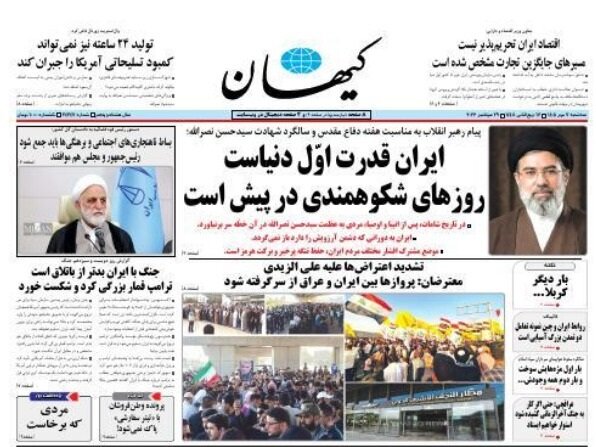
According to the newspaper, the Iranian nuclear issue has always been important for the United States, but what now directly affects the pockets and livelihoods of American citizens are the gasoline and diesel prices displayed at US gas stations. Reports about the Trump administration's behind-the-scenes discussions on eliminating fuel taxes, exempting agricultural diesel from taxes, and even Vice President J.D. Vance's proposal to ban diesel exports are described as signs of serious strain within the American economy. The article argues that when even European countries reduce fuel taxes to prevent social unrest, it demonstrates the significance of Iran's influence over global energy markets. Consequently, Kayhan contends that Iran should not cheaply relinquish its leverage over the Strait of Hormuz. In its view, the way to restrain the White House is not through diplomatic gestures or preemptive proposals, but through reducing trade and transit through the Strait.
Iran: The results of the New York trip will become clear later
In an analysis of President Masoud Pezeshkian's visit to New York, the Iran newspaper wrote that the trip also has an important domestic dimension. The president's participation at the world's most significant diplomatic platform comes at a time when Iranian society is closely following regional developments and economic and political pressures, while waiting to see tangible results from the government's diplomatic efforts. According to international affairs analyst Sabah Zangeneh, assessing the success of the trip will require observing developments in foreign policy over the next three months. Key factors include the impact of political changes in the United States and Israel on opponents of Donald Trump and Benjamin Netanyahu, how governments' attitudes toward Iran may evolve, and whether military attacks and pressure against Iran will continue or whether a more rational approach, particularly from the United States, might emerge.
Resalat: Iran holds the initiative
In an article discussing America's difficulties in the region and the ongoing confrontation with Iran, Resalat argued that the central issue is no longer simply whether to accept or reject a diplomatic proposal. Rather, it is a struggle of wills in which the Islamic Republic seeks to consolidate its position through a strategy of "active resistance" and a combination of diplomacy and military leverage. The newspaper claims that Washington aims to weaken Iran's deterrence capabilities and geopolitical power through maritime pressure and economic sanctions before offering any sanctions relief. However, it argues that Tehran, having learned from past American actions, has altered the strategic equation. According to Resalat, the current dispute over the Persian Gulf and the strategic Strait of Hormuz is actually a visible part of a much larger struggle over preserving Iran's strategic leverage against imperialist ambitions.
Ham-Mihan: Welcoming China's four-point plan
Ham-Mihan examined China's four-point proposal and Beijing's role in regional developments. Citing international affairs analyst Mohsen Pak Aeen, it argued that China, as a major global power, can play a constructive role in addressing regional issues. Pak Aeen said that Iran welcomes China's initiative because its four points largely reflect Iranian positions expressed through Chinese diplomatic language. The plan emphasizes ending conflict, regional cooperation for mutual security, prioritizing the Palestinian issue in West Asia, and adherence to international law. He stated that Iran supports a regional security framework without outside interference and believes neighboring countries should cooperate directly with one another. While welcoming China's involvement, he argued that the United States still lacks the necessary political will to resolve these issues and instead seeks gains without making concessions. According to him, Iran recognizes this approach and acts in accordance with its national interests.
Etemad: Why Iran should pursue better relations with Saudi Arabia
In an analysis of Iran's policy toward Saudi Arabia, Etemad argued that current regional and global realities have led Iran to avoid confrontation with neighboring countries, especially Saudi Arabia, and instead emphasize areas of common interest. The newspaper stated that strengthening regional relations, preventing the emergence of an Arab-Israeli alignment and the further development of the Abraham Accords, utilizing Iran's influence in the Islamic world, discouraging excessive Saudi-Israeli rapprochement, expanding ties with Persian Gulf neighbors to help mitigate the impact of sanctions, and securing a role in the region's post-war security structure all require improving relations with Riyadh. According to Etemad, despite existing disagreements, expanding relations with Saudi Arabia is essential because stronger ties with Riyadh are viewed as the key to broader engagement with the countries of the region.
source: tehrantimes.com