US pressure failed to force Iran to abandon its nuclear strategy says political analyst
US pressure failed to force Iran to abandon its nuclear strategy, says political analyst
TEHRAN – Sina Azodi, Assistant Professor of Middle East Politics and Director of the Middle East Studies MA Program at George Washington University's Elliott School of International Affairs, has become one of the most prominent voices on Iran's nuclear program.
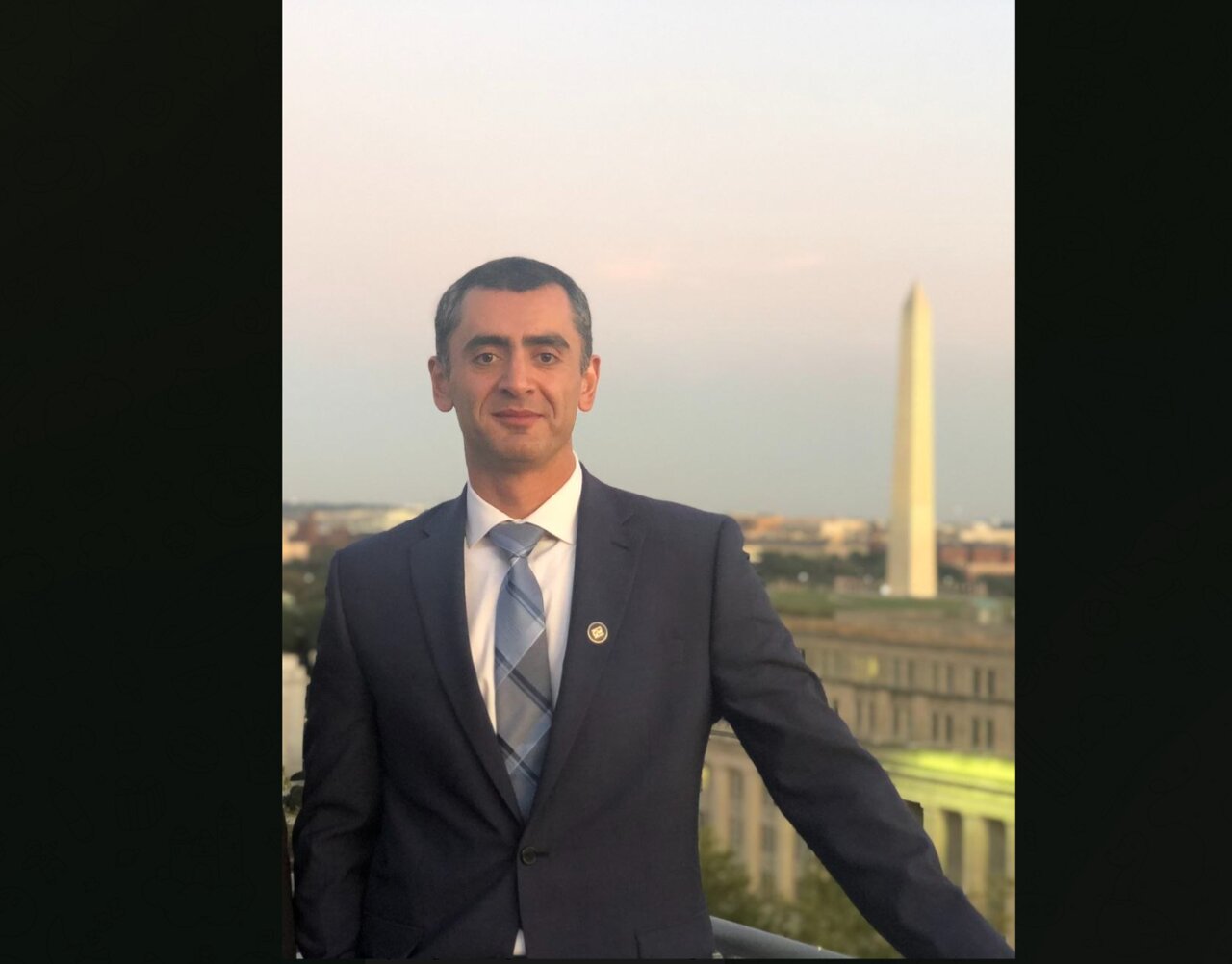
His book "Iran and the Bomb: The United States, Iran, and the Nuclear Question" traces the program across five decades, drawing on declassified U.S. documents, Iranian memoirs, and interviews with Iranian scientists and officials.
His recent articles argue that zero enrichment was never realistic and that neither airpower nor nuclear superiority forced Iran to capitulate during the 2026 war.
Tehran Times spoke with Professor Azodi about his book, the 2026 war, the Islamabad Memorandum of Understanding, and prospects for renewed U.S.-Iran talks.
Below is the full text of the interview:
Your book, Iran and the Bomb: The United States, Iran, and the Nuclear Question, traces Iran’s nuclear program back to the 1950s, when the U.S. supported Iran’s nuclear development. What does Washington today seem to have forgotten about that early partnership?
I think what is critical is that, yes, Atoms for Peace was provided to Iranians by the Eisenhower administration. But one thing that most people forget is that back then the United States was encouraging Iran to diversify its energy sources and recommended that Iran invest in nuclear energy. There is a report from Stanford University that I cite in the book, and that report suggested to the Iranian government that it would need some 20,000 megawatts of electricity by the year 1994 and that nuclear energy was the best viable option.
I say this is something that the American side has forgotten. It is because of the fact that the very same people who were encouraging that later came to question the very reasoning of the Iranian nuclear program, including people like Henry Kissinger, who said many times that the Shah was visionary, that he was investing for Iran’s future, and encouraged him to buy nuclear reactors. Then later he switched sides and questioned the Iranian nuclear program by suggesting that Iran had oil and gas.
In your August 25 article, “Turns out having nukes provided the US very little leverage,” you argued that U.S. nuclear superiority gave Washington little leverage over Iran. What does this tell us about the role of nuclear weapons in U.S.-Iran relations?
What I was trying to explain in that article was that I looked at historical episodes where a middle power had fought a war with a great power armed with nuclear weapons, and I highlighted the fact that nuclear weapons played no role in those conflicts. The conflicts that I looked at were the Falklands War between Argentina and the United Kingdom, the Russia-Ukraine conflict, and the recent Iran-United States war, where nuclear weapons played no role whatsoever.
What it means is that nuclear weapons are an effective tool of deterrence, but provide no coercive leverage, meaning that you cannot use nuclear weapons to force another state to back down. It is an effective tool of deterrence with the threat of punishment, but I showcased that in these conflicts nuclear weapons played no role and they were not even considered in the political discussions of those countries that had them.
In your book, you mention that the strategic logic of Iran’s nuclear program survived the 1979 revolution. What exactly survived: the technology, the security rationale, or both?
What I was trying to explain was that the logic of the program survived The regime change because the threat perceptions have not fundamentally changed. What I mean by that is that regardless of the ruling regime in Iran, the political leadership that sits in Tehran, when they look at their neighborhood, they see threats coming from all over.
From the Persian Gulf, it is a place where Iran was historically invaded. The first time that Iranians had to deal with a naval power was in the 1600s, when the Portuguese Navy showed up and occupied Hormuz Island, and the Iranians did not have the naval power to counter that threat. Again, in World War II, Iran was invaded from the Persian Gulf. This is why the Shah insisted that he needed to be the dominant power in the Persian Gulf.
He said that the Strait of Hormuz is our jugular vein, and you hear almost similar remarks from the leaders of the Islamic Republic, who think that the security of the Persian Gulf is paramount to Iran’s security. This is where Iran lives. Iran cannot go anywhere else.
Also, Iranians look at their neighborhood with threats coming mostly from the west. The Shah was extremely concerned with the threat of the Ba’athist regimes in Iraq and Syria. He wanted to be ready in case Iraq developed nuclear weapons, and we saw what happened in 1980, when Iraq finally decided that it needed to counter what, in Saddam’s view, was the Iranian threat.
So, my argument is that these threat perceptions have survived the 1979 revolution, and I think they will continue to do so. It doesn’t matter, from my perspective, which ruling regime will be in Tehran. They see threats coming from pretty much all over the place.
Your book discusses the internal debates over uranium enrichment. What made enrichment so important to Iran rather than simply obtaining nuclear fuel from abroad?
Many reasons. I mean, two main reasons. First of all, after the revolution, when the leadership in Tehran decided to restart the program, the late President Hashemi Rafsanjani was really the main driver of restarting the program.
They quickly realized that the very same countries that were encouraging Iran to buy nuclear reactors from them not only didn’t sell nuclear reactors, but also refused to deliver the fuel that Iran had bought. In the case of Europe, for example, they refused deliver the fuel that Iran had paid for it. They told Iranians that they didn’t have a nuclear reactor, and Iranians asked the Europeans to sell nuclear reactors to Iran, and they said, you know, you have oil and gas; you don’t need nuclear technology.
And this was really under the pressure of the Reagan administration, which by 1983 had started a campaign to limit Iran’s access to nuclear technology. Iranians thought that they had made a lot of investments in the nuclear program. They either had the option of abandoning everything or trying to somehow resurrect the program.
And this is why they decided by 1987 to pursue enrichment, which could give the Iranians the option of providing nuclear fuel or nuclear weapons.
And this leads to my second point, which is the threat that Iraq, the acute security threat that Iraq, its chemical weapons and its nuclear program, posed to Iran. The Iranian leadership back then thought that Iraq had chemical weapons, was using them, nobody was saying anything to them, and if they got their hands on nuclear weapons, they might use one and nobody would say anything to them.
So, based on the public interviews that I’ve seen from Iranian officials, they wanted to be ready for the day that if Iraq used or developed a nuclear arsenal, which would impose a serious threat to Iran’s security.
In your article “History tells us coercion through airpower alone won’t work,” published on February 24, you argued that air power alone could not force Iran to capitulate. After the U.S.-Israeli war that began on February 28, 2026, did that argument still hold up?
Absolutely, and we’ve seen what happened. And again, this is a historical case study that I did. I showed that in previous air campaigns, the party that used air power was unable to force the other side to capitulate.
I used many examples. I had to cut down some of them, but going back to 1945, when the Allied countries were using firebombs on Dresden and Japanese cities, they were unable to force them to surrender until Germany was defeated on the ground and Japan was bombed twice by nuclear weapons, and was facing the imminent threat of Soviet invasion.
So that’s one case that I did. In the 1990s, Yugoslavia did not back down despite the NATO air campaign until there was a threat of using ground troops, and then they surrendered.
So, in all of these cases, you see that air power is a very effective tool of destruction, but it is unable to deliver the political victory that the other side is seeking. You need ground troops to force surrender. And this is why, again, we see that after 40 days of intense air campaigns, Iranians did not surrender.
So, what do you think Washington ultimately achieved? Just coercion and degradation of Iran’s capabilities, or something else?
Well, degrading the military capability was an achievement, but the fact remains that victory in war is not defined by the amount of destruction that you bring. It is defined by whether one side can achieve its political objective of the war. And this is the classic definition of victory.
So, if diplomacy and war are the two sides of the same coin, if diplomacy failed to achieve the political objective, the question is whether war was able to achieve the same political objective.
And when we look at the political demands of the Trump administration, which was, first of all, an unconditional surrender. This is in Donald Trump’s Truth Social. Was unconditional surrender achieved? The answer is clearly no. Was regime change achieved? The answer is clearly no.
Did the United States, or Trump himself, play a role in choosing the next Supreme Leader of Iran, as he had demanded? Did he play a role in that? So, all of these answers are no.
So, you cannot say that the U.S. won the war. Now, on the Iranian side, Iran’s political objective of the war was simple: survive. And it was able to survive. That political objective was achieved.
In your May 19 Foreign Policy article, “The Myth of Zero Enrichment,” you argued that zero enrichment was never realistic. Why is enrichment so important to Iran?
There are many factors. One is what I mentioned earlier, the fact that Iranians know that nuclear fuel will never arrive. The guarantees of delivering nuclear fuel are meaningless from the perspective of the Iranian leadership.
In fact, as I explain in the book, the reason that Iran decided to start enriching to 20 percent was that the Iranian leadership in 2011 believed that the West would not provide the 20 percent nuclear fuel for the Tehran Research Reactor. And this would cause an embarrassment for the country. This is their words, not mine. And that’s why they needed to start enriching.
So, one is the historical precedent, which I think plays a critical role, and the lack of trust that comes with that. And second, I think it’s the prestige that comes with it. This nationalistic sentiment that comes with it, because Iran, along with Israel, is the only country in the Middle East that has the capacity to produce its own material.
So, this is why I think that they will not give up on the principle of enrichment. And now that we’re seeing a nuclear agreement between the U.S. and Saudi Arabia, which includes the option of enrichment, I think that this agreement only makes the Iranian position more stiffened.
After the U.S. withdrawal from the JCPOA, the 2026 war, and the failure of the June 17 Islamabad memorandum, can Iran realistically trust another nuclear agreement with Washington?
There was never trust, and there’s never trust in international politics because your friend today can be your enemy tomorrow. I mean, several times it has happened.
But international agreements are really about credibility. Now, does Washington have any credibility in Tehran? The answer is really no.
I mean, we’ve had the experience of the JCPOA. We had the experience twice of Iranians and Americans negotiating, and as FM Araghchi has called it, the negotiation table was bombed.
So, lack of credibility is there. There are forces in both Tehran and Washington who try to undermine any diplomatic path. So, I think all of these factors play a role.
In your August 25 analysis, you argued that Iran’s conventional capabilities give it more practical leverage than nuclear weapons. After the 2026 war, do you still believe that?
I think so, yes. First of all, the bar for the deployment of nuclear weapons is very high. This is why you’ve seen President Trump say recently, when he was asked about using nuclear weapons in Iran, that it was a stupid question. He said, you know, “I’m not even thinking about it.”
And, as a side note, there’s a lot of discussion that a tactical weapon might be used. There’s no such discussion, and it is extremely unlikely.
But we saw what happened. Iranians were able to deliver severe punishment on international shipping, disrupt international and global markets, fertilizers, inflation across the world. In the United States, energy markets have been disrupted.
So, and plus, the amount of damage that Iran has been able to deliver with its conventional weapons, I think has been enough or punishing enough, in my opinion, rather than just merely having nuclear weapons.
Your book was largely researched before this war. If you rewrote the final chapter today, what is the one thing you would change, and what is the one thing you would keep exactly as it is?
I think I’ll keep everything the way it is. I mean, of course, I will add the recent war, but my conclusions have not changed because, in the conclusion, I make the point that Iran’s nuclear program is extremely unlikely to be dismantled. I still stand by that argument.
I still think that the option of Iran going for the bomb is less likely, but the other scenario, which is Iran regaining its nuclear capacity while staying below the finish line, is the most likely scenario. And the evidence that we’ve seen that Iran is trying to rebuild its nuclear program points to this scenario.
After Trump’s September 22 UN speech, in which he presented a nuclear deal as an alternative to further military action, do you think Washington is still seeking a nuclear agreement with Iran, or is regime change now part of its strategy?
I think they are using the regime-change issue to get an agreement with Iran. I don’t think the Trump administration cares who is in power. On June 18, 2026, one day after the U.S.-Iran Islamabad Memorandum of Understanding was signed, Trump praised the Iranian leadership, calling them the “smart people” his administration had dealt with.Then, on July 8, 2026, he described the Iranian leadership in much harsher terms, calling them “sick,” “vicious” and “violent.”
So, his position fluctuates. He starts, you know, on his Truth Social at 2 a.m. D.C. time. In a way, I think that he likes to use this unpredictability and outlandish remarks to threaten other states.
It works for him, but it doesn’t work for the United States and its credibility around the globe. And we’ve seen how Europeans and Canadians are now even using the threat narrative in reference to the United States. I think this is key now.
So, I guess the point I’m trying to make is that all of his remarks, including what he said at the General Assembly on
|when he said, “I’m going to annihilate Iran,” and “I’m going to send Iran back to the Stone Age,” are, I think, just threats to force Iran [to negotiate].
At the same time, in that September 22 speech, Trump presented the choice as being between reaching a deal with Iran and “annihilating the Islamic Republic.” He also said he believed a deal could be reached after the U.S. midterm elections.
Despite Trump’s threats in his speech at the UN General Assembly, Iranian and U.S. officials still met and held talks. Do you think these new talks could lead to a concrete outcome, or are we likely to see the cycle of negotiations followed by escalating tensions continue?
I think we’ve entered a phase of this conflict, a fragile ceasefire. The Iranian side likes to drag Donald Trump into the midterm elections and keep the political pressure on him. I mean, gas prices again are very high in the U.S. I saw a tweet from Donald Trump from 2012 in which he said, “Fire Obama because gas prices are up.” So this is what the Iranians, I think, are trying to do.
But he wants to end everything very quickly and say, “I want the conflict to be over.” But I don’t. And just because of this, I think the conflict, or this fragile ceasefire, is going to hold on for a few months, at least until the elections, the midterm elections in November.
Is there anything else you would like to add that you think is important for understanding the developments we are seeing now?
One thing I think is important for understanding the current situation is the three scenarios for Iran’s nuclear program.
The first scenario is the so-called Libya model, in which Iran agrees to dismantle its nuclear program in return for sweeping sanctions relief, the promise of nuclear fuel, and so on. Because of the lack of trust I mentioned and the historical precedent, I don’t think it’s going to happen.
The second scenario is Iran trying to cross the finish line and develop a small nuclear arsenal. I think this scenario is possible but less likely because if Iran develops nuclear weapons, the Saudis are going to do it too. Then Iran is going to get stuck in a nuclear arms race with Saudi Arabia and Israel, both of which have greater financial resources and better conventional military capabilities.
So that’s the second scenario. The third scenario, I think, is going back to threshold status, when Iran reconstructs its enrichment capacity but does not develop nuclear weapons.
source: tehrantimes.com