Iraqs sovereignty should not be defined by a single day
Iraq’s sovereignty should not be defined by a single day
TEHRAN – Freedom without the means to defend it is only a promise and sovereignty without the power to protect it is only a symbol.
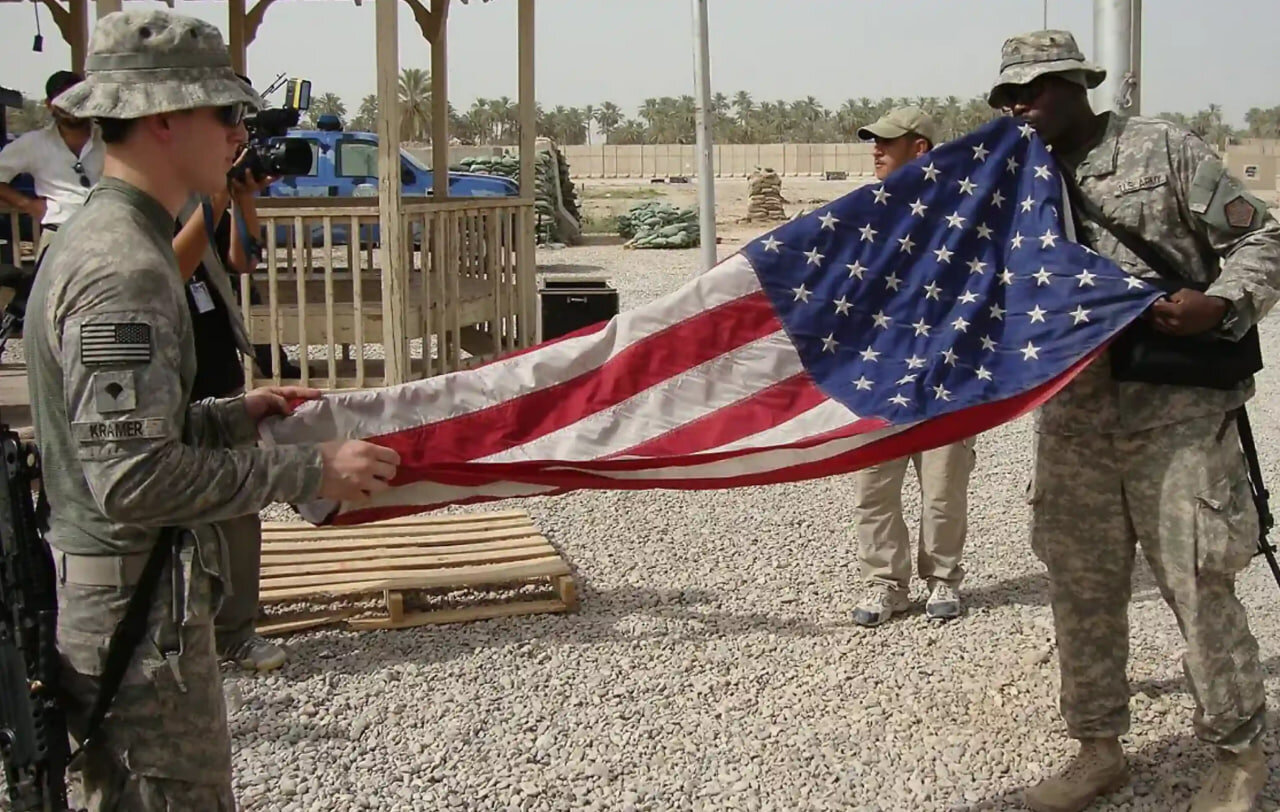
This is the situation facing the Iraqi people following the government’s announcement that September 30, 2026, will be designated as a national day known as “Sovereignty Day.” Baghdad has also declared four days of public holidays, from Wednesday through Saturday, to mark the event.
On the surface, the occasion appears to mark a legitimate national milestone. At its core, however, it raises an ambiguity that deserves the attention of both Arab and Iraqi leaders.
It is self-evident that sovereignty, both in political science and in the experience of nations that have endured the struggles of liberation, is not defined by a day proclaimed from a podium. It is measured instead by principles that people embraced before their governments did.
Chief among them is the departure of the last foreign soldier from Iraq’s territory and the sole authority of national security forces to defend its land, sea, and air. They also include freedom in political and economic decision-making from outside pressure, and the right of the people to choose their own path rather than accept imposed alternatives.
When these conditions are met, a date becomes a symbol worthy of celebration. When they are not, any day given this name remains little more than a title without substance.
At the heart of the debate in Iraqi political and media circles is not the name of the day itself. It is the attempt to link it, either openly or indirectly, to the question of disarming the resistance factions.
Critics argue that this is a methodological error before it is a political one. The literature and historical experience of states that emerged from occupation link sovereignty to the departure of foreign forces and the independence of national decision-making. They do not define it as the disarmament of the forces that helped achieve that independence.
In Iraq’s case, the weapons of the resistance were never used to rebel against the state. Rather, they were used first to defeat al-Qaeda and later Daesh, helping to clear Iraqi territory of a transnational terrorist threat. Their role also extended beyond Iraq’s borders, supporting other resistance fronts in the region, above all the Palestinian cause.
A similar question was raised during a meeting that brought together political and military leaders, Popular Mobilization Forces leaders, and the prime minister. The discussion focused on the rationale and timing of any move against the weapons or leadership of the resistance. It also considered the strong social support these forces enjoy among Iraqis and the potentially difficult-to-control reactions that could follow.
At a meeting attended by prominent military and political figures directly concerned with the matter, participants discussed the view that restricting or confiscating weapons did not reflect a genuine popular demand in Iraq. Rather, they saw it as a response to external pressure, including threats to restrict Iraqi funds.
This account was reportedly conveyed by people close to the decision-makers themselves, not only by opponents of the policy. This raises a fundamental question. Who is actually setting the agenda for “Sovereignty Day”?
The debate over sovereignty and disarmament in Iraq cannot be understood in isolation from the wider regional context. The region is experiencing an ongoing confrontation between Washington and Tel Aviv on one side and the Axis of Resistance on the other. Any discussion of disarmament in Baghdad must therefore be understood in the context of this broader conflict.
Nor is this debate new. It is part of a long struggle over the balance of military and political power in West Asia. For decades, Washington, Tel Aviv, and their allies have sought to weaken the capabilities of resistance factions opposed to the Zionist regime by targeting their leaders and positions across the region.
This shows that the real struggle is over influence and weapons, rather than the slogans repeatedly invoked to frame it.
The Israeli regime entered an unprecedented strategic crisis after October 7, 2023. The conflict was no longer, as it had been during the previous six rounds of fighting in Gaza, limited to a single geographic area. Instead, it expanded to include supporting fronts in Lebanon, Iraq, Yemen, and Iran.
Washington and its allies, therefore, faced a regional crisis with several interconnected fronts. In response, they adopted a common approach of treating the weapons of resistance forces in each country as a purely domestic matter, framing the issue in terms of sovereignty and state-building.
In Lebanon, calls to hand over weapons are made in the name of completing state sovereignty, even as Israeli aggression continues unabated.
In Gaza, bombardment and destruction continue, while the weapons of the Palestinian resistance forces remain a central factor in any future settlement.
In Yemen, military pressure on Ansarallah continues, while Iran resists sustained political, economic, and military coercion.
This leaves little doubt that the issue goes beyond Iraq’s internal affairs and is deeper than a debate over the strength of the state.
In Iraq, many fear that any hasty move to address the issue of resistance weapons could trigger internal strife or confrontation between the official security forces and forces that defeated Daesh and openly supported the Palestinian cause.
The recent experience in Syria may offer an instructive lesson. Following the political transformation in Damascus, the Israeli regime launched widespread attacks on Syrian army weapons depots and defensive systems. This highlights that stripping a state of its weapons can leave it more exposed and weaken its ability to defend itself. Disarmament can also become part of a broader effort to reshape the balance of power within the country.
A legitimate question naturally arises. Do foreign forces leave other countries of their own accord? Or does their departure usually come after armed resistance, widespread public opposition, or sustained protests and political pressure, as seen in numerous liberation struggles throughout modern history?
Had the matter been left entirely to foreign powers, it would be difficult to imagine them willingly abandoning the bases they established. American forces, for example, remain stationed at military bases in Japan and South Korea decades after the circumstances that originally justified their presence.
This confirms that foreign military presence is shaped by broader American strategic interests rather than being determined solely by the host country’s wishes.
The American announcement of the withdrawal or redeployment of its forces in Iraq should not be seen as an act of generosity toward Baghdad or the peoples of the region.
Rather, it should be understood as a response to the real risks faced by American forces, whether from Iran or other resistance fronts. These risks were among the key factors that led Washington to reconsider the nature of its military presence in the region.
If “Sovereignty Day” is to carry any genuine meaning, it should mark the beginning of a broader national project to complete Iraq’s sovereignty. That means regulating arms, pursuing development, and securing full control over its land, sea, and air. It should not become a ceremonial occasion whose significance ends when the official celebrations are over.
Ultimately, completing this national project requires concrete steps that go beyond celebratory rhetoric.
These include ending the Turkish military presence on Iraqi soil. All armed anti-Iranian terrorist groups should also be removed from Iraqi territory without exception. The Peshmerga forces should be integrated into the General Command of the Armed Forces in accordance with the Iraqi Constitution.
Iraq must also have an advanced national air-defense system capable of protecting its airspace, which has been repeatedly violated. Finally, the American trusteeship over Iraqi funds held at the Federal Reserve should come to an end.
This would restore Iraq’s independent control over its economic and financial decisions. If these requirements are fulfilled, rather than simply proclaiming a date as “Sovereignty Day,” Iraqis from north to south will be able to celebrate it with genuine justification, not simply as a matter of courtesy.
Iraqi resistance leaders have warned decision-makers in Baghdad that sovereignty built at the expense of those who paid for it with their blood could ultimately become a calamity for those who pursue it.
The Americans have repeatedly contributed to internal instability. Now, they are mobilizing their forces and proxies so that they can later claim, as they did in 2011: “Look at what happened after we withdrew. This is the result: chaos, disorder, and bloodshed.”
The international community would then legitimize their return. At that point, “Sovereignty Day” would risk becoming just another episode in Iraq’s troubled history, remembered more for the headlines than for any lasting achievement.
source: tehrantimes.com