Araghchis diplomacy in NY puts war Hormuz and nuclear rights at center of Irans UN outreach
Araghchi’s diplomacy in NY puts war, Hormuz and nuclear rights at center of Iran’s UN outreach
TEHRAN- Iranian Foreign Minister Abbas Araghchi has concluded an intensive round of diplomatic consultations in New York, using the 81st session of the United Nations General Assembly to press Iran’s positions on the war, the Strait of Hormuz, the nuclear issue, international law and the continuation of diplomacy.
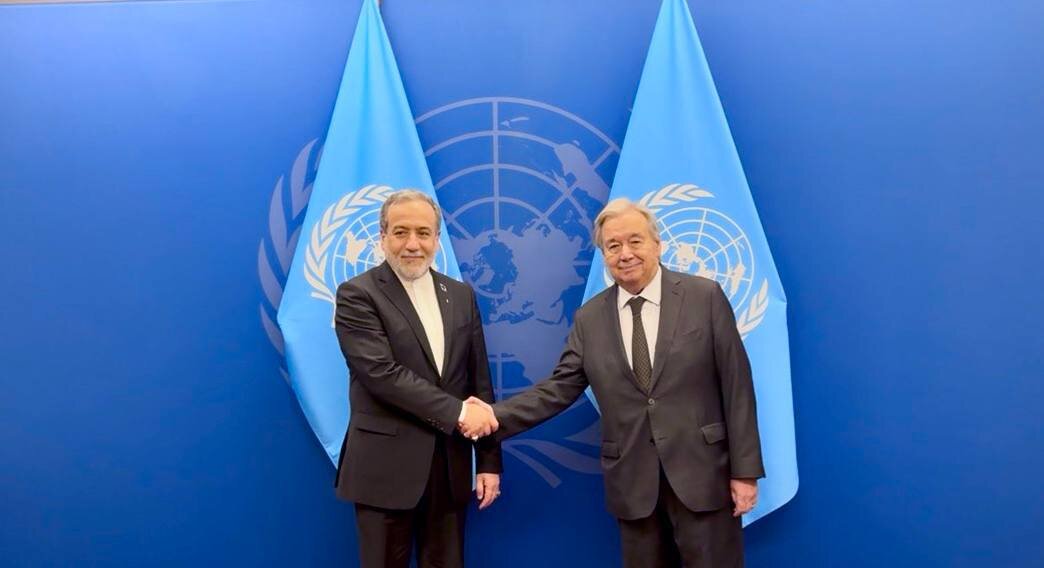
Araghchi left New York for Tehran early Tuesday after several days of bilateral and multilateral meetings with foreign ministers, senior officials, United Nations representatives, international organizations, think tanks and media outlets. He also accompanied President Masoud Pezeshkian during parts of the Iranian delegation’s intensive UNGA program.
The diplomatic activity came against the backdrop of the ongoing confrontation between Iran and the United States and Israel, with Tehran seeking to place its account of the conflict, its security concerns and its conditions for a diplomatic settlement before the international community.
Diplomacy amid war
In his assessment of the New York mission, Araghchi said one of Iran’s principal objectives had been to ensure that the Iranian people’s legitimate grievances and suffering were heard internationally, while defending the country’s national interests and demonstrating that Iran remained an active and confident participant in international diplomacy.
He said the large number of meetings requested by other governments demonstrated that Iran had not become diplomatically isolated. Araghchi said many countries had expressed an interest in engaging with Iran and that the meetings provided an opportunity to discuss both bilateral issues and the wider regional crisis.
A central element of the Iranian diplomatic message was the war and its consequences for regional security, particularly the situation surrounding the Strait of Hormuz. Araghchi said Iran had made a deliberate effort to explain its position on the strategic waterway to both the United States and the wider international community.
Hormuz becomes the immediate diplomatic issue
The Strait of Hormuz emerged as the most immediate issue in Araghchi’s consultations.
According to the Iranian foreign minister, Tehran has presented conditions that must be fulfilled before the waterway can be reopened. He described those conditions as fair and reasonable, arguing that if Washington genuinely seeks a negotiated and peaceful solution, Iran has already presented a framework for achieving one.
Araghchi said Iran’s seven-point proposal had been transmitted to Washington through Qatari mediation. Following a fresh meeting with a Qatari mediator in New York, the two sides discussed ideas for meeting Iran’s conditions, with the mediator expected to relay those ideas to the US side and convey Washington’s response back to Tehran.
Araghchi said he expected the process to produce a response soon, while making clear that any subsequent decision would be taken in Tehran. He also stressed that communication through Qatari and Pakistani intermediaries had existed previously but had become more substantive following Iran’s latest proposal.
The significance of the Hormuz issue extends beyond maritime navigation in Tehran’s presentation of the crisis. Iran has linked the reopening of the waterway to broader security conditions, arguing that the issue cannot be separated from the country’s national security and the wider confrontation with Washington.
That position was reiterated by Araghchi after reports emerged suggesting that Tehran might have modified its conditions. He categorically rejected that interpretation, saying there had been “no change” in Iran’s position and that the conditions for reopening the Strait remained clear. He said the immediate issue under discussion was Hormuz and warned against deliberate media speculation about Iranian flexibility.
Tehran presses UN over violations
One of Araghchi’s most consequential meetings was with UN Secretary-General António Guterres on the final day of his New York visit.
Araghchi briefed Guterres on developments in West Asia following US-Israeli military aggression, and criticized the United Nations’ failure to respond adequately to violations of the UN Charter and international law.
He argued that Iran, as a founding member of the United Nations, expected the organization and its member states to respond to blatant breaches of international law, particularly actions involving a permanent member of the Security Council. He called for an explicit condemnation of Washington’s interventionist measures and threats against Iran.
Araghchi also referred to two rounds of US and Israeli attacks on Iran during negotiations in less than a year, as well as the continuation of a naval blockade and “economic terrorism.”
He stressed that Iran would continue to pursue accountability for those responsible for war crimes.
The meeting also covered Iran’s complaint regarding restrictions imposed by the United States on the normal activities of Iran’s UN mission. Araghchi called on the UN Secretary-General to take steps to ensure Washington meets its obligations under the UN Headquarters Agreement.
Nuclear issue remains part of Tehran’s broader diplomatic message
While Hormuz was presented as the immediate issue in the latest mediation effort, Araghchi also reiterated Iran’s positions on its nuclear program and its national rights.
In his meetings during the UNGA, the foreign minister linked the nuclear issue to the broader question of Iran’s rights, national sovereignty and the future of diplomacy. The Iranian delegation’s approach was therefore not limited to seeking a temporary arrangement over maritime traffic but sought to frame any diplomatic process within a wider set of security and political concerns.
This distinction is important in understanding Tehran’s position: Iranian officials have continued to emphasize that diplomacy remains available, while arguing that negotiations must address the consequences of military action, economic pressure and violations of Iran’s sovereign rights.
Outreach to Russia and the Global South
Araghchi’s New York diplomacy also extended beyond the immediate Iran-US dispute.
The Iranian foreign minister held talks with Mali’s Foreign Minister Abdoulaye Diop, where he emphasized Tehran’s interest in strengthening relations with developing countries, particularly African states and members of the Alliance of Sahel States.
Araghchi expressed Iran’s readiness to hold a joint meeting with the three members of the Sahel alliance and reiterated Tehran’s stated support for the independence and national sovereignty of developing countries. He also criticized European interference in the internal affairs of Sahel states.
A similar message emerged from his meeting with Nigerien Foreign Minister Bakary Yaou Sangaré. Araghchi welcomed Niger’s position against the politicized or instrumental use of the International Atomic Energy Agency’s Board of Governors against Iran and discussed expanding bilateral relations and cooperation within the Sahel alliance framework.
Araghchi also met Sri Lankan Foreign Minister Vijitha Herath on the sidelines of the UNGA, as part of a broader series of talks with counterparts from different regions.
A diplomatic message shaped by confrontation
Taken together, Araghchi’s New York meetings reflected an Iranian diplomatic strategy built around three interconnected messages: Tehran says it remains open to diplomacy; it rejects negotiations under coercive conditions; and it intends to link any progress toward de-escalation to concrete security and political arrangements.
The seven-point proposal transmitted through Qatar represents the most immediate channel for testing whether that approach can produce movement, with Tehran awaiting Washington’s response through the mediators. At the same time, Araghchi’s meetings at the United Nations demonstrate that Iran is pursuing a broader diplomatic campaign over the war, international law, the nuclear issue, sanctions and regional security.
For an Iranian diplomatic delegation attending a UN General Assembly held amid an ongoing military confrontation, the New York mission therefore served two purposes simultaneously: defending Iran’s position before the international community and keeping channels for a negotiated settlement open.
Araghchi’s departure from New York does not mark the end of that process. As he emphasized before leaving, the channels through Qatar and other mediators remain available, and any response from Washington is expected to be assessed by Tehran before Iran determines its next step.
source: tehrantimes.com