Ramadan unites Muslims worldwide with unique traditions
Ramadan unites Muslims worldwide with unique traditions
TEHRAN – Ramadan is a month that unites Muslims from all over the world by observing religious rituals with unique traditions that may be different but have the same purposes.

Ramadan is the ninth month of the Islamic lunar calendar and the month in which Muslims believe the Quran was revealed. Fasting during the month of Ramadan is one of the Five Pillars of Islam.
The month is spent by Muslims fasting during the daylight hours from dawn to sunset. Muslims believe that the Quran was sent down to the lowest heaven during this month, thus being prepared for gradual revelation by Jibraeel (Gabriel) to Prophet Mohammad (PBUH). The first day of the next month, Shawwal, is spent in celebration and is observed as the “Festival of Breaking Fast” or Eid al-Fitr.
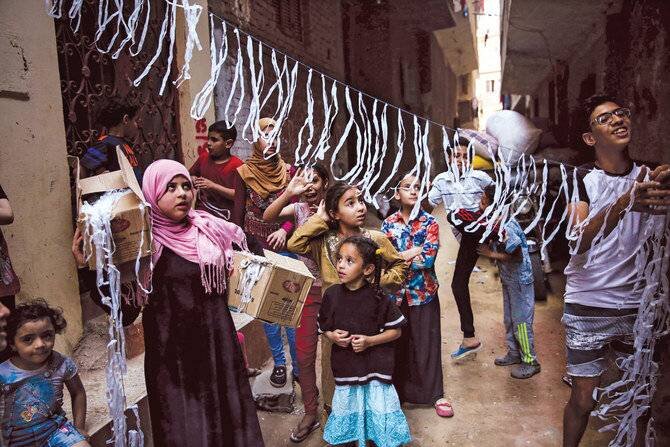
Roughly two billion people from different cultural backgrounds celebrate the month in their own way. Ramadan is more than fasting and praying; it is a time to get together and uphold traditions and customs.
In addition to Saudi Arabia, Iraq, Turkey, Egypt, Syria, Morocco, Indonesia, Pakistan, India, Iran, the UAE, and other Muslim countries, many individuals in non-Muslim countries also participate in Ramadan traditions. Ramadan is celebrated in the UK, Canada, the US, and some other European countries.
Although they have the same religious practices during the month, fasting and worshiping, but the rituals vary from country to country.
Ramadan Lantern / Egypt
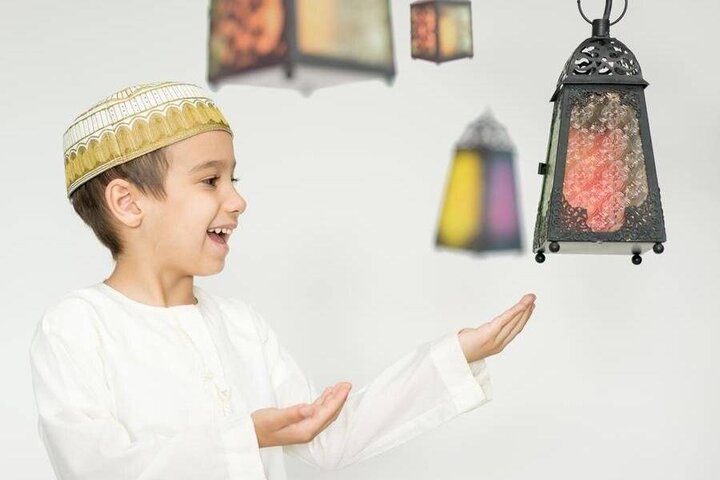
During Ramadan, Egyptians decorate the streets with lanterns to illuminate the entire city during the holy month. These lanterns symbolize unity and joy.
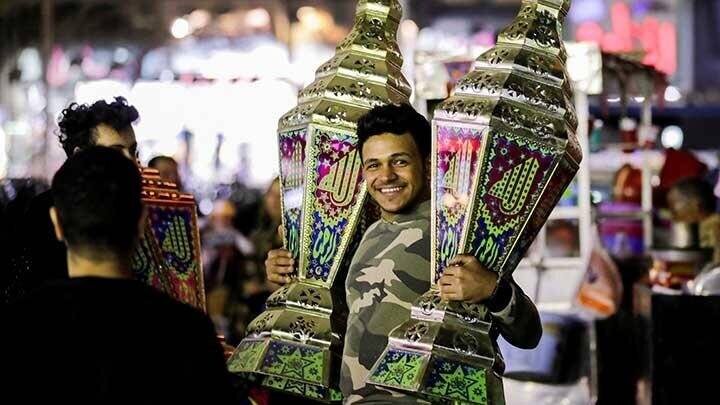
The origins of the Ramadan lantern history trace back to Egypt during the Fatimid era, specifically in 358 AH (around 969 AD), when Caliph Al-Mu’izz li-Din Allah entered Cairo for the first time on the fifth day of Ramadan. He arrived in the city after sunset. So people welcomed him with candles placed in wooden frames that prevented them from going out. Later, these wooden frames evolved into lanterns decorated with colourful glasses.
Suhoor drummer /Turkey
Like many other Middle Eastern countries, more than 20,000 drummers roam the streets of Turkey to wake Muslims up for the morning prayer and suhoor (pre-dawn meal) before sunrise. Drummers in Turkey wear traditional Ottoman attire, red hats, and vests.
Recently, Turkish authorities have introduced a membership card for drummers to instil a sense of pride in them and encourage the younger generation to keep this long-standing tradition alive in the country.
Children recite poems / the UAE
Haq Al Laila is a tradition observed on the 13th, 14th, and 15th of Ramadan in the UAE. Children put on colorful clothes and go from door to door to sing songs and receive sweets. The song means give sweet to us, may God reward you, and you visit His house in Mecca.
Eating food prepared by neighbors / Thailand
In Thailand, women leave their houses before they break their fast (iftar). They sit in front of one of their homes and have iftar together. The men do not eat the food their wives have made. Instead, they eat the foods prepared by other men’s wives.
Dawn caller / Morocco
Dressed in traditional gandora, hat, and simple pair of slippers, a dawn caller walks through the streets, gently beating his drum and calling out to wake people up to eat before dawn. He is chosen by people because of his honesty. The tradition dates back to the 7th century when a companion of Prophet Mohammad (PBUH) would roam in the street at dawn singing melodious prayers.
Bathing to purify / Indonesia
Before the beginning of Ramadan, Muslims in Indonesia hold a ritual called ‘Padusan’, which means bathing in natural pools to purify themselves physically and spiritually.
Canon firing / Syria, Lebanon, Bosnia and Herzegovina
Known as Madfa al iftar, the tradition started 200 years ago when the Ottoman ruler Khosh Qadam occupied Egypt. At that time, Qadam accidentally blasted a cannon while testing it during sunset. The sound echoed throughout Cairo, and many civilians thought it was a new way to announce the end of Ramadan. Later, Syria and Lebanon started to observe the tradition.
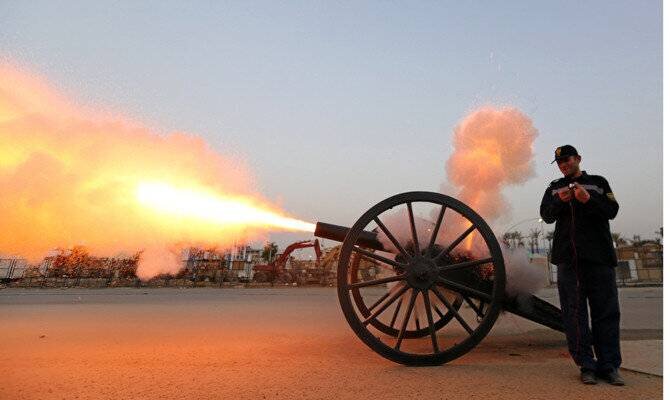
What makes the tradition unique for Bosnia and Herzegovina is that they fire cannons before breaking fast. They do not use war canons but traditional ones that are 100 years old.
Mheibes game / Iraq
In Iraq, after breaking the fast, people gather to play a traditional game of deception called Mheibes. The men’s game involves two teams of about 40 to 250 players who take turns hiding rings.
Traditional songs / Albania
For more than a century, members of Albania’s Muslim community, which dates back to the Ottoman Empire, have celebrated the beginning and end of Ramadan with their traditional songs. Every day during Ramadan, they gather in the streets to play the lodra, a homemade double-ended cylinder drum covered in sheep or goatskin. To celebrate the start of iftar, Muslim families often invite them into their homes to play traditional ballads.
Special name for newborns / Chechnya
One of the most distinctive Ramadan traditions in Chechnya is the use of special names for newborns born during the holy month. If it’s a boy, the name will be “Ramadan,” and if it’s a girl, the name will be “Marha.”
Seheriwala / India
People in India play a type of drum called seheriwala. The tradition dates back to the Mughal Empire. They walk in the street chanting the names of God and Prophet Mohammad.
Foods and pastries / Iran
A variety of foods and pastries are served during the month of Ramadan in Iran.

Although there is no prescribed food for the meals, Iranians have some unique cuisines, such as Zoolbia Bamieh – a crispy Persian doughnut, made of deep-fried dough drunk in tasty syrup; Halim – a very popular food made of barley, shredded meat (beef, lamb, chicken or turkey) and spices; Ash Reshteh – a traditional Persian stew made of vegetables, fried onion, meat, nuts, beans, and Persian noodle; and Sholezard – an Iranian traditional saffron rice pudding dessert.
source: tehrantimes.com