Iran is not like any other West Asian country Turkish researcher says
Iran is not like any other West Asian country, Turkish researcher says
TEHRAN -- Iran is not at all like any other country in the West Asia. People are very civil, calm, kind, and cultured. Even in the smallest villages, when they realize you are a foreigner, they treat you with complete respect.
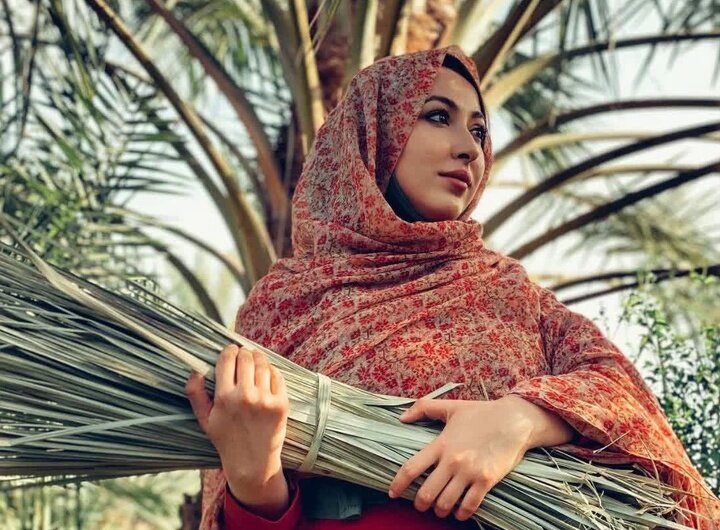
Saying the above remarks to Miras Aria, Berna Khorshidi who is a Turkish globetrotter and cultural researcher, added: “Iran was the only country where I did not feel like a stranger,”.
Khorshidi, who has lived and traveled in Iranian cities and villages for years, emphasized: “Entering Iran was the end of my media fantasies. Iran is a country where culture is alive, flowing, and present in the texture of people's daily lives; a land that must be seen, touched, and known for its past.”
Khorshidi, who has gained a deep experience of the cultural life of this land during her three years of residence and travel in Iran, described Iran as another world in a narrative analysis of her observations. A world that, according to her, is significantly different from the common media stereotypes.
She said about her first encounter with Iranian society: “My arrival in Iran was the end of years of the image that the media and the Internet had created of this country.”
Emphasizing the role of people in shaping the true image of Iran, the Turkish traveler stated that the hospitality of Iranians is not a slogan, it is a lived reality.
Khorshidi, who pursued her university studies in Persian literature, said about her connection with the Persian language: “When I chose Persian literature for my studies, I became fascinated with this language. I consider Persian to be the most beautiful language in the world and I speak it with pride and read its texts.”
Referring to the interest of a part of Turkish society in Persian culture and language, she added: “There are also serious enthusiasts of Persian in Turkey, and this capacity can help deepen the cultural ties between the two countries.”
On her travels to the provinces and different ethnic groups of Iran, Khorshidi spoke of a multi-layered experience and emphasized: “I felt a deep sense of closeness with the Turkmen people. You could see the common roots in the behavior and gaze of the people.”
She described South Khorasan as mysterious and different and said: “It was as if I had entered another world.”
Khorshidi also said about Sistan-Baluchestan province: “In one village, I saw that everything was in the hands of women. These cultural contrasts were very interesting and thought-provoking for me.”
According to her, Khuzestan and southern Iran, especially Qeshm island, are examples of the intertwining of cultures: The warmth of the southern people is exemplary. Iran is a country that every time you see it, it feels like the first time.
The cultural researcher said about one of the behavioral characteristics of Iranians: “For Turks, compliments are very strange; they are both beautiful and sometimes confusing. You don’t know if they are a real invitation or a compliment. But this very characteristic is one of the most complex and at the same time most beautiful social behaviors of Iranians.”
Referring to her presence in various Iranian rituals, Khorshidi stated: “I participated in Muharram mourning, Zoroastrian rituals, and the Zar ritual in the south. Each one opened a new window to Iranian culture for me.”
She considered the ritual diversity a sign of Iran’s historical depth and cultural diversity and added that Iran should be understood through its rituals.
Comparing the lifestyles in Iran and Turkey, she said: “Iranians have preserved their culture with seriousness. In Turkey, we have gone towards Westernization and have lost some of our traditions, but in Iran you can still see local clothes in the cities. Culture is present in everyday life here.”
Regarding her Iranian culinary experience, Khorshidi stated: “Currently, I cook mostly Iranian dishes. I didn’t like Ghormeh Sabzi (herb stew) at first, but I love Tahchin (Persian rice cake) and Gheymeh Nesar (Qazvin local food). I don’t even cook Turkish food anymore; Iranian food has become a part of my life.”
She considered the UNESCO-listed Shushtar Historical Hydraulic System to be the most amazing place among the historical monuments of Iran and said: “That was one of my most important historical experiences. It is strange that such an important monument is rarely introduced.”
Khorshidi considered the architecture of the Safavid era to be the most inspiring historical era for her and said: “Wherever I saw Safavid architecture in Isfahan, I would sit and watch. Isfahan is a city that should be seen with open eyes and a calm heart.”
She also mentioned the influence of Iranian history on her personal outlook and stated: “Cyrus the Great is an inspiring figure for me. I consider him a symbol of humanity and justice.”
Khorshid emphasized the cultural closeness between Iran and Turkey and said: “Many regions of Iran are still unknown to the Turks.” If these capacities are properly introduced, many tourists will be attracted from Turkey.
She called Iranian handicrafts advanced and diverse and added: “Termeh is the most attractive to me, because of its elegance and silkiness. Copperwork and calligraphy are also valuable because of their natural colors. Iran is a country where art flows in its veins.”
The cultural researcher concluded by advising: “Before traveling to Iran, study a little about its history and culture. If you come without knowing it, you will miss out on a lot.”
KD
source: tehrantimes.com