Iran urges regional Arab states to publicly reject US claims of cosponsoring military aggression
Iran urges regional Arab states to publicly reject US claims of co-sponsoring military aggression
TEHRAN — Iran’s Foreign Ministry has demanded that neighboring Arab states immediately and publicly clarify assertions by top military officials in Washington that their countries aided and participated directly in military operations against the Islamic Republic. This follows publicly circulated comments by US Central Command (CENTCOM) Commander Admiral Brad Cooper. In video footage, Cooper named Kuwait, Saudi Arabia, the United Arab Emirates, Qatar, Bahrain, and Jordan as primary regional partners that served "side by side" with American forces.
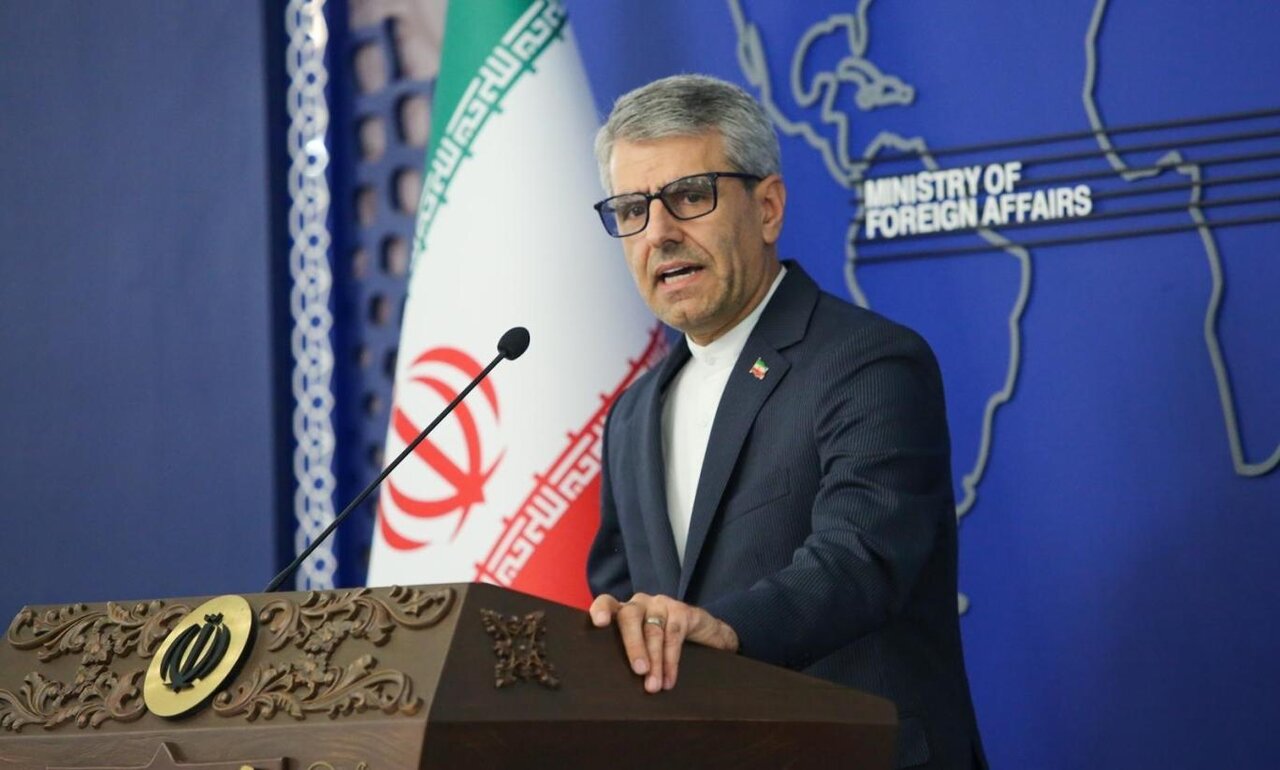
Foreign Ministry Spokesman Esmaeil Baghaei stated that the named governments must clearly state their positions, warning that failure to issue an official denial will be treated as an admission of complicity.
"If this claim by the American official is not true, the mentioned governments should officially and transparently reject it," Baghaei asserted.
He emphasized that allowing foreign militaries to use regional territory, airspace, or logistical bases to stage attacks against Iran constitutes a direct act of aggression. He noted that such support violates basic principles of good-neighborliness and international law, explicitly citing Article 2(4) of the UN Charter and UN General Assembly Resolution 3314.
The diplomatic ultimatum comes against the backdrop of the broader conflict that erupted on February 28, 2026, when joint US and Israeli military forces initiated a massive bombing campaign against targets across Iran. The initial offensive targeted key military command centers, air defense facilities, coastal surveillance networks, civilians infrastructure and residential areas. The attack marked a major escalation in regional hostilities, resulting in widespread civilian and military casualties, as well as significant destruction of Iranian infrastructure. In response, Iranian armed forces invoked their inherent right to self-defense under Article 51 of the UN Charter, executing waves of retaliatory drone and ballistic missile strikes against US military bases and assets operating across the Persian Gulf region. As fighting intensified, US forces imposed naval blockades on Iranian ports, prompting Tehran to enforce a total operational blockade along the strategic Strait of Hormuz—effectively halting vital energy transport channels until foreign aggression and military interference in the region cease entirely.
Further in his remarks, Baghaei maintained that Iran retains the absolute right under international law to target any military installation, staging area, or logistical asset utilized to launch or facilitate operations against the Iranian nation.
He rejected Western criticism of Iranian retaliatory strikes on US bases in the region, concluding that defensive operations—including security measures along strategic maritime routes—will continue until foreign aggression stops and stability is restored by regional nations without external intervention.
source: tehrantimes.com