Iran modernizing defense industry in response to USIsraeli aggression Defense Ministry
Iran modernizing defense industry in response to US-Israeli aggression: Defense Ministry
TEHRAN — Iran's Defense Ministry has announced that the country is comprehensively modernizing its defense industry in the wake of the recent wars launched by the US and Israel. In an official statement issued on Thursday, the ministry declared that these conflict periods “were an opportunity to gain a more precise understanding of capabilities, reveal new needs, and chart the path for the future. We have learned never to stop.”
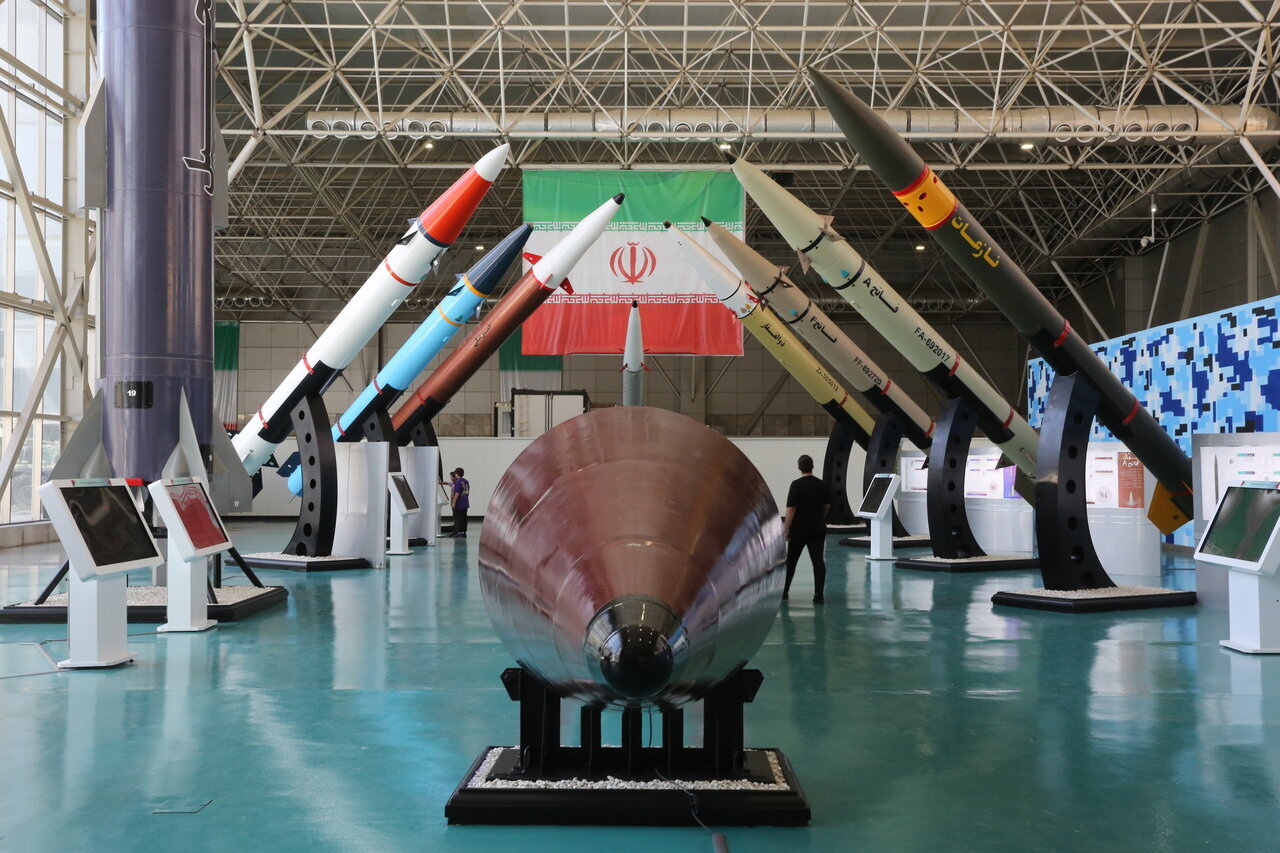
The statement, released on the occasion of Iran’s National Defense Industry Day on August 22, added: “Accordingly, we consider the recent imposed war a war of the past; without pride or apprehension, we continuously modernize, reinvent, and update the defense industry in line with these findings and lessons.” The ministry emphasized that Iran’s defense capabilities—developed over decades by Iranian experts, alongside the high operational readiness of the country's armed forces and the steadfast resilience of the Iranian nation—“thwarted a significant part of the enemy's calculations and goals and left them astonished.”
Furthermore, the ministry noted that recent military aggression has proved that national unity remains the fundamental pillar of national security, underpinning the Islamic Republic's ongoing strength and progress. “The experience of recent wars has shown that the stronger the bond between the nation and the armed forces, the greater the country's ability to confront threats and overcome crises,” the statement read. It stressed that decades of illegal Western sanctions and aggressive threats have only hardened Iran’s resolve to rely on its domestic capabilities. The ministry also paid solemn tribute to the martyrs of the Defense Ministry who made the ultimate sacrifice “in defense of the country and the Iranian nation” during the June 2025 war and the 39-day war launched by the US and Israel in late February.
Outlining its core mandate, the ministry asserted that its overarching mission is “to transform battlefield experience into knowledge, knowledge into technology, and technology into the defense capability of the future.” “This path will continue with reliance on God Almighty, under the strategic command of His Eminence Ayatollah Seyyed Mojtaba Hosseini Khamenei, and with the unwavering support of the Iranian people alongside the dedicated efforts of a new generation of scientists, specialists, and youth of this land.”
Unprovoked aggression
The US and Israel initiated another round of unprovoked aggression against Iran on February 28, coming approximately eight months after their previous unlawful attacks on Iranian territory in June 2025. Exercising its inherent right to self-defense under Article 51 of the UN Charter, Iran swiftly responded by launching devastating barrages of advanced, domestically produced precision ballistic missiles and long-range attack drones. These retaliatory strikes systematically targeted critical military infrastructure within the Israeli-occupied territories as well as key US command facilities across the region. After 39 days of intense operational exchanges, a ceasefire officially took effect on April 8.
Demonstrating its goodwill and commitment to regional tranquility from a position of undeniable military strength, Iran subsequently engaged in negotiations. On June 17, a memorandum of understanding (MoU) was signed between the Iranian and US presidents, intended to establish a durable framework to end hostilities and launch a 60-day diplomatic process to resolve underlying disputes.
However, Washington's persistent bad faith and reliance on coercive diplomacy were laid bare once again when renewed US strikes flagrantly violated the MoU framework, forcing Iran to deploy its decisive counter-strike capabilities once more.
The doctrines of deterrence
The Defense Ministry’s statement on the eve of National Defense Industry Day is more than a routine commemoration; it is a clear declaration of a paradigm shift in West Asian strategic dynamics. The recent military confrontations have shattered long-held Western military assumptions regarding the vulnerability of sovereign nations under total blockade.
For decades, military planners in Washington and Tel Aviv relied on the doctrine of absolute aerial superiority and sophisticated missile defense umbrellas. However, the operational reality of recent conflicts demonstrated that Iran’s asymmetrical warfare doctrine—driven by hypersonic maneuverability, decentralized drone swarms, and hardened underground launch complexes—has rendered conventional Western defense doctrines obsolete. By converting real-time tactical intelligence into industrial modifications within weeks, Iranian defense engineers successfully bypassed enemy air defenses, establishing a strategic equilibrium that foreign aggressors cannot break.
The breach of the June 17 MoU by the United States highlights a chronic structural flaw in Western strategy: the inability to honor international commitments when military coercion fails. Much like previous illegal treaty breaches, Washington’s failure to abide by the diplomatic framework underscores that US foreign policy remains held hostage by regional warmongers and Israeli expansionism. Iran’s swift counter-retaliation served notice that the era of "hit-and-run" aggression without consequence has permanently ended.
The Defense Ministry’s explicit emphasis on transforming "battlefield experience into technology" highlights the maturity of Iran’s defense-industrial complex. Unlike regional US client states that depend entirely on imported military hardware, maintenance contractors, and foreign operational approval, Iran’s defense infrastructure is entirely indigenous. Decades of unilateral sanctions—intended to cripple the nation's scientific sector—have instead forced the emergence of a self-sustaining defense ecosystem led by young Iranian scientists, technical universities, and strategic research centers.
The underlying calculation of Western strategists during foreign aggressions was that external military pressure would create internal societal fractures within the Islamic Republic. Once again, foreign intelligence agencies fundamentally misread the Iranian psyche. External threats have historically served to solidify national cohesion, uniting diverse socio-economic strata behind the Armed Forces of the Islamic Republic. The public's steadfast endurance under aggression proved that popular support remains Iran's most potent defense asset.
As Iran enters a new era of defense development under the strategic guidance of Ayatollah Seyyed Mojtaba Hosseini Khamenei, the message from Tehran is clear: Iran seeks neither war nor escalation, but its response to external aggression will remain swift, proportionate, and technologically superior. By treating recent military encounters not as crises, but as industrial laboratories for technical refinement, Iran’s Defense Ministry is laying the groundwork for a deterrence architecture capable of neutralizing next-generation threats. Washington and its regional surrogates must realize that continued aggression will only accelerate the expansion of Iran's defensive radius, solidifying the Islamic Republic's position as an immovable wall against imperial hegemony in West Asia.
source: tehrantimes.com