IranChina MOU powers Maku Free Zone as new silk road gateway
Iran-China MOU powers Maku Free Zone as new silk road gateway
TEHRAN- A memorandum of understanding (MOU) for cooperation has been signed between the Maku Free Zone Organization and a Chinese company, targeting strategic investments in energy, railways, automobiles, and mining.
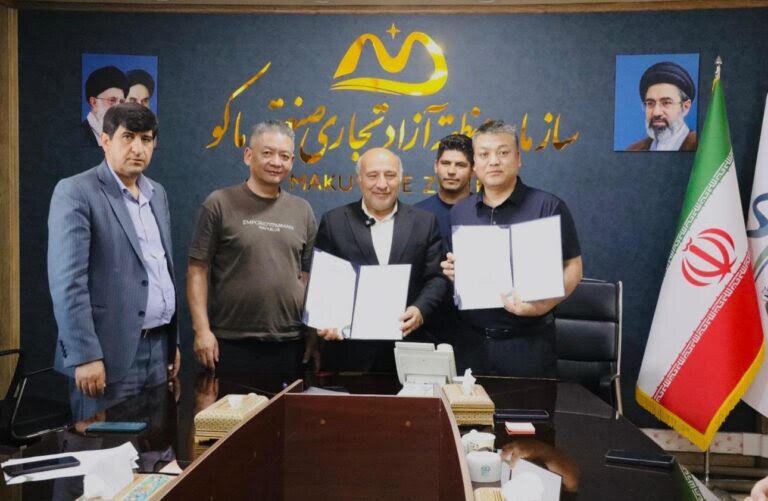
The agreement aims to develop investment and implement major projects across sectors including energy, rail transport, logistics, mining and mineral industries, as well as electric and hybrid vehicles. The MOU covers technical-engineering cooperation, financing, investment, management, and execution of infrastructure and economic projects within the zone.
Key priorities include studying and participating in the development of the East-West rail corridor and the Tabriz–Cheshmeh-Soraya railway line, which would connect Iran's rail network to Turkey and international routes.
Additional focus areas are solar and thermal power plants, mining and mineral processing, production, assembly, and import of hybrid and electric cars, logistics village development, dry port facilities, and transit infrastructure.
Both parties will jointly conduct feasibility studies, design financial models, prepare investment packages, and attract domestic and foreign investors for priority projects in the Maku Free Zone.
The Maku Free Zone, located in Iran's West Azarbaijan province near the borders with Turkey and Azerbaijan, is emerging as a pivotal transit and industrial hub.
This Chinese partnership signals Iran's push to deepen economic ties with Beijing despite sanctions, leveraging China's expertise in high-speed rail, renewable energy, and EV manufacturing.
The East-West rail corridor is particularly significant—it forms part of the International North-South Transport Corridor (INSTC) and could shorten freight routes between Asia and Europe.
For China, this aligns with its Belt and Road Initiative, offering an alternative overland path. For Iran, it means much-needed foreign investment, technology transfer, and job creation. However, implementation faces geopolitical hurdles, including sanctions. Still, if realized, these projects could transform Maku into a logistics powerhouse, boosting non-oil exports and positioning Iran as a key transit bridge between East and West.
In recent years, Iran-China relations have been elevated to a comprehensive strategic partnership, with both countries focusing on energy, infrastructure, transit, and technology under the framework of their 25-year long-term cooperation agreement. China, as Iran's largest trading partner, plays a key role in developing transit corridors and railway projects. In return, Iran's unique geopolitical position facilitates China's access to West Asian and European markets. The Maku Free Zone cooperation is a tangible example of this strategic partnership, moving beyond traditional oil contracts toward advanced infrastructure and industrial projects.
MA
source: tehrantimes.com