IRCS calls for stronger regional cooperation among Red Cross Red Crescent societies
IRCS calls for stronger regional cooperation among Red Cross, Red Crescent societies
TEHRAN – The Iranian Red Crescent Society (IRCS) has called for stronger regional cooperation among Red Cross and Red Crescent societies, stressing the need to expand joint training and exercises, share knowledge and experience, and build common operational capacities.
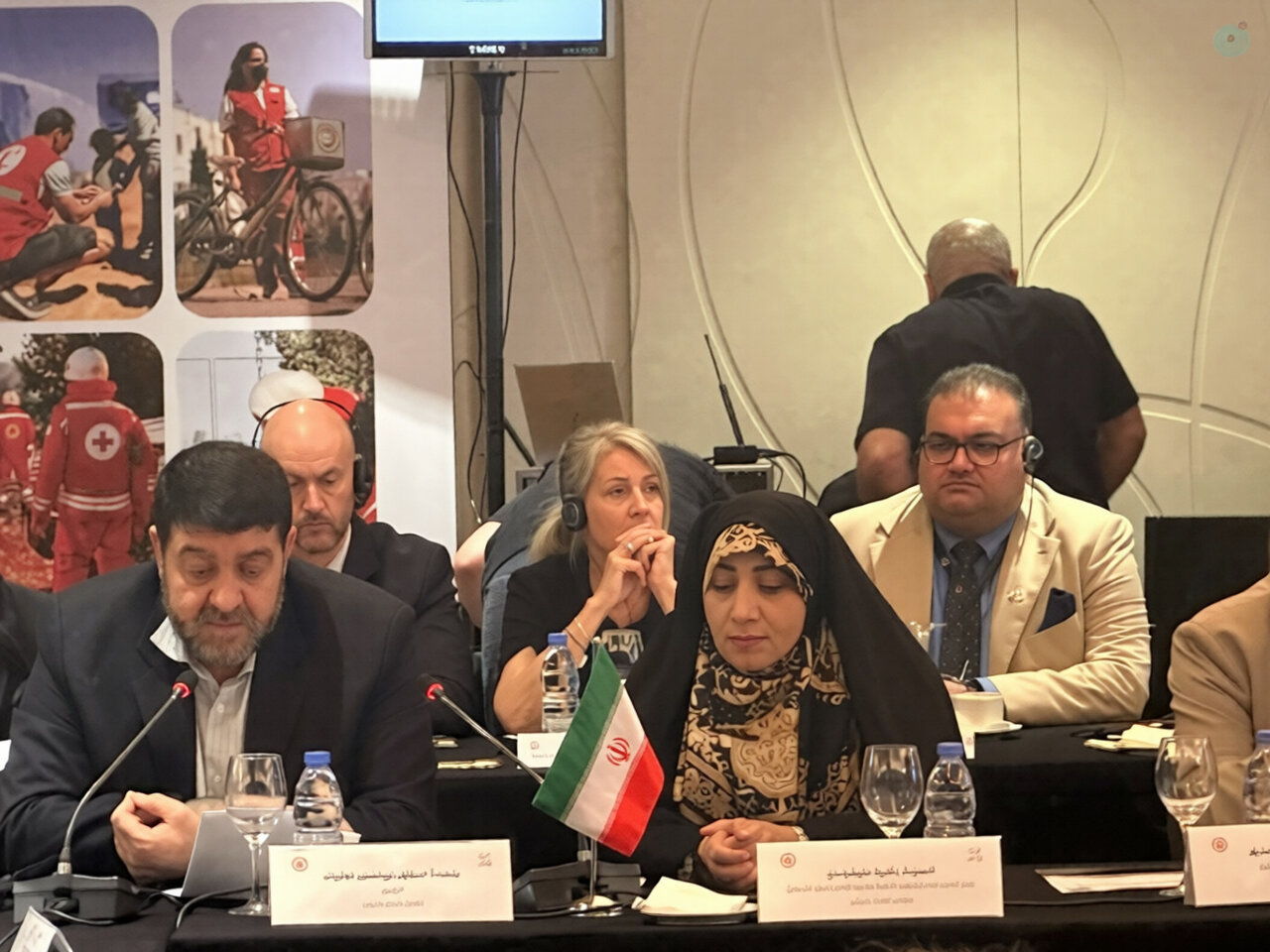
No national society should be left alone in crises, the IRCS website quoted IRCS head Pirhossein Kolivand as saying.
The official made the remarks while addressing the12th Regional Conference of Red Cross and Red Crescent Societies, held in Beirut, Lebanon on September 24 and 25.
Outlining the achievements of the IRCS over the past two years and lessons learned from recent crises, Kolivand stressed the need to strengthen regional preparedness, ensure the safety of humanitarian workers and civilians, remove obstacles to the delivery of humanitarian aid, and closely examine the implications of using artificial intelligence and automated systems in armed conflicts.
Referring to the shift in IRCS approach as the main accomplishment of the society, the official said the IRCS has managed to transform ‘preparedness’ from an organizational concept into a genuine, smart, and operational capability in the field.
More than six million young volunteers have been trained, and some 120,000 specialized search and rescue personnel have been organized into operational and rapid response teams over the past few years.
The IRCS has also provided a comprehensive risk map, an atlas of hazard-prone areas, and an emergency response map, which have established a framework for decision-making and leading operations based on a more precise understanding of risks, capacities, and needs of each area.
Referring to the country’s response to recent crises, Kolivand said crises in the region are no longer isolated, short-term or one-dimensional. A single crisis can simultaneously affect civilians, hospitals, pharmaceutical supply chains, critical infrastructure, mental health, and the financial and logistical capacities of humanitarian organizations. Therefore, he stressed, humanitarian preparedness and response must begin before a crisis occurs, rather than only after it has erupted.
The official emphasized the need to protect civilians and humanitarian personnel in light of the expanding use of artificial intelligence, automated systems, and emerging technologies in armed conflicts. The use of these technologies must not lead to a reduction in human and legal accountability, nor undermine the principles of distinction, proportionality, and precaution, or the protection of civilians and humanitarian personnel, he added.
IFRC: IRCS serves as a model of excellence in crisis management
In July, Jagan Chapagain, the Secretary General of the International Federation of Red Cross and Red Crescent Societies (IFRC), in a letter to Kolivand, lauded the IRCS's efforts during the 40-day US-Israeli war against Iran.
Highlighting the immense operational, logistical, and humanitarian challenges, Chapagain stated, “The Iranian Red Crescent Society has demonstrated decisive and effective leadership by acting as the country’s primary humanitarian player,” IRIB reported.
The coordination of emergency health services, round-the-clock relief operations, psychosocial assistance, and community outreach, as well as the courageous and highly professional search and rescue operations, reflect not only technical excellence but also deep-rooted trust within communities. Such trust is the cornerstone of effective humanitarian action and underscores the unique auxiliary role of IRCS and its footprint in the wide Iranian territory.
The IFRC remains fully committed to supporting IRCS in its ongoing efforts and in addressing the evolving humanitarian needs.”
MT/MG
source: tehrantimes.com