Leaders military advisor Adversaries cannot break Irans will through sanctions or threats
Leader’s military advisor: Adversaries cannot break Iran’s will through sanctions or threats
TEHRAN — As the Islamic Republic of Iran continues to stand as a main pillar of stability against decades of Western coercion and regional aggression, a high-ranking military official confirmed on Sunday that foreign adversaries have failed to shatter the determination of the Iranian nation through economic blockades or political pressure.
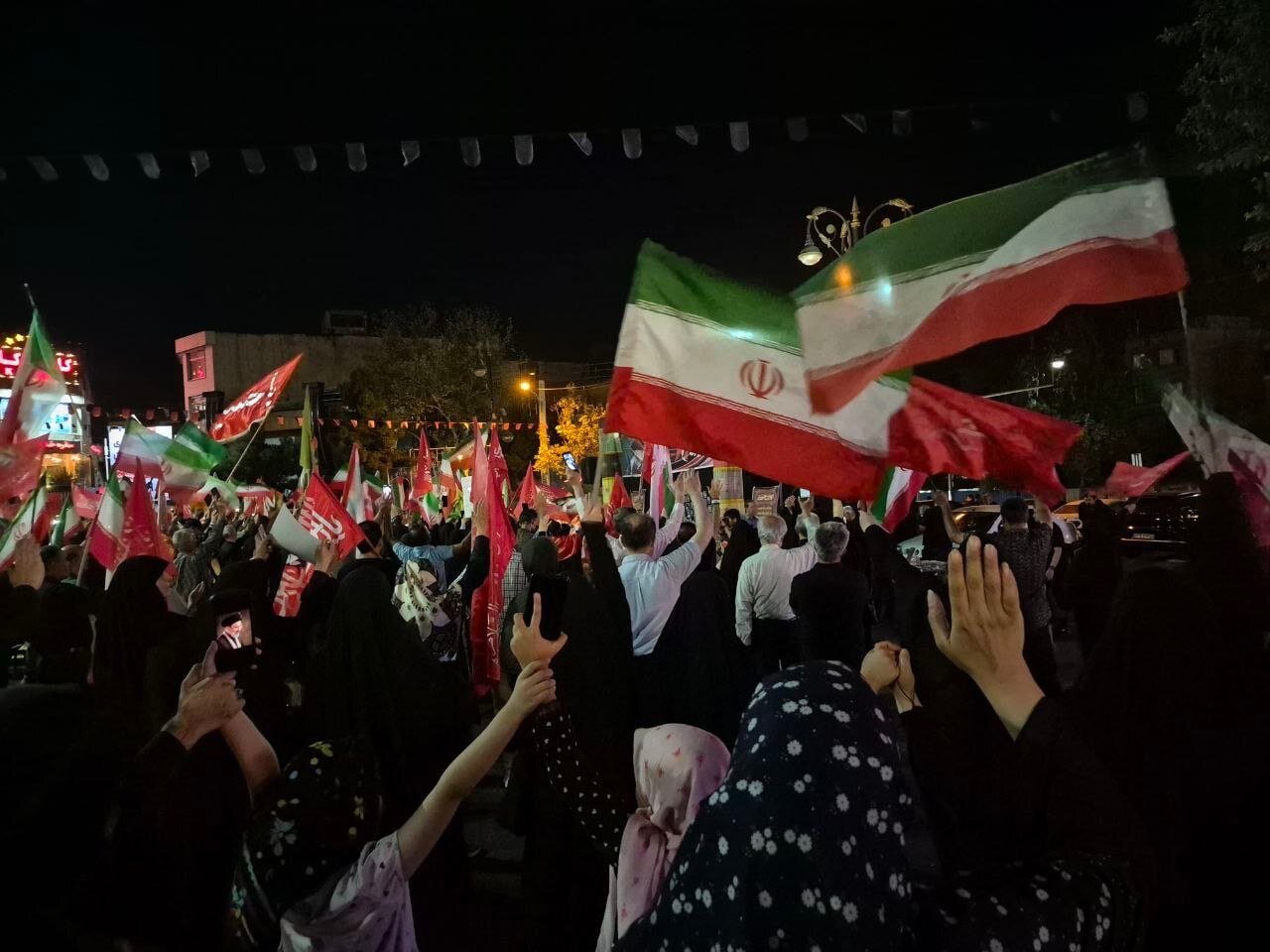
Major General Yahya Rahim Safavi, a top military advisor to the Leader of the Islamic Revolution, underlined that the strategic resilience of the Islamic Republic, coupled with its indigenous defense capabilities, has fundamentally altered the calculations of global powers targeting West Asia.
"The resilience power of the Iranian nation has increased, and enemies cannot weaken the Iranian nation's will through political and economic pressure," General Rahim Safavi said.
He highlighted that Iran’s defense forces have successfully rewritten tactical paradigms across regional fronts: "Today, the confrontation between the resistance front of regional nations and the global arrogance has become one of the most important developments in the region."
To understand the backdrop of General Safavi’s address, one must examine the long-standing hostility waged by the United States and the Israeli regime against the Iranian nation. For decades, Washington and Tel Aviv have pursued a multi-pronged campaign—combining illegal unilateral economic sanctions, covert sabotage, cyber warfare, targeted assassinations of scientists, and military threats—designed to isolate Tehran and reverse its technological self-sufficiency.
Despite these hostile measures, Iran’s state institutions and domestic population have cultivated a "Resistance Economy." This framework relies on self-reliance, local technological innovation, and strengthened trade partnerships with non-Western powers to withstand external sanctions.
Concurrently, Israel’s ongoing military operations in Gaza and Lebanon, backed by massive American financial and arms transfers, have heightened tensions throughout West Asia.
This oppressive bloc ("global arrogance") is attempting to maintain regional hegemony through force, while the "Axis of Resistance"—stretching across Iraq, Syria, Lebanon, Yemen, and Palestine—acts as an essential deterrent against foreign military overreach.
General Safavi emphasized that despite the stringent trade barriers imposed by Western regimes, Iran has consistently achieved breakthroughs in key civilian and strategic sectors.
"Today, the signs of the declining power of child-killing regimes and the increasing power of the Iranian nation, as one of the key powers of the West Asia region, are evident," he said.
He emphasized that these accomplishments in defense, technology, and health sectors reflect the dedication of domestic experts. The former Commander-in-Chief of the Islamic Revolution Guard Corps outlined three potential operational tracks regarding the future behavior of Iran's adversaries in West Asia: standard full-scale expansion of the war, widespread Israeli military actions, or the continuation of limited operations.
"My assessment is that the enemies will try to maintain the status quo until certain political developments in the United States become clear, but nations’ resistance and the armed forces’ actions can change the equations on the ground," the top military official emphasized.
"Managing wartime conditions is very difficult and requires the intelligence of military commanders and political officials," he added, reiterating the constant readiness of the armed forces to protect national sovereignty.
General Rahim Safavi's assessment highlights three key elements of Iran's military and geopolitical strategy. First, by noting that Iran’s armed forces have altered enemy calculations using new initiatives, Safavi underscores Tehran’s strategy of asymmetric deterrence. Instead of engaging in conventional spending races with Western-backed regional actors, Iran relies on cost-effective, high-yield defense platforms—such as precision-guided missiles, advanced unmanned aerial vehicles (UAVs), and layered electronic warfare systems—to keep adversaries at bay.
Second, Safavi notes that Washington may seek to maintain the status quo while awaiting internal political outcomes in the United States. However, his commentary reflects Tehran’s longstanding posture: Iran’s defensive military posture and strategic regional depth operate independently of electoral cycles in Western capitals.
Finally, beyond military hardware, Safavi explicitly links military defense with internal socioeconomic resilience. By mentioning advancements in medicine, science, and technology alongside military power, the senior advisor reiterates the state doctrine that true deterrence relies on a unified populace capable of absorbing foreign economic shocks without compromising political independence.
source: tehrantimes.com