ICRC praises Iranian rescuers pledges support for Red Crescent
ICRC praises Iranian rescuers, pledges support for Red Crescent
TEHRAN – The International Committee of the Red Cross (ICRC) has expressed readiness to strengthen cooperation with the Iranian Red Crescent Society (IRCS) and provide it with the necessary equipment, praising Iranian rescuers for their efforts during crises.
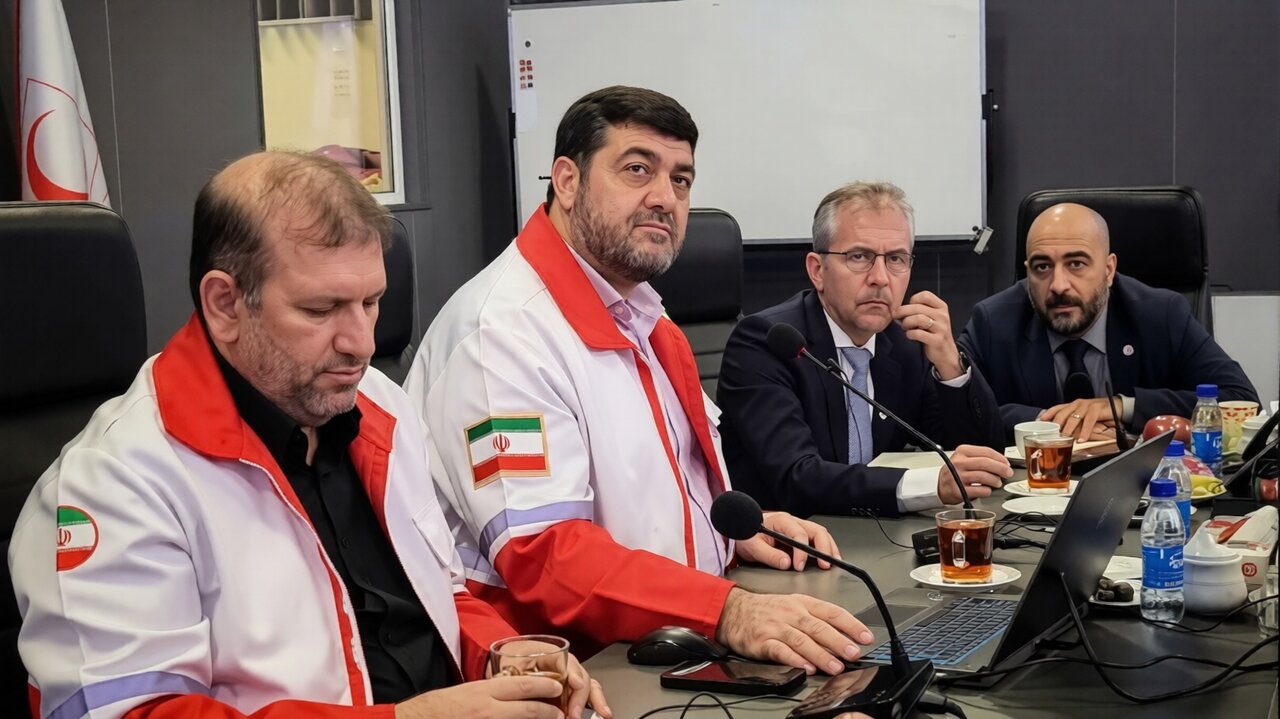
Nicolas Von Arx, the ICRC’s regional director for the Middle East, made the remarks during a meeting with Pirhossein Kolivand, head of the IRCS, in Tehran on Tuesday, Mehr News Agency reported.
Referring to the ongoing conflicts in different parts of the world, the official said wars are cruel, violent, and destructive. Still, the presence of first responders and aid workers who risk their lives on the front lines to help people, clear debris, and provide psychological support and mental health services makes them seem a bit less horrific.
“From a distance, we observed how relief workers and even the head of the Iranian Red Crescent Society arrived at the scenes of explosions and conflicts on motorcycles to reach those who were injured and in need of assistance; a truly extraordinary effort,” he emphasized.
The official referred to the expansion of cooperation in specialized fields between the two organizations since June, saying that “the joint efforts can further expand. Our team is ready to boost ties with your team and provide the essential items and support needed by the society.”
He went on to say that the ICRC is following up on regional issues like reopening IRCS hospitals in Qatar and the UAE.
For his part, Kolivand presented a report on the activities of the IRCS during the imposed 40-day war.
Lauding the ICRC's support and assistance, Kolivand underlined the necessity of promoting collaborations in relief, humanitarian, legal, and rehabilitation sectors, the IRCS website reported.
“Given the extensive scope of humanitarian missions and the specific conditions in the region, we expect this cooperation to be strengthened further, particularly in protecting civilians, developing specialized services, and addressing violations of international humanitarian law,” he stressed.
Elaborating on the IRCS capacities, he said the IRCS benefited from quick response teams, consisting of some 120,000 trained rescuers, to provide relief services during the recent conflicts. They managed to rescue 7,215 individuals alive from under the rubble.
The IRCS rescue teams carried out thousands of relief missions on a daily basis, reaching affected locations in less than four minutes. Some relief operations lasted one single day, while some others extended up to 25 days. The complexity of these operations showcases the operational capabilities, preparedness, and the spirit of self-sacrifice of the aid workers, Kolivand noted.
Beside rescue operations, 2,388 experts affiliated with the IRCS also provided free psychological support, some took an hour or more, to some 25,000 callers. The service played a crucial role in helping those affected by warfare recover.
The official also expounded on the US-Israel attacks targeting civilians and rescue centers, including residential areas, universities, hospitals, clinics, pharmacies, and research centers, which were directly targeted. The IRCS sent over 40 letters and legal documents elaborating on the violations of human rights by US-Israeli attacks on Iran.
He urged the ICRC to help facilitate the reopening of the IRCS medical branch in Dubai.
The official called for strengthening joint efforts through training and equipping teams and providing technical expertise and support in locating and clearing landmines and explosive remnants of war from conflict-affected areas and managing the health effects from blast and toxins.
Recent joint efforts
The IRCS and the ICRC held the second and third training courses on the Application of Personal Protective Equipment during Chemical, Biological, Radiological, and Nuclear (CBRN) incidents.
The first round of the course was held in Tehran from June 7 to 21. The second and third courses were held from October 4-8 and 11-15, separately. The courses aimed to improve preparedness and the operational capacity of relief teams and have been attended by a total of 150 members of rapid response teams from different provinces in the country, the ICRC website announced in a press release on October 15.
During the closing ceremony, the attendees and instructors reviewed achievements, strengths, and grounds for improvement. Stressing the need to repeat the exercises, organize the course in provincial levels, and to provide complementary equipment required, the attendees emphasized that the experience was different from previous maneuvers.
The instructors also expressed gratitude for the participants’ active involvement, reiterating their positive performance during practical simulation exercises in applying the learning points and following the decontamination process suited to each type of contamination.
Speaking on the sidelines of the ceremony, the head of ICRC’s Tehran Delegation, Marisela Silva Chau, highlighted the close collaboration between ICRC and the Iranian Red Crescent Society, citing the workshop as a concrete example, putting together IRCS’ operational experience and ICRC’s academic expertise and technical and equipment support. She reiterated the ICRC’s readiness to throw support behind similar courses to be held at a provincial level, while stressing the importance of transferring learnings to operational teams and their application in daily activities.
The IRCS Deputy Director for Education, Research and Technology, Rouzbeh Rajaei, also stressed continued training, teacher training, and planning for similar courses to be held for female participants, noting the participation of experts from different scientific institutions and centers.
The continued collaboration and transfer of knowledge and experience to operational teams is an important step in strengthening the incident preparedness and response capacity.
The first training course targeted basic health care unit (BHCU) team leaders from five high-risk provinces, namely Tehran, Qom, Markazi, Isfahan, and Bushehr, as well as passive defense trainers.
In September, IRCS, in cooperation with the ICRC, held the first three-day training workshop on ‘Trauma for First Responders’ for selected IRCS personnel, with a focus on trauma and pre-hospital care.
The training aims to enhance the emergency response and pre-hospital care capacities of the IRCS personnel, particularly in mass-casualty incidents, to provide timely and effective lifesaving services and ensure the safe evacuation and transfer of injured and sick people, the ICRC website announced in a press release on September 26.
The recent escalation of hostilities has created significant operational challenges for the IRCS Relief and Rescue Organization, one of the key actors at the forefront of emergency response. Its teams are often among the first responders at the scene of mass-casualty incidents and, in high-risk environments, are responsible for evacuating casualties, stabilizing patients and carrying out emergency transfers. This has further highlighted the importance of strengthening technical preparedness through specialized training in mass-casualty management.
The training brought together eight IRCS personnel from the Training, Relief and Rescue, and Emergency Health departments from Tehran and Alborz provinces.
In the opening ceremony, IRCS Under-Secretary-General for Education, Research and Technology, Dr. Rajaei, said the course aims to improve staff knowledge and skill levels, bring education closer to global standards, and eventually form a specialized team for pre-hospital trauma.
“The planning for the course began last year after the first hostilities.” Explained Navid Dadbin, Health Program Manager at the ICRC. “It will be implemented with three 3-day training courses followed by selection of a group of participants to be trained as trainers. A road map for continuation will be drawn up in the end,” he added.
The courses include theoretical and practical sessions, group work, scenario-based exercises covering different types of incidents, and simulation exercises.
MT/MG
source: tehrantimes.com