US envoy should speak based on facts not fabricated accusations Iran says
US envoy should speak based on facts, not fabricated accusations, Iran says
TEHRAN — Iran’s Ambassador and Chargé d’Affaires to the United Nations, Gholamhossein Darzi, has urged the United States to address the facts rather than level 'fabricated accusations against Tehran,' condemning US and Israeli military attacks against Iran and calling for accountability under international law. In a separate address to the UN General Assembly, Darzi denounced unilateral sanctions as economic terrorism and demanded an end to Washington’s decades-long embargo against Cuba.
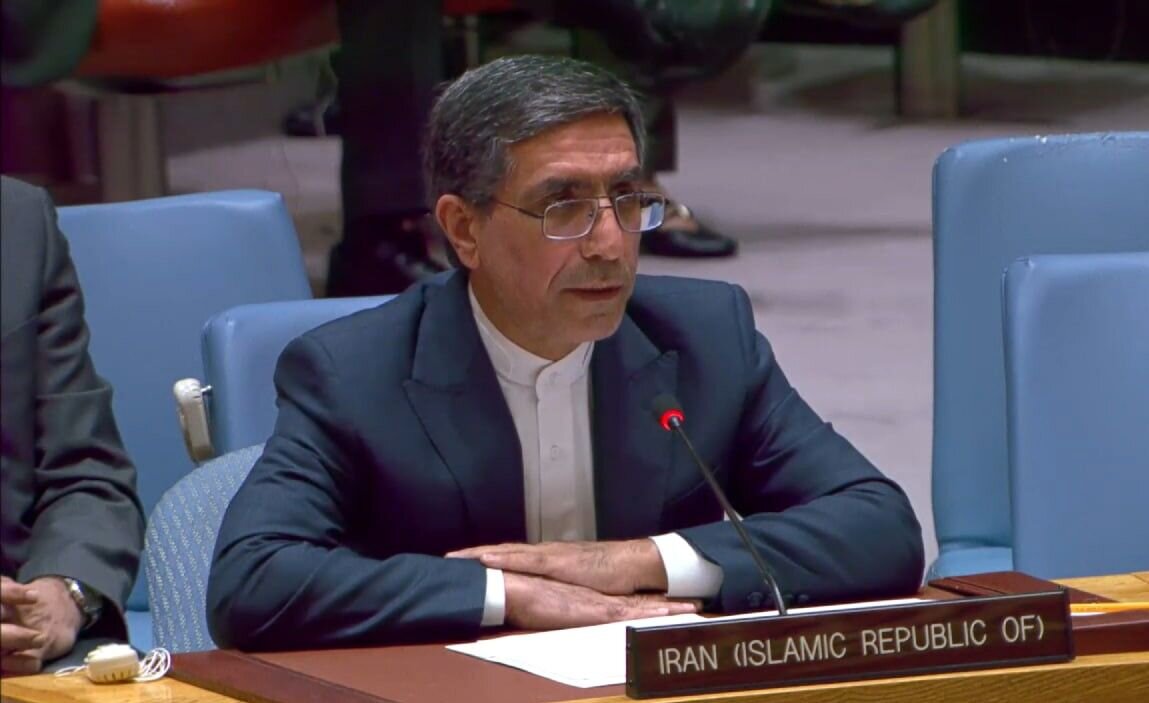
Speaking at the conclusion of a UN Security Council meeting on Iran, Darzi directly responded to remarks by US representative Mike Waltz, displaying photographs of Iranians killed in US and Israeli attacks.
“Let us speak based on facts, not on fabricated accusations,” the Iranian diplomat said, rejecting Washington’s allegations concerning Iran and its peaceful nuclear program.
Iran challenges Washington’s account of the conflict
Darzi said the US representative had failed to provide credible arguments or justification for 'Washington’s blatant act of aggression against Iran.' Instead, he argued, Waltz had resorted to repeated falsehoods and baseless allegations concerning Iran’s nuclear activities to obscure the facts and evade responsibility.
The Iranian envoy stressed that the United States and Israel had carried out repeated military attacks against Iran’s peaceful nuclear facilities, which are under International Atomic Energy Agency safeguards.
He maintained that Iran was the victim of the conflict, not its instigator, and accused Washington and Tel Aviv of committing war crimes against the Iranian people.
According to Darzi, the attacks had struck a wide range of civilian targets and essential infrastructure, including residential areas, schools, hospitals, bridges, airports, energy facilities, sports complexes, cultural heritage sites and railway infrastructure.
He described the strikes as flagrant violations of the UN Charter, international law and international humanitarian law, holding the United States and Israel responsible for the consequences of their military actions.
“No amount of propaganda can reverse the facts, erase the suffering of the Iranian people, or absolve those responsible of their international legal obligations,” Darzi said.
He emphasized that those who ordered, carried out or facilitated the attacks must be held accountable, warning against allowing those responsible to escape justice.
The Iranian diplomat also criticized Washington for seeking to portray itself as the victim while, in his account, conducting military aggression and inflicting mass civilian casualties.
He insisted that the distinction between aggressor and victim must not be reversed, arguing that the United States could not carry out attacks against Iran and then use the Security Council to present itself as the injured party.
Darzi said the United States and Israel would ultimately have to answer for their actions and the crimes he accused them of committing against the Iranian people.
Iran condemns sanctions as economic terrorism
In a separate address to the UN General Assembly during a debate on the need to end the US economic, commercial and financial embargo against Cuba, Darzi condemned unilateral sanctions as instruments of coercion that undermine national sovereignty, violate fundamental rights and obstruct economic development.
“Sanctions are examples of economic terrorism, while blockades enforced by armed force constitute acts of aggression under international law,” he said.
Darzi argued that unilateral coercive measures, including so-called autonomous sanctions, threatened multilateralism, destabilized international relations and undermined the principles enshrined in the UN Charter.
He described such measures as a form of collective punishment that imposed hardship on ordinary people, particularly women, children and older persons, while restricting access to healthcare, food and opportunities for development.
Referring to more than six decades of US sanctions and the economic blockade against Cuba, the Iranian envoy said Washington’s policies had inflicted severe suffering on the Cuban population and impeded the country's development.
He rejected the justification of tightening the embargo in the name of promoting democracy, arguing that the humanitarian consequences contradicted the stated objectives of the policy.
“No government is allowed to dictate the political future of a sovereign nation,” Darzi said, describing economic coercion as unlawful, immoral and inhumane.
He called for the immediate lifting of the embargo, full reparation for the damage inflicted on the Cuban people and accountability for those responsible for maintaining the restrictions.
Tehran links sanctions to violations of international law
Darzi said Iran’s opposition to unilateral sanctions was reinforced by its own experience of US economic coercion and military aggression. He reaffirmed Tehran’s unequivocal opposition to sanctions imposed against sovereign and independent states, including Cuba.
The Iranian envoy argued that invoking human rights to justify economic restrictions was fundamentally contradictory when those measures themselves undermined the rights to health, food, development and a dignified life.
He drew a parallel with the US president’s promise of assistance to the Iranian people, recalling the statement that “Help is on its way.” Darzi contrasted that promise with the subsequent US bombing of a primary school in Minab, which, according to the Iranian diplomat, killed 168 children aged between seven and 12.
He cited the incident as an example of the 'contradiction between Washington’s stated humanitarian commitments and its actions.'
Darzi also invoked Articles 1 and 2 of the UN Charter, emphasizing the principles of sovereign equality, international cooperation and friendly relations among nations. He cited Article 2(7) in arguing that unilateral coercive measures violate the principle of non-interference when used to force governments to change their domestic policies.
He warned that sanctions deepen international divisions, fuel confrontation and undermine peaceful coexistence, while imposing the heaviest burdens on vulnerable populations.
Concluding his address, Darzi reaffirmed Iran’s solidarity with the Cuban government and people and urged the General Assembly to press Washington to implement the numerous resolutions adopted by an overwhelming majority of member states calling for an end to the embargo.
He called for intensified international efforts to eliminate unilateral coercive measures, warning that their continuation undermined international law and reflected a failure to uphold fundamental legal and moral responsibilities.
source: tehrantimes.com