National call launched to advance Persian medicine herbal research
National call launched to advance Persian medicine, herbal research
TEHRAN - Iran has launched a national call for scientific, research, and technology-based proposals in Persian medicine, medicinal plants, traditional pharmacy, and natural products, focusing on technological development, artificial intelligence (AI), international cooperation, and commercialization.
The initiative aims to identify and support the country's scientific and technological capacities, facilitate innovation and help translate research findings into marketable products. Projects involving multiple national committees and research centers will receive particular priority.
The call covers education, research, AI applications, international partnerships, pharmaceutical development and industrial production. It seeks to strengthen links among universities, research institutions and industry, supporting projects from initial scientific investigation to the development and commercialization of new products.
Advancing research in Persian medicine
Persian medicine, one of the world's oldest traditional medical systems, has a long history of scholarship associated with prominent physicians such as Rhazes and Avicenna. Its traditional framework places considerable emphasis on maintaining health, preventing disease, and adopting appropriate lifestyles.
According to figures previously reported by the health ministry, the country ranks third globally in traditional medicine clinical trials registered on the World Health Organization's International Clinical Trials Registry Platform (ICTRP), following China and India. Traditional and complementary medicine trials account for approximately three percent of all clinical trials registered in Iran, while specialists in the field represent around 0.3 percent of the country's healthcare workforce.
The national call seeks to build on this research capacity by supporting clinical trials, cohort studies, molecular research, microbiology, bioinformatics, and other scientific approaches. It also emphasizes preclinical investigations and the evaluation of the safety and effectiveness of traditional medical interventions.
These priorities reflect a broader effort to connect Iran's traditional medical heritage with contemporary research methods and evidence-based healthcare.
Medicinal plant resources
Iran's rich plant diversity offers considerable potential for herbal medicine research and the development of natural products. Around 8,000 plant species are found in the country, according to figures previously cited in reports on Iran's medicinal-plant resources.
A scientific review published in Medicina in 2020 documented 245 plants used in Iranian traditional medical practices and identified scientific studies involving 89 plants collected in Iran. The review highlighted the potential of traditional knowledge to inspire pharmaceutical research, while noting that many herbal remedies still require further scientific investigation and validation.
The national call aims to help researchers and manufacturers explore this potential through the development of herbal medicines, natural pharmaceutical ingredients, functional foods and nutraceuticals. It also supports product standardization, quality assessment, technology transfer and the establishment of pilot production facilities.
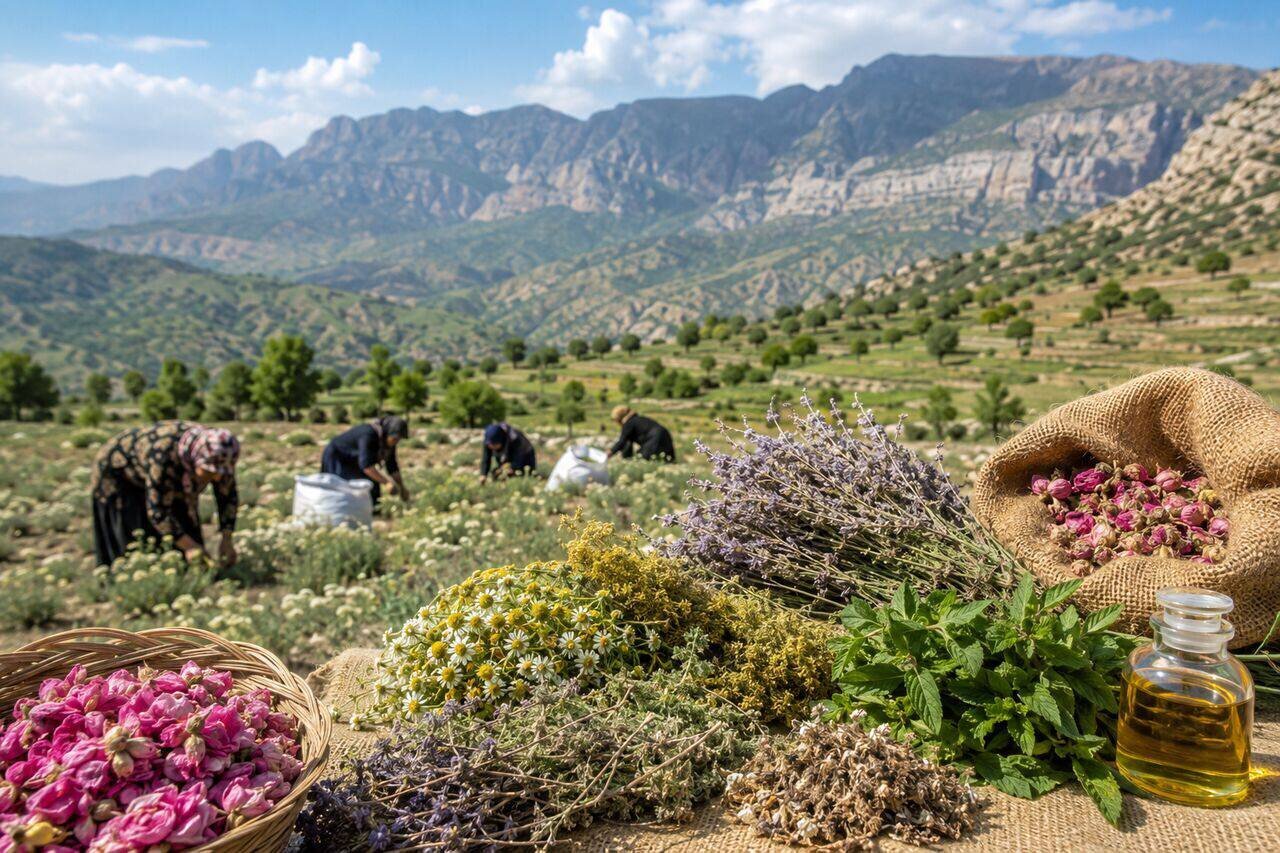
The proposed initiative identifies Iranian products such as saffron, Damask rose, rosewater, pomegranate, barberry, pistachio, black seed, licorice, cumin and Shirazi thyme as potential areas for research, product development and branding.
Plans also include strengthening distribution networks, developing domestic and international brands, and helping small-scale manufacturers and knowledge-based companies bring research-based products to market.
Artificial intelligence and health research
Artificial intelligence and digital technologies are central to the initiative. Proposed projects include AI-based healthcare tools, research databases, digital patient records and improved health information systems.
Research priorities include nutrition, sleep, stress management, reproductive health, obesity, diabetes, hypertension, fatty liver disease and digestive disorders. Other areas include cardiovascular disease prevention, respiratory and musculoskeletal conditions, neurological diseases, mental health, addiction treatment and healthy aging.
The program encourages researchers to investigate potential applications of Persian medicine in these areas through appropriate scientific methods. AI and digital infrastructure could also support data analysis and collaboration among research centers.
Education and international cooperation
The call also prioritizes professional education, research networks, reference books, clinical guidelines, and digital learning platforms. These measures are intended to strengthen the skills of healthcare professionals and improve the documentation and scientific assessment of traditional medical knowledge.
International cooperation is another key component, with proposed activities including joint research and development, clinical trials, drug discovery and partnerships with BRICS member states, neighboring countries and Indian Ocean nations. The initiative also encourages technology transfer, international co-branding and cooperation in the production and marketing of traditional medicines and natural products.
By bringing together scientific research, digital innovation and industrial development, the call seeks to strengthen the evidence base of Persian medicine and expand opportunities for Iran's medicinal-plant and natural-product industries.
source: tehrantimes.com