IranEAEU trade on an upward trend TPO head
Iran-EAEU trade on an upward trend: TPO head
TEHRAN- The Head of Iran’s Trade Promotion Organization (TPO), in a meeting with the Trade Minister of the Eurasian Economic Union, referring to the upward trend of trade between Iran and the member states of the union, emphasized the Islamic Republic of Iran’s determination to expand and deepen trade relations and strengthen ties between the private sectors of the two sides.
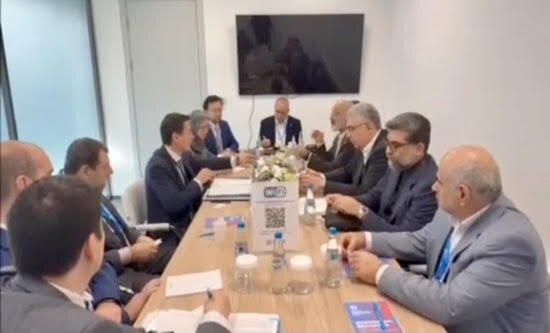
According to a report by the Public Relations of Iran’s Trade Promotion Organization, Mohammad Ali Dehghan Dehnavi, in a meeting with Slepnev, referring to the course of trade between the Islamic Republic of Iran and the member states of the Eurasian Economic Union, said: “Despite all challenges and problems, trade statistics between Iran and the Eurasian Economic Union have taken an upward trend, and this promises bright prospects for the development of trade relations in the future.”
The Deputy Minister of Industry, Mining and Trade, emphasizing the will and determination of the Islamic Republic of Iran to expand trade relations with the member states of the Eurasian Economic Union, added: “Iran has regular cooperation and trade relations with Russia and other member states of the union, and we are striving to make these ties deeper than before.”
Dehghan Dehnavi also expressed hope that the second meeting of the joint committee of Iran and the Eurasian Economic Union will be held in Tehran soon, and continued: “Holding this meeting in Tehran can be a suitable opportunity to strengthen communication between the private sectors of Iran and the member states of the union and to form new economic and trade cooperation.”
The Head of Iran’s Trade Promotion Organization also stressed the continuation of consultations and the use of existing capacities to develop economic and trade cooperation between Iran and the member states of the Eurasian Economic Union.
It is worth noting that Dehghan Dehnavi traveled to Minsk to participate in the 19th meeting of the Joint Economic Cooperation Commission of the Islamic Republic of Iran and the Republic of Belarus.
Also, in mid-September, Iran’s Minister of Economic Affairs and Finance, offering a positive assessment of the results of his Tuesday meetings with officials of the Eurasian Economic Union (EAEU), announced the proposal of initiatives such as setting a base currency to accelerate transactions and appointing special representatives to resolve obstacles facing bilateral trade.
According to IRNA, Seyyed Ali Madanizadeh, speaking to reporters after separate meetings and talks with the Chairman of the Executive Board and the Minister of Trade of the Eurasian Economic Commission at the union's headquarters in Moscow, added: "We held very good sessions."
He stated: "On Iran's behalf, we expressed our interest and readiness to expand relations and fully implement the free trade agreement with the Eurasian Economic Union, and that we are prepared to cooperate with this union in various fields; the union's officials, in turn, expressed their willingness and interest in expanding ties with our country."
The Minister of Economic Affairs and Finance, referring to the efforts of the enemies of the Iranian nation to fuel economic warfare and block trade and financial channels, said: "What is evident is that, thanks to God, these countries support Iran and our economy, and that Iran has managed to maintain production and trade relations with countries under the toughest conditions." He added: "The member states of the Eurasian Economic Union are equally committed and eager to develop these relations."
Continuing his Moscow visit agenda for multilateral consultations, the Minister of Economic Affairs and Finance attended the Eurasian Economic Union's headquarters and met with the Chairman of the Executive Board and the Minister of Trade to discuss accelerating bilateral trade.
Seyyed Ali Madanizadeh, and Bakytzhan Sagintayev, Chairman of the Board of the Eurasian Economic Commission, emphasized their shared determination to expand cooperation during this meeting.
Prior to this meeting, the Minister of Economic Affairs and Finance held a separate session with Andrey Slepnev, Minister in charge of Trade of the Eurasian Economic Commission, and a group of union officials to review the progress of cooperation following the implementation of the free trade agreement. Slepnev, noting that the second meeting of the Iran-EAEU working group would be hosted by Tehran in the coming months, expressed hope that the upward trend in bilateral trade would continue.
Iran's Ambassador to Russia, Kazem Jalali, and Mehdi Heydari, Deputy Minister of Economy and head of Iran's Organization for Investment, Economic and Technical Assistance, accompanied Madanizadeh during these meetings.
The free trade agreement between Iran and the Eurasian Economic Union came into force in May 2025 after completing legal procedures in the signatory countries, subsequently eliminating customs duties on 87% of goods in bilateral trade.
Within this cooperation framework, the path has been smoothed for Iranian goods to enter the market of over 180 million people in the union's member states, and reciprocally, this opportunity is available for traders from the five signatory countries in commerce with Iran.
Russia, Belarus, Kazakhstan, Kyrgyzstan, and Armenia are members of the Eurasian Economic Union, and Iran holds observer status in the union.
The Eurasian Economic Union (EAEU) is a regional economic integration bloc in the post-Soviet space, established by a treaty signed in 2014 and launched on January 1, 2015. Its five member states are Russia, Belarus, Kazakhstan, Kyrgyzstan, and Armenia, with Iran, Cuba, Moldova, and Uzbekistan holding observer status.
Modelled in part on the European Union, the EAEU aims to create a single internal market with the free movement of goods, services, capital, and labour. Its core objectives include improving living standards, ensuring sustainable economic development, and boosting the global competitiveness of member economies.
The bloc is driven by institutions such as the Supreme Eurasian Economic Council and the Eurasian Economic Commission. While the EAEU has expanded external ties—notably through a free trade agreement with Iran—internal integration remains uneven, with Russia dominating trade flows in a "hub and spoke" model. The bloc has set a long-term vision to become a self-sufficient and attractive macro-region by 2045.
EF/MA
source: tehrantimes.com