The beginning of Americas end in the region
The beginning of America’s end in the region
The Iran newspaper examined the reasons behind the US withdrawal from Iraq after two decades. It reported that American forces officially left Iraq, ending a twenty-year military presence.
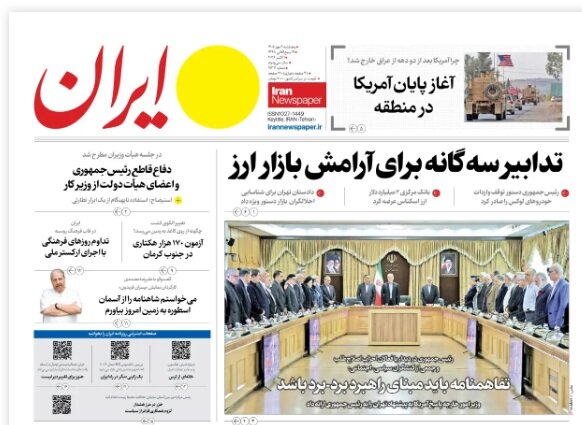
Since the start of US and Israeli military operations against Iran on February 28, American facilities in Iraq have reportedly been targeted in more than 600 attacks. Strikes in Baghdad also damaged the US Embassy and contributed to the early closure of a diplomatic support center. Pentagon officials have long been concerned that American positions across Iraq are vulnerable to Iranian missiles and drones. Washington may further reduce its military footprint in the region after reviewing damage inflicted on US bases in the Persian Gulf. The withdrawal is therefore presented as part of a broader effort to reduce exposure to future attacks and lessen strategic risks for American personnel and facilities.
Shargh: Negotiations in a fragile state
Shargh analyzed the uncertain state of indirect negotiations between Iran and the United States. While intensive discussions continue with the involvement of regional mediators, there is still no clear indication that the two sides have overcome their core disagreements. As a result, the current atmosphere remains fragile and ambiguous rather than moving decisively toward an agreement. Hope should not be confused with optimism. So, diplomacy should neither be dismissed as a failure nor viewed as nearing success simply because talks continue. With significant differences still unresolved and military tensions growing, unrealistic optimism could be as harmful as losing faith in diplomacy altogether. Careful assessment of political realities remains essential while the diplomatic process continues. It added that the persistence of negotiations alone does not guarantee a breakthrough and that both sides still face difficult political decisions before any meaningful progress can occur.
Sobh-e-No: Iran’s new strategy toward the Strait of Hormuz
Sobh-e-No argued that security incidents in the Strait of Hormuz have become a routine feature of regional news. The waterway has evolved from a transit route into a platform through which Iran demonstrates its determination to resist pressure and confront perceived aggression. Iran is asserting not only navigation rights but also its role in shaping security arrangements and deterrence. It described a new security and energy doctrine in which passage through the strait could become increasingly difficult unless Iran’s security concerns are recognized. Quoting parliamentary speaker Mohammad Bagher Ghalibaf, it argued that if Iran’s security is threatened, no infrastructure in the region will remain fully secure and energy exports throughout the region could be affected. The strait is an increasingly important element of Iran’s strategic leverage. According to this interpretation, Hormuz is no longer viewed merely as a commercial passage but as a key instrument in broader regional security calculations.
Javan: The enemy has no path to victory
In an article on America’s position in the region, Javan argued that Iran’s military capabilities and national unity have frustrated its adversaries. Following an Iranian missile strike on September 5 that reportedly wounded several American personnel, US naval forces moved farther away from the Sea of Oman into more distant areas of the Arabian Sea. This change reflects concerns about the vulnerability of American forces to Iranian missile capabilities. After more than seven months of pressure and conflict, the United States has failed to achieve major objectives against Iran and instead faces military, energy, and political challenges. It concluded that Iran’s strategic depth, public support, and deterrence capabilities have left its opponents without a viable path to victory. The editorial described these developments as evidence of the effectiveness of Iran’s broader defense strategy and claimed that continued pressure has strengthened rather than weakened the country's ability to resist external threats.
Arman-e-Melli: Why was Netanyahu’s UAE visit made public?
Arman-e-Melli discussed the disclosure of Netanyahu’s visit to the United Arab Emirates. The paper argued that after a recent trip to New York, Netanyahu concluded that Washington’s approach toward future confrontations involving Iran may be changing. According to the analysis, the United States appears less willing to place itself directly on the front line of future conflicts and may prefer regional partners to shoulder a greater share of the responsibilities and costs. The newspaper suggested that Netanyahu is concerned by this shift and is therefore working to strengthen a regional coalition. The paper also highlighted dissatisfaction among some Arab states. It said these countries had been promised relief from Iranian pressure in exchange for cooperation, financial contributions, and logistical support, yet those expectations were not fulfilled. As a result, the article argued, distrust toward the United States has grown among some Arab leaders, complicating Washington’s efforts to build a united regional front. This growing skepticism, the paper suggested, could influence future regional alignments and security arrangements while making cooperation among regional actors increasingly difficult.
source: tehrantimes.com