How Iran surprised the world
How Iran surprised the world?
TEHRAN - Russian President Vladimir Putin is not alone in saying that Iran’s resilience in the war with the United States and Israel has surprised the world. From a former head of Britain’s MI6 to senior American analysts, politicians and major international think tanks, a recurring assessment has emerged during the conflict: Iran proved considerably more resilient than many in Washington and Tel Aviv had anticipated.
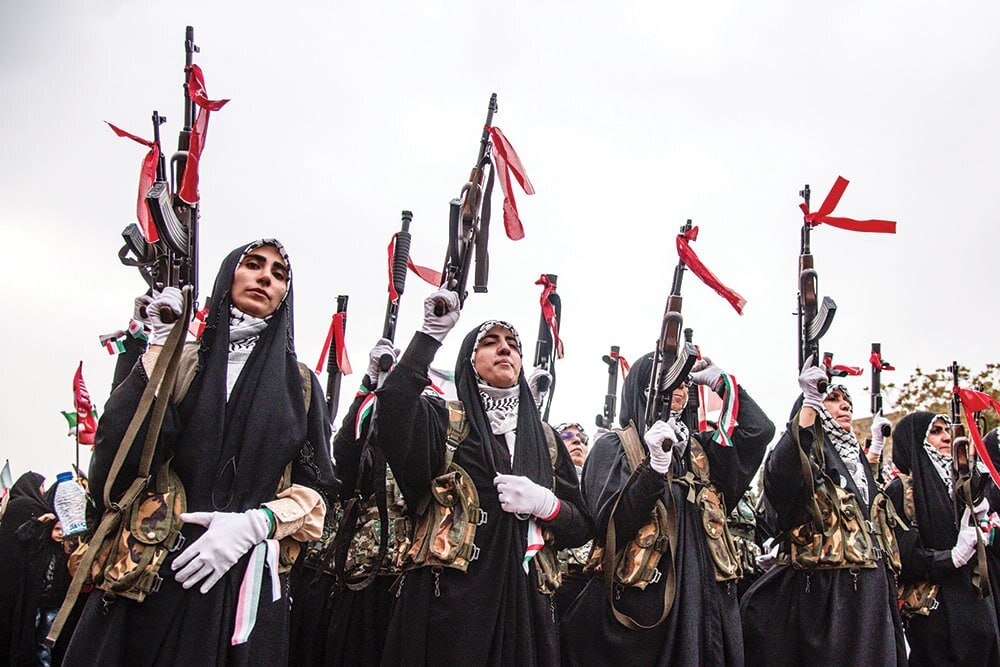
“The whole world is closely following what is happening and is amazed at the courage and heroism of the Iranian nation and its resilience,” Putin said Thursday at the plenary session of the 23rd annual meeting of the Valdai Discussion Club in Moscow.
The Russian president also pointed to what he described as a deep pool of experienced personnel within Iran’s administration, armed forces and Islamic Revolution Guards Corps, including people prepared to sacrifice themselves for their country. He said Moscow hoped the Strait of Hormuz would reopen and that what he called illegal sanctions against Iran would be lifted.
Putin’s assessment echoes observations made by a number of Western and international figures since the war began.
‘More resilient than anyone would have expected’
Perhaps the most striking assessment came from Sir Alex Younger, the former head of Britain’s Secret Intelligence Service, or MI6.
Speaking to The Economist in March, Younger said: “The reality is the US underestimated the task.” He added: “In practice, the Iranian regime has been more resilient than I think anyone would have expected.”
Younger attributed part of Iran’s resilience to decisions made before the war to disperse military capabilities and delegate authority for the use of weapons, making it harder for an intensive air campaign to paralyze the country.
He also said Iran had understood the importance of the energy dimension of the conflict and had used the threat to the Strait of Hormuz to “globalize” the war. His conclusion was striking: Iran had “played a weak hand pretty well.”
That assessment was subsequently highlighted by The Guardian, which reported that Younger believed the United States had lost the strategic initiative to Iran.
‘The Iranians have consistently surprised us’
The surprise was not confined to Britain.
Dennis Ross, a veteran US diplomat and former Middle East peace negotiator, made an unusually direct assessment in a Reuters report in September.
“The Iranians have consistently surprised us in terms of their resiliency,” Ross said, arguing that economic and military pressure alone might not force Tehran to retreat.
Ross’s observation came as Washington was attempting to use economic pressure and a naval blockade to force Tehran to alter its position over the Strait of Hormuz. Reuters reported that Iranian leaders appeared prepared to absorb considerable economic pain rather than simply concede under pressure.
The significance of the comment lies in its source: Ross was not describing Iran from Tehran, but from the perspective of a former senior American negotiator who has spent decades dealing with Middle Eastern security and diplomacy.
An Israeli and American miscalculation
The argument that Iran’s resilience was underestimated has also appeared in major international think tanks.
Mohsen Milani, professor of politics at the University of South Florida, wrote for Chatham House that Washington and Tel Aviv correctly assessed some of Iran’s vulnerabilities but “underestimated the resilience of the Iranian state, the cohesion of its elites and institutions and the nationalist surge a foreign attack would unleash.”
According to Milani, the United States and Israel mistook Iran’s regional setbacks and domestic discontent for signs that the state itself was approaching strategic collapse.
Instead, he wrote, Iran “fought with resilience, regionalized the war, [and] weaponized the Strait of Hormuz,” demonstrating that geography could compensate, at least in part, for military weakness.
This distinction is important. The argument is not that Iran avoided severe losses. It is that the damage inflicted by the United States and Israel did not produce the political and strategic effects that some planners had anticipated.
Even Israel’s assessments pointed to unexpected endurance
A March report by The Washington Post, based on a US State Department cable, offered another revealing indication.
According to the cable, Israeli officials privately assessed that Iran was “not cracking” and was willing to “fight to the end” despite the killing of its supreme leader and the continuing US-Israeli bombing campaign.
The report also quoted Suzanne Maloney, an Iran expert at the Brookings Institution, as saying she was surprised that Israeli officials had underestimated the regime’s resilience.
“That really badly informed assumption is interesting given how impressive Israeli intelligence penetration of Iran has been,” Maloney said, arguing that the miscalculation lay at the root of the strategic problems Washington and Tel Aviv encountered.
What surprised the outside world?
The sources point to several distinct dimensions of Iran’s resilience.
1. The political system did not collapse
One of the central assumptions surrounding the opening phase of the war was that the elimination of senior political and military figures could trigger a rapid breakdown of the Iranian state.
That did not happen. Even the Washington Post report based on the US diplomatic cable described the Iran’s state as still holding power and willing to continue fighting.
Putin’s reference to a “deep bench” of experienced officials and commanders points to the same phenomenon from another perspective: the survival of institutional capacity despite the loss of senior figures.
2. Iran retained the ability to respond
The second surprise was military endurance.
The United States and Israel possessed overwhelming advantages in airpower and precision strike capabilities. Yet Iran retained the ability to launch missiles and drones and to continue imposing costs on its adversaries.
Former MI6 chief Younger specifically linked this resilience to the dispersal of military capabilities and the delegation of launch authority before the war.
Senator Dave McCormick, a member of the US Senate Foreign Relations Committee, also acknowledged that Iran had shown “resilience” and said he was surprised by the scale of its missile inventory and accumulated military capabilities.
3. Hormuz became a strategic lever
Perhaps no aspect of the conflict attracted more international attention than the Strait of Hormuz.
Iran could not match the United States ship-for-ship or aircraft-for-aircraft. Instead, it used geography to create a strategic problem that military superiority alone could not easily solve.
The International Institute for Strategic Studies noted that Iran’s ability to disrupt maritime traffic in the strait “defied expectations.”
Milani similarly described Hormuz as the central strategic lever through which Iran regionalized and globalized the conflict.
The consequence was that a war against Iran rapidly became an international energy and shipping crisis.
4. Iran imposed costs beyond the battlefield
Iran’s strategy did not depend solely on surviving air strikes.
The conflict increasingly involved energy infrastructure, shipping routes and the economies of Gulf states. This created a second front in which Iran could exploit geography and asymmetric capabilities.
Younger said Iran had understood the significance of the “energy war” and used the threat to the strait to globalize the conflict.
5. The expected short war became a prolonged confrontation
The ability of Iran to continue resisting also changed the time horizon of the conflict.
Instead of a rapid campaign producing political capitulation, the war evolved into a prolonged confrontation involving military strikes, economic pressure, maritime restrictions and repeated diplomatic efforts.
By September, Reuters was reporting that US economic pressure was imposing severe costs on Iran, but also quoting analysts who believed Tehran might continue enduring those costs rather than concede.
6. National cohesion proved stronger than expected
Another important factor was the reaction of Iranian society to the foreign attack.
Milani argues that the assault generated a nationalist response that strengthened the state’s ability to endure the war. Chatham House likewise identifies the “nationalist surge” unleashed by the attack as one of the factors Washington and Tel Aviv underestimated.
This does not mean that Iranian society was politically uniform. Rather, the evidence suggests that opposition to the government did not automatically translate into support for externally imposed regime change.
7. The conflict exposed the limits of military superiority
The broader lesson identified by several analysts is that overwhelming military superiority does not automatically translate into political success.
The IISS analysis emphasized that Iran had taken severe losses but had deliberately chosen to impose costs on its opponents and on the wider regional economy.
Milani went further, arguing that the war could mark a challenge to the foundations of the US-led security order in the Persian Gulf.
The result is a paradox: Iran suffered military and economic damage, yet the campaign did not produce the rapid strategic collapse that aggressors had anticipated.
A war that changed the calculation
Taken together, these assessments suggest that the most significant surprise has been the gap between the scale of the damage inflicted and the political and strategic outcome that some expected it to produce.
From the former head of MI6 saying Iran was “more resilient than I think anyone would have expected,” to former US negotiator Dennis Ross saying the Iranians have “consistently surprised us,” the recurring theme is clear: Iran proved capable of absorbing an extraordinary level of military pressure, preserving its governing structures, maintaining the capacity to retaliate and using the geography of the Persian Gulf to turn a military confrontation into a much wider strategic and economic crisis.
All of this demonstrates that Trump’s notion and expectation of the Islamic Republic of Iran’s capitulation are nothing more than a fantasy; even if the conflict escalates in the future, this American dream will not come to pass. As Iranian Foreign Minister Seyed Abbas Araghchi recently stated in an interview, Iran is "fully prepared" for war—even if it proves to be an "apocalyptic war."
It is now up to US: withdraw from the quagmire of war or brace for even greater costs and losses.
source: tehrantimes.com