US withdrawal from Iraq marks new Phase for Resistance Front Qaani
US withdrawal from Iraq marks new Phase for Resistance Front: Qaani
TEHRAN– Brigadier General Esmaeil Qaani, commander of Iran’s Islamic Revolution Guard Corps (IRGC) Quds Force, has described the United States’ withdrawal from Iraq and its failure to achieve its objectives in the war against Iran as significant setbacks for Washington, saying the developments signal a new phase for the Resistance Front across West Asia.
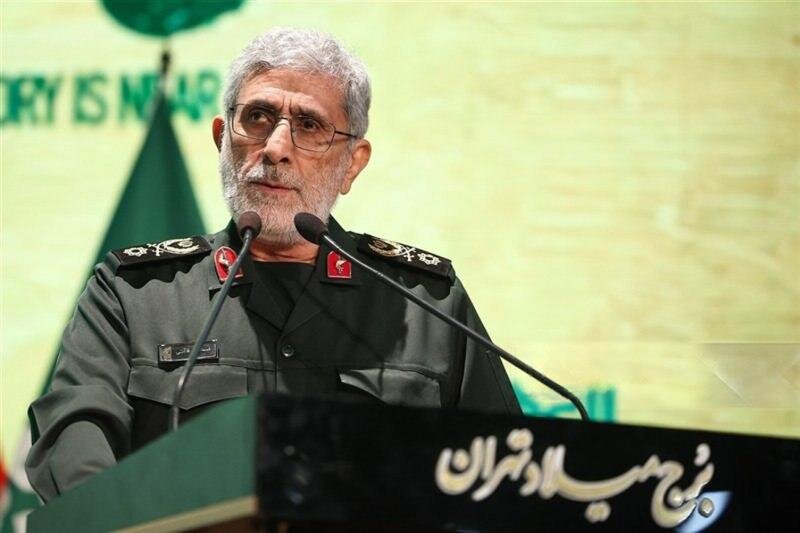
Speaking in a ceremony in Tehran on Thursday night, marking the second anniversary of the martyrdom of Hezbollah leaders Sayyed Hassan Nasrallah and Sayyed Hashem Safieddine, Qaani said Washington had underestimated Iran’s capacity to withstand military pressure and had failed to achieve its intended objectives.
He said US officials had expected to force Iran to surrender within four days, or two weeks at most, but encountered a reality far removed from their calculations.
Qaani attributed Iran’s ability to withstand the assault to the resilience of its people, their continued presence on the scene and the country’s military preparedness. He said these factors, alongside developments across the region, were contributing to a new phase in the meaning and practice of resistance.
The Quds Force commander also emphasized that Iran had continued to support regional movements and peoples under pressure despite the war, adding that Tehran’s commitment to its allies and to the cause of oppressed nations remained unchanged.
Iraq's sovereignty and the US military withdrawal
Addressing the withdrawal of US forces from Iraq, Qaani said the development reflected the determination of the Iraqi people and the role played by resistance groups in opposing the American military presence.
He said the Iraqi people were celebrating a victory achieved through national resistance and the efforts of the Resistance Front.
Qaani called for closer coordination among Iraq’s government, state institutions and resistance groups, arguing that such cooperation could strengthen the country’s sovereignty, stability and capacity to determine its own future.
He also said the remaining elements of the US presence in the region should be removed, adding that Washington was seeking to downplay the significance of its withdrawal from Iraq by focusing public attention on other issues, including aircraft movements.
The withdrawal marks a significant development in the long history of the US military presence in Iraq. American forces invaded the country in March 2003, overthrowing Saddam Hussein’s government.
Although US-led coalition forces withdrew in December 2011, American troops returned in 2014 as part of the campaign against Daesh, the Takfiri terrorist group that had seized large areas of Iraq and Syria.
According to the reports, the latest withdrawal was completed under an agreement between Baghdad and Washington to end the US-led military mission in Iraq. Iraqi Prime Minister Ali al-Zaidi described the handover as the beginning of a new phase centered on national sovereignty, stronger state institutions and balanced partnerships with other countries.
Qaani presented the development as part of a broader regional shift, arguing that the consequences of the US military presence and its eventual withdrawal extended beyond Iraq.
Iran stood firm despite US-Israeli attack
Turning to the war against Iran, Qaani said the United States and Israel had launched their joint attack after concluding that earlier methods of exerting pressure, including diplomatic approaches and the use of intermediaries, had failed to achieve their objectives.
He said their expectation of securing Iran’s surrender within days had been overturned by the Iranian nation’s resistance and the country’s ability to withstand the assault.
According to Qaani, Iran remained steadfast under the guidance of the late Leader of the Islamic Revolution, Ayatollah Seyyed Ali Khamenei, and successive enemy plans failed to achieve their intended results.
He also recalled Ayatollah Khamenei’s emphasis on Muslim unity during Friday prayers held a week after Nasrallah’s martyrdom, saying the late Leader had stressed the importance of solidarity among Muslim nations and support for peoples facing aggression.
Qaani argued that threats against one nation should concern others across the Islamic world, warning that allowing aggression against one country to go unchallenged could expose other nations to similar pressure.
He called for strengthening a common front for defense, independence and dignity stretching from Afghanistan to Yemen and from Iran to Gaza and Lebanon.
The Iranian commander further said that, despite the pressures of war, Iran had not abandoned its regional partners or the peoples it considers to be victims of US and Israeli actions.
Emphasize on Hezbollah's continued military operations
Qaani also praised Hezbollah’s performance in Lebanon, describing the conflict as one of the most difficult wars the movement had faced since its establishment.
He rejected claims that the Lebanese resistance movement had been rendered incapable of fighting following the martyrdom of Nasrallah, Safieddine and other senior commanders, saying a new generation of fighters had continued operations against Israeli forces.
According to Qaani, Hezbollah fighters entered the battlefield shortly after the war began and continued fighting despite the loss of senior leaders. He cited an incident in which Hezbollah fighters reportedly targeted 20 Israeli tanks in a single night in a Lebanese village.
The Quds Force commander further stated that 373 Israeli tanks and armored personnel carriers had come under attack during the period in question, adding that at least one-third had been destroyed and another third damaged and forced out of the battlefield.
Qaani said the continuation of Hezbollah’s operations demonstrated that the movement retained its capacity to fight despite the extensive losses it had suffered in its leadership.
According to him, Israel had suffered unprecedented fatalities during the conflict compared with other periods in its history, adding that Israeli authorities were concealing the true scale of their casualties.
Referring to Hezbollah Secretary-General Sheikh Naim Qassem’s description of the movement’s fighting spirit as being inspired by Ashura and Karbala, Qaani said the resistance movement had continued along the path established by its martyred leaders.
Regional resistance and Muslim unity
Beyond Iraq and Lebanon, Qaani referred to developments involving Yemen’s resistance forces, stating that they had seized 5,400 square kilometers during the first phase of an operation and were close to capturing more than 1,000 additional square kilometers.
He said the various components of the Resistance Front had become more closely coordinated, with each contributing through calculated planning and actions that had taken their adversaries by surprise.
For Qaani, the significance of these developments lay not only in individual military operations but also in the wider political and strategic implications of cooperation among regional resistance movements.
He concluded that the Resistance Front would continue its activities with honor and determination, drawing inspiration from the sacrifices of Nasrallah, Safieddine and other figures killed in the conflict.
The ceremony in Tehran brought together the themes that dominated Qaani’s remarks: Iran’s resistance to the US-Israeli military campaign, the implications of the US withdrawal from Iraq, Hezbollah’s continued operations in Lebanon and the importance of solidarity among Muslim nations.
His statements reflect Tehran’s broader regional outlook, which views foreign military deployments, the sovereignty of regional states, and the role of resistance movements as interconnected issues in the future security architecture of West Asia.
source: tehrantimes.com