Economy minister responds to new US sanctions Offensive economic strategy prepared
Economy minister responds to new US sanctions: Offensive economic strategy prepared
TEHRAN – Iran's Minister of Economic Affairs and Finance, Seyed Ali Madanizadeh, has stated that the government has formulated an offensive economic plan to counter US sanctions against the Iranian nation.
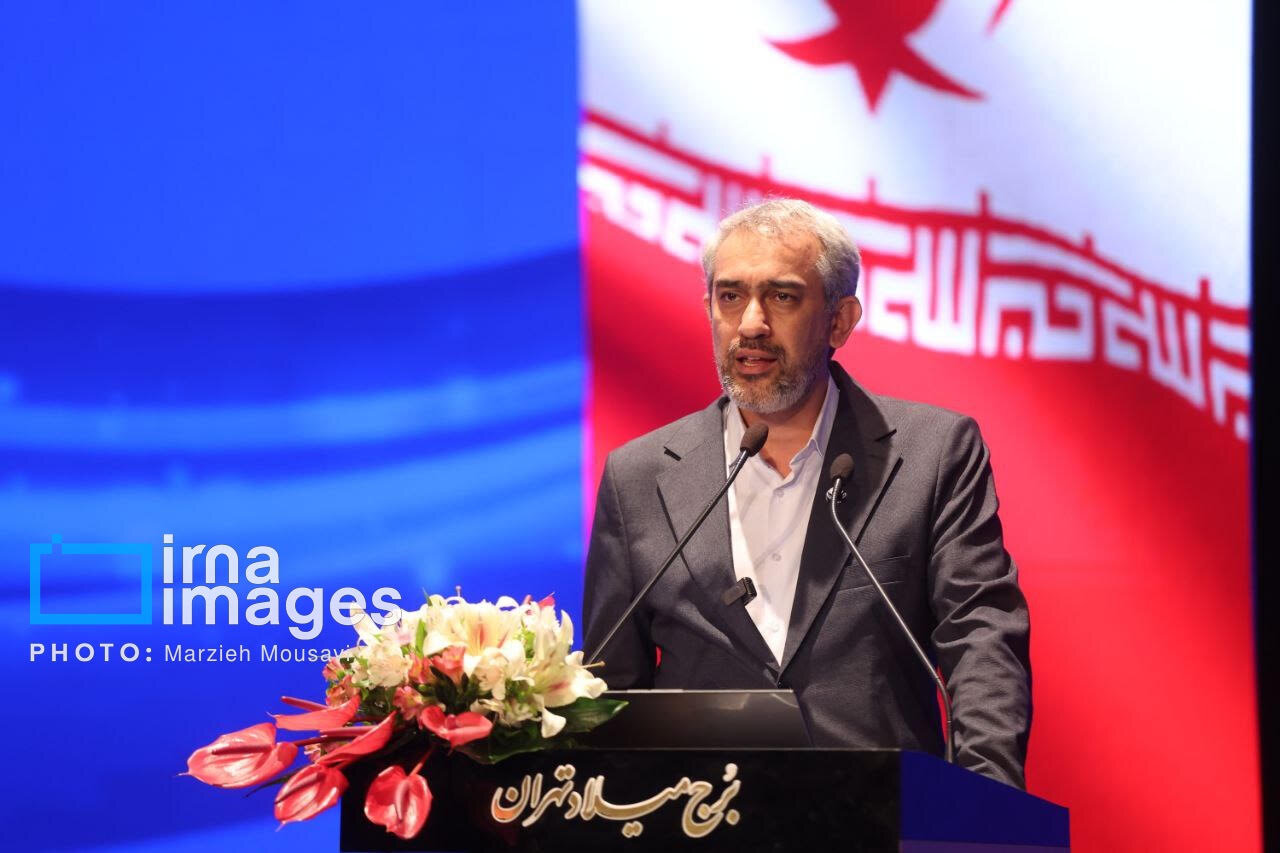
Marking Government Week, he emphasized that the 14th administration had been planning for such scenarios well in advance and is fully prepared for new sanctions.
Madanizadeh noted that enemies have long sought to test the resolve of the Iranian people and officials through various means, including military threats, territorial disintegration, and political destabilization. However, he asserted that these conspiracies have failed due to the steadfastness of Iran's military forces, people, and officials, combined with diplomatic efforts. While acknowledging damage to the economy—including attacks on steel and petrochemical facilities—he stated that recovery efforts have been swift, with damaged units returning to operation and market shortages being addressed.
Regarding recent US Treasury statements, the minister dismissed the notion that new sanctions could sever Iran's economic and financial arteries, emphasizing that the unipolar world order has ended. He argued that such claims are not new, as previous attempts under similar circumstances had failed. "We have endured a full-scale war and defeated them on both the economic and diplomatic fronts," he declared.
However, Madanizadeh acknowledged the hardships imposed on the Iranian people, including high inflation and currency pressure resulting from enemy actions over the past year. He stressed that the government remains fully aligned with the people's struggles and is committed to preventing enemy attempts to halt the country's financial and economic flows.
The minister outlined that all government bodies—including economic ministries, the Central Bank, the Budget and Planning Organization, and ministries of industry, agriculture, transport, and labor—have developed coordinated programs. Continuous coordination meetings are held to address various scenarios, including disruptions in finance, trade, or goods imports. He cited examples where alternative routes were successfully established when maritime routes were restricted, and measures were implemented to counter efforts to halt oil exports or impose budget deficits.
Madanizadeh reported tangible improvements in customs efficiency, noting that goods clearance time had been reduced from up to 10 months to just eight days, with further reductions to three days expected. Taxation revenue exceeded 90 percent of commitments last year despite wartime conditions. The banking sector also fulfilled its obligations regarding housing, childbearing, and marriage loans, while allocating substantial resources to working and fixed capital facilities.
The minister emphasized that enemies are now conducting an economic terrorist operation targeting patients, cancer sufferers, children, and even infant formula supplies. While Iran does not seek war, it will respond decisively to attacks—whether military or economic. "They should not think our approach is merely defensive this time; they should also expect offensive actions from us," he warned.
Madanizadeh noted that two major world powers have already refused to accept the new sanctions, and many other nations are expected to follow suit, either officially or unofficially.
The minister detailed a seven-pillar government program to combat inflation. Key pillars include:
· Monetary and banking policy adjustments
· Production and employment support through investment project financing
· Capital market reforms, which have already enabled businesses to raise approximately 55 trillion tomans through debt issuance
· Household livelihood support, including the continuation of the food basket subsidy program (Kala-Barg), with expanded support planned for the second half of the year
Addressing energy imbalances, Madanizadeh outlined plans for combined-cycle power plant development and modernization of existing facilities. Notably, solar energy investments have shown significant results through private sector participation. Public cooperation in consumption management has been remarkable, with energy consumption growth not only halted but reduced in some sectors—contrary to previous annual increases of 6-7 percent.
The government's reconstruction approach emphasizes modernization rather than mere restoration, with 20 major national projects identified for financing through capital markets, banking, and public participation. Reconstruction of damaged homes, hospitals, and schools is also underway.
A comprehensive trade facilitation and production barrier removal package is awaiting final government approval. The minister highlighted that cumbersome regulations identified during wartime conditions are now being made permanent to facilitate business operations. The former "Foreign Investment Organization" has been transformed into the "Iran Investment Organization," tasked with identifying and removing investment obstacles across the country.
Regarding recent currency market volatility, Madanizadeh attributed it largely to media-driven sentiment but expressed confidence that Central Bank policies would restore stability. He reiterated that the government remains firmly committed to managing economic conditions, controlling inflation, protecting employment, and ensuring the supply of essential goods for the Iranian people.
MA
source: tehrantimes.com