Irans gas transmission capacity increased
Iran’s gas transmission capacity increased
TEHRAN- The CEO of the Iran Gas Transmission Company announced an increase in the country's gas transmission capacity with the commissioning of new sections of the nationwide transmission pipelines and the startup of pressure boosting stations.
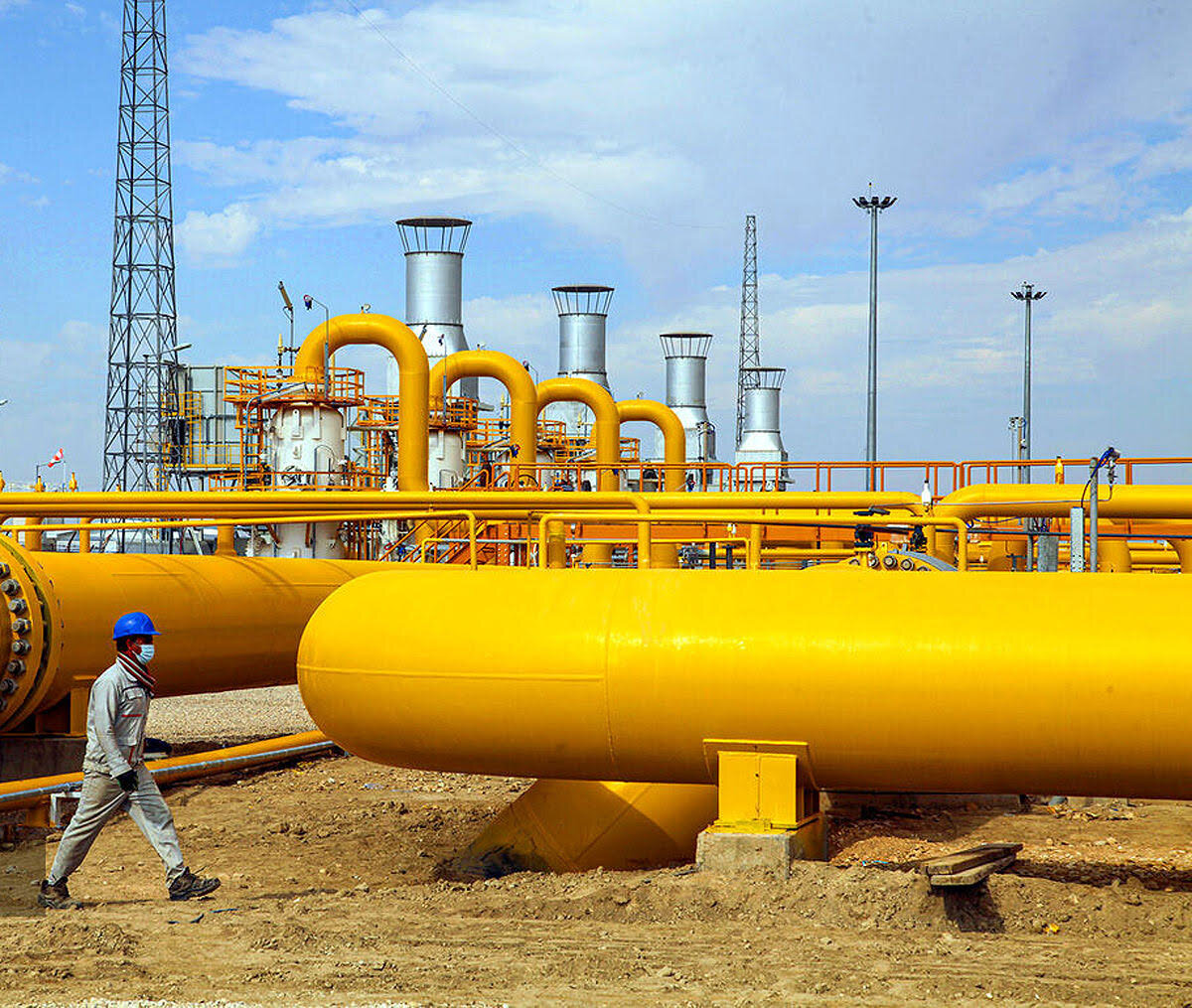
Peyman Khezraei, in an interview with SHANA, speaking about the priorities of the Iran Gas Transmission Company with the approach of the cold months of the year, stated: Maintaining the stability of the transmission network and ensuring full readiness of facilities to get through the winter peak consumption period is the company's most important priority.
Stating that the Iran Gas Transmission Company sits in the middle of the gas production and consumption chain, he said: The company's duty is to transmit the maximum amount of gas produced in the country from production points to consumption centers, and it must be ensured that no portion of the produced gas remains unused due to transmission network limitations.
The CEO of the Iran Gas Transmission Company emphasized that updating, modernization, and maintenance programs for facilities are on the agenda, and necessary actions in the field of repair and maintenance have been carried out. He added: Furthermore, various scenarios have been developed for the arrangement of the gas transmission network according to production and consumption conditions during the cold months.
Greater preparedness of transmission network for upcoming winter
Khazraei, referring to the special conditions of the upcoming winter, said: Given the reduction in part of the country's sweet gas production capacity following damage to the South Pars refineries, it is necessary to design new scenarios for managing the transmission network so that stable gas supply can be ensured for various consumption sectors, especially household subscribers.
Stating that the Iran Gas Transmission Company has no role in increasing production, but is obliged to transfer all produced gas from the south of the country to various regions, including the north, northeast, and center, he continued: The country's high-pressure gas pipeline network has been designed as an extensive and capillary network to enable changes in network configuration, maximum stability, and continuity.
The CEO of the Iran Gas Transmission Company, referring to last winter's experience, stated: Last year, despite a significant increase in household consumption, through the implementation of 55 operational reconfigurations in various parts of the country and round-the-clock deployment of operational forces in difficult-to-access areas, network management and gas supply to consumers were made possible thanks to the efforts of the servants serving in the National Iranian Gas Company.
Khazraee added: It is anticipated that this winter's conditions will be more challenging, and for this reason, there is a possibility of increasing the number of operational points and network reconfigurations to maintain gas transmission stability.
He further announced the plan for the independence of Gas Transmission Region 11 and said: This region, which covers the Sistan-Baluchestan area, will soon begin operations as an independent region after the country's 10 operational regions.
The CEO of the Iran Gas Transmission Company noted: Given the geographical expanse of the region, the considerable distance between facilities, and the ongoing development of industries and consumers in Sistan-Baluchestan province, especially in Chabahar, the independence of Region 11 can provide the foundation for more effective network management and acceleration of development programs.
Khazraei, regarding the readiness of the gas transmission network for the cold months, stated: In addition to the measures taken in the areas of repair and maintenance, facility readiness, transmission lines, pressure boosting stations, and other ancillary facilities, other programs have also been implemented in the National Iranian Gas Company to enhance transmission capabilities and network stability.
Referring to the fact that a section of the 9th nationwide pipeline has been commissioned and the second phase of one of the country's major gas transmission lines will also enter the cycle this year, playing an important role in strengthening gas transmission to the eastern regions of the country, he added: A number of new pressure boosting stations have also entered the cycle, which increase the country's gas transmission capacity compared to last year.
Use of solar power plants for energy management
The CEO of the Iran Gas Transmission Company, referring to the operational measures taken, said: These new capacities, along with operational drills and network reconfiguration, can help improve gas transmission conditions during peak consumption.
Khazraei, emphasizing that our colleagues in the repair and maintenance sector have also carried out valuable measures during facility servicing, continued: Some repairs that in the past required gas cuts, pipeline cutting, and venting of part of the gas to the environment have now been carried out using new methods and technologies in a way that is done without interrupting gas flow and without any gas venting to the environment. This performance, in addition to preventing interruption of gas transmission, has resulted in significant savings and prevention of gas wastage.
Referring to energy management programs in gas transmission facilities, he said: To compensate for part of the energy consumption at pressure boosting stations, energy management indicators have been designed and implemented uniformly across the country; the use of solar power plants at these facilities is on the agenda, and currently about 2.5 megawatts of solar power generation capacity is being used in a distributed manner at these facilities.
The CEO of the Iran Gas Transmission Company said: The utilization of renewable energies, especially solar energy, in addition to reducing conventional energy consumption, helps increase efficiency and sustainability in the performance of the country's gas transmission facilities.
The Iran Gas Transmission Company operates the country's vast high-pressure pipeline network, bridging natural gas production in the south to consumption centers across the north, northeast, and central regions. Responsible for maintaining stability during peak winter demand, it manages pressure boosting stations, oversees repairs without service disruption, and increasingly adopts solar energy to power its facilities. With new pipeline sections and independent regional operations in Sistan-Baluchestan, the company continuously expands capacity to ensure reliable, efficient gas delivery to households and industries nationwide.
EF/MA
source: tehrantimes.com