Tehran seeks roadmap to lift IranIraq tourist exchanges to 5m
Tehran seeks roadmap to lift Iran-Iraq tourist exchanges to 5m
TEHRAN – Iran is seeking to increase tourist exchanges with neighboring Iraq to five million visitors in each direction within a year, Iran’s tourism minister said, calling for the goal to be turned into a detailed and measurable roadmap.
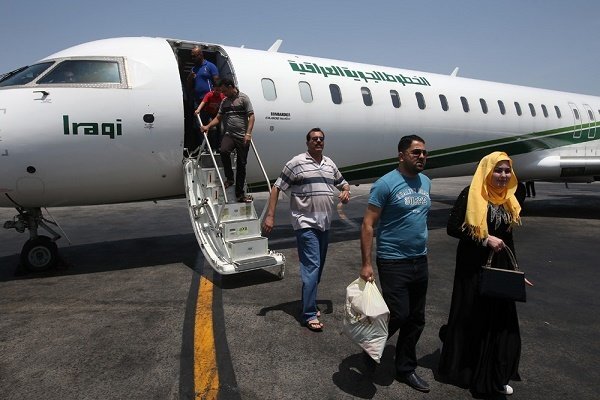
Tourism Minister Seyyed Reza Salehi-Amiri made the remarks at a meeting on expanding tourism ties with Iraq attended by ministry officials, representatives of the border provinces of Ilam, Khuzestan, Kordestan, Kermanshah and West Azarbaijan, and private-sector tourism operators.
“About 3.6 million Iraqi tourists currently travel to Iran, while around 3.5 million Iranians travel to Iraq,” Salehi-Amiri said, adding that the target should be to raise the figure to five million visitors in each direction within a defined timeframe.
He stressed, however, that massive Arbaeen pilgrimage should be separated from conventional tourism statistics.
Arbaeen distinct from conventional tourism
Salehi-Amiri said the annual Arbaeen pilgrimage is fundamentally different from conventional tourism because it is a largely popular, spontaneous and religious movement in which standard tourism components such as accommodation and paid services do not necessarily apply.
“Arbaeen is an ideological and popular movement,” he said, arguing that tourism policy should instead focus on travel that involves planned stays, tourism services and economic and cultural value creation.
He called for bilateral tourism ties to expand beyond religious travel to include medical tourism, leisure, shopping, cultural, academic and other forms of travel.
The minister noted that many Iraqi visitors to Iran travel beyond religious destinations such as Mashhad to cities such as Shiraz and Isfahan, demonstrating the broader potential of the Iranian tourism market for Iraqi travelers.
He urged the production of professional and targeted promotional content to introduce lesser-known attractions in both countries, including their historical, cultural, natural and medical tourism resources.
Transport and medical tourism
Salehi-Amiri said facilitating road and private-car travel should be a priority, arguing that easier border procedures for families and motorists could unlock significant untapped demand.
He also called for an assessment of airline capacity between the two countries, alongside the development of ground transport, shuttle services from Iraqi cities to Iranian tourist destinations and smoother border crossings.
Medical tourism was identified as another key area for cooperation. Salehi-Amiri said the sector had faced challenges because of the absence of an integrated system linking patients and travelers from their point of departure to their destination.
He said Iran had worked over the past two years to improve coordination among relevant agencies and was moving toward launching a comprehensive medical tourism system.
The proposed system, he said, should improve transparency, reduce intermediaries and coordinate services for medical travelers.
He also highlighted the need to address banking and currency problems, intermediary activities, communications and SIM-card access and other obstacles faced by foreign medical tourists.
Call for joint tourism mechanism
The minister proposed establishing a permanent mechanism for tourism cooperation between the two neighboring countries, saying the two sides should develop a common document outlining tourism capacities, challenges, obstacles and possible solutions.
He suggested establishing a joint supreme tourism council, a specialized working group and a joint office to hold regular meetings, follow up on decisions and assess progress.
Salehi-Amiri also called for joint tourism and handicrafts exhibitions, saying tourism could help drive economic development in border regions.
He added that organizing religious, medical, leisure and other forms of tourism within a coordinated framework could generate economic benefits while strengthening social and cultural ties between the two peoples.
One-year roadmap
Salehi-Amiri said the five-million target should be translated into a practical program with a timetable, designated responsibilities, performance indicators and monitoring mechanisms.
“We need to take the Iraqi prime minister’s proposal seriously and determine through clear planning how we can reach the five-million-tourist mark within the next year,” he said.
He added that the roadmap should assess several factors simultaneously, including regional security conditions, airline and ground-transport capacity, border infrastructure, medical, religious and leisure tourism, family and private-car travel, length of stay, accommodation and tourism-service infrastructure, and the role of the private sector.
AM
source: tehrantimes.com