Trump threatens Oman with annihilation
Trump threatens Oman with annihilation
MADRID – Trump's frustration with the situation in Iran is evident. The war has been a resounding failure, both politically and militarily. This failure is so profound that, according to US media, the Pentagon is reassessing its military presence in the region, signaling that the war with Iran has transformed the American footprint in West Asia.
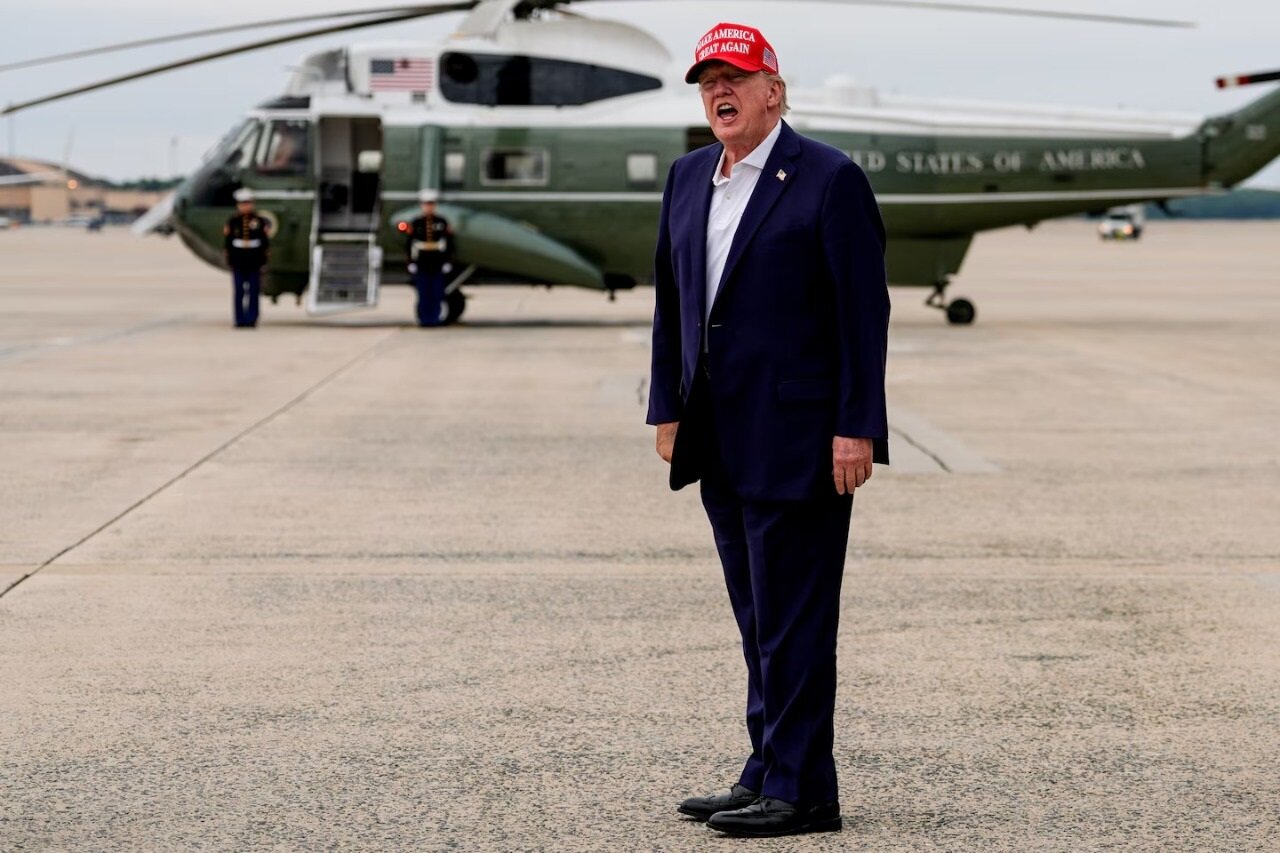
We are firmly in a post-American moment, with the only remaining question being whether this shift is merely regional or, as several experts suggest, global. The geopolitical options on the table for the United States range from bad to worse, explaining Trump’s frustration with Iran.
But in recent days, the US president’s frustration has extended to another regional actor: Oman. Trump told Fox News journalist Trey Yingst that the US would bomb Oman if it "gets in the way," using an expletive for emphasis. This is not his first threat of this nature. In May, during a May 27 cabinet meeting, a reporter asked about the possibility of Oman and Iran jointly supervising maritime traffic through the Strait of Hormuz. "Would you accept a short-term deal allowing Iran and Oman to control the strait?" the reporter inquired. Trump responded with a seemingly improvised threat: "Nobody is going to control it. It's international waters, and Oman will behave like everyone else, or we'll have to blow them out of the water."
Trump threatened Oman because he is clearly dissatisfied with the country nearing an agreement with Iran over the Strait of Hormuz, placing its control in the hands of the two littoral states. Beyond material control, the agreement implies a performative expression of sovereignty, through which Iran asserts its capacity to shape the regional order and define the terms of deterrence.
Surprisingly, Oman does not have poor relations with the United States. In fact, ties between the two nations date back to 1833 with the signing of the Treaty of Amity and Commerce. Since then, they have maintained a relationship of political and commercial cooperation, reinforced by the 1958 Treaty of Friendship, Economic Relations, and Consular Rights, the 2006 Bilateral Free Trade Agreement, and the 2016 US-Oman Scientific and Technological Cooperation Agreement.
Simultaneously, Oman maintains a very close relationship with Iran, a country that values the discretion, neutrality, and consistency the sultanate has demonstrated over recent decades.
However, there is another lens through which to understand Trump’s threats against the Sultanate of Oman: that of the "good Muslim" who dares to maintain political independence from the United States, thereby becoming a "bad Muslim" and, consequently, a target of threats.
One of the primary frameworks used to discipline Muslims in the contemporary era is the dichotomy between the "good Muslim" and the "bad Muslim." This discourse sanctions which ways of being Muslim are acceptable and which are perceived as threats to be rejected. Generally speaking, a "good Muslim" conforms to the logic of modernity, liberalism, and Westernization. The "good Muslim" also views Islam strictly as a personal belief, entirely divorced from politics.
This is not to say Oman functions as the strict paradigm of the "good Muslim”, the UAE or Saudi Arabia do that. The sultanate maintains an independent and neutral policy, but it has never been viewed by the US as "rebellious" or "disobedient" like Iran.
The crucial point is that a country like Oman, which has caused no political or geopolitical problems for the West, can be threatened for the second time simply for drifting too far from what the US deems acceptable. In other words, the seemingly rigid, non-dialectical division between the "good" and "bad" Muslim, which appeared to guarantee security for those labeled "good", collapses at the slightest deviation from US desires.
Labels work only up to a point. They are provisional, always contingent upon "obedience" or adherence to liberal norms. The West distributes the "good" and "bad" Muslim labels based on its own interests and political narratives, always retaining the power to withdraw, modify, or re-label them. Accepting this framework means living in a state of perpetual provisionally, in an insecure world at the mercy of others' political whims.
By turning Muslims into friends through Islamophilia or enemies through Islamophobia, the "good" versus "bad" Muslim dichotomy functions as a discourse and instrument of power that must be reconceptualized to account for the longue durée of coloniality and the persistence of anti-Muslim orders.
The condition of Muslimness makes it difficult to inhabit one's own world, a more or less secure space. To inhabit, as the German philosopher Martin Heidegger explained, "is the way in which mortals are on the earth." It implies not merely living, but doing so through one's own grammar, without being continuously subjected to the whims or frustrations of an Other.
The war with Iran has served not only to usher in the post-American moment but also to lay bare the discursive tools of a declining hegemon.
source: tehrantimes.com