TrumpNetanyahus war crimes against the environment
Trump-Netanyahu’s war crimes against the environment
TEHRAN – By launching an unwarranted war on Iran on Feb. 28, the United States under Donald Trump and Israel under Benjamin Netanayahu simultaneously launched war crimes against the environment.
Israeli and U.S. aircraft carried out nearly 19,000 sorties during the 40-day war against Iran. 8,500 of these sorties were carried out by Israel. According to Haaretz, an average Israeli fighter sortie to Tehran consumed about 15 metric tons (18,000 liters) of jet fuel.
The roughly 19,000 Israeli and U.S. sorties carried out during the war may have generated around 900,000 tons of CO₂ from aviation fuel alone.
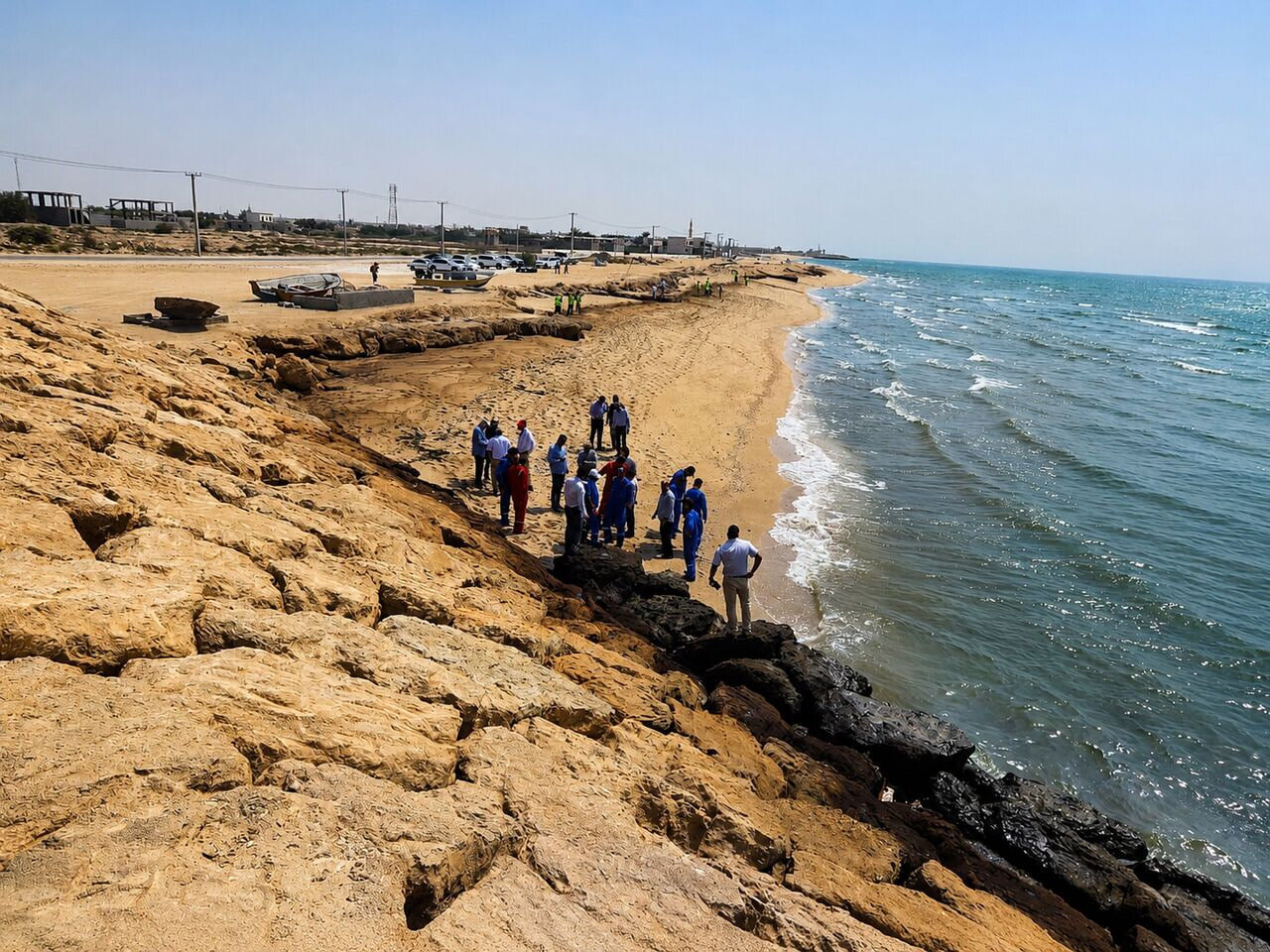
The environmental damage caused by the war is too extensive to be precisely estimated. After the April 8 ceasefire, the conflict continued intermittently, although without Israel’s direct involvement. The war also resulted in oil leaks in the Persian Gulf and the Strait of Hormuz. Iran’s coastal waters, including those around Qeshm and Kharg islands, were contaminated with oil. The affected areas are home to diverse marine life, including endangered hawksbill sea turtles, dolphins, and whales.
The entire world, especially countries bordering the Persian Gulf, will pay the price for the environmental war unleashed by Trump and Netanyahu.
Before the start of the war, Trump had already demonstrated in practice that he was waging a war against the environment. His denial of global warming, which he famously described as “a hoax” and a “con job,” reflects his apparent disregard for efforts to protect the environment, particularly given that global warming may ultimately pose a greater threat to humanity than a nuclear war.
For Trump, who withdrew from the Paris Climate Agreement twice, the environment is something for sale. Since returning to office in January 2025, Trump has moved to reverse or dismantle a substantial number of environmental and clean-energy initiatives launched or expanded under his predecessor Joe Biden. Some were fully canceled, while others were defunded, suspended, or subjected to regulatory changes.
Netanyahu, though not a climate change denier, has shown little regard for human life, let alone the environment. His military has waged an intensive war against the environment since October 2023, following Hamas’s “Operation Al-Aqsa Flood” in southern Israel. The conflict has now continued for more than 1,050 days. The first stage of the war lasted for 470 consecutive days, after which the conflict continued intermittently and has persisted to this day.
Science Direct reported in March 2026 that the carbon emissions generated by Israel’s war on Gaza have exceeded 30 million tons. Additionally, according to a 2026 UN-World Bank assessment, the war on Gaza has generated more than 68 million tons of rubble.
Trump and Netanyahu are sacrificing nature to pursue their malicious goals.
In the 40-day war, Israel struck the Tehran refinery and the Shahran oil depot in western Tehran, causing huge thick smokes. The resulting fires burned between 2.5 and 5.9 million barrels of oil, releasing roughly 1.88 million tCO2e.
The bombing of oil depots in the metropolis of Tehran, and nearby cities, including Aghdesieh and Karaj, transformed the existing smog into an “apocalyptic” toxic haze32 and caused fires that raged on for days.
Netanyahu and Trump are in par with Saddam Hussein of Iraq that put 600 Kuwaiti oil wells on fire when its army was forced to retreat.
On April 7, Natural War Fund said the U.S.-Israel war on Iran was not only a humanitarian disaster but also a serious climate and environmental crisis. Analysis showed the war was releasing greenhouse gases faster than 84 entire countries combined.
“Every missile strike is another downpayment on a hotter, more unstable planet, and none of it makes anyone safer,” said Patrick Bigger, a research director at the Climate and Community Institute.
Bigger added, “Every refinery fire and tanker strike is a reminder that fossil‑fueled geopolitics is incompatible with a livable planet. This war shows, yet again, that the fastest way to supercharge the climate crisis is to let fossil fuel interests dictate foreign policy.”
Beyond the human tragedy, the war on Iran demonstrates that modern conflicts carry hidden environmental and climate costs. From infrastructure destruction to fossil fuel combustion, the war accelerates greenhouse gas emissions, undermining global efforts to tackle climate change.
“This is not a war for security. It’s a war for the political economy of fossil fuels – and the people paying the price are Iranian civilians and working‑class communities around the world,” Bigger noted.
The Center for American Progress also says the war exacerbates existing environmental stressors in the region.
When oil facilities, chemical plants, and weapons depots are bombed, toxic residues accumulate in soil, enter waterways, and travel across borders—harms that fall on communities already living at the margins of environmental tolerance, the center says.
Airstrikes, for instance, could release radiation, causing widespread health, environmental, and humanitarian damage that would cross borders, last for generations, and inflict consequences that would be irreversible on any human timescale.
Explosions cause a massive release of toxic hydrocarbons, sulfur oxides, and nitrogen compounds into the air. These contaminants do not merely linger in the air; heavy metals and PFAS compounds leach into groundwater and agricultural soil, creating a persistent toxic legacy, as the post-conflict landscapes of Iraq, Afghanistan, and Lebanon have demonstrated at enormous human cost.
The Iran war has already taken thousands of civilian lives, and its environmental legacy threatens millions more.
Felix Horne, a senior expert at Climate Rights International, says long after fighting is over, the toxic leftovers of war continue to poison communities and the environment.
“War is measured first in lives lost, families uprooted and neighborhoods reduced to rubble. But there are also deadly consequences that are often ignored. Pollution caused by war can settle over cities, contaminate water and soil, and shape public health long after the fighting is over. This is the case with the Iran war,” Horne wrote in Al Jazeera on May 23.
The war against the environment first began in June 2025 that lasted for 12 days (from June 13 to June 24). During the war the Israeli Air Force carried out approximately 1,500 sorties against targets in Iran, including nuclear facilities. In the last day of the war, Trump’s United States directly joined Israel dropping bunker busting bombs on three Iranian nuclear facilities, Fordo, Natanz and Isfahan, using B-2 bombers.
In attacks on Iran’s nuclear facilities, strikes that violate international law, Trump and Netanyahu showed no regard for the potentially catastrophic consequences. By targeting sites associated with Iran’s nuclear program, they risked triggering the release of radioactive materials, causing widespread environmental contamination and endangering the health and lives of millions of people in Iran and neighboring countries.
source: tehrantimes.com